Tag: AI Chips

  • Huawei Sees Opportunity in U.S. Export Restrictions

    Huawei Sees Opportunity in U.S. Export Restrictions

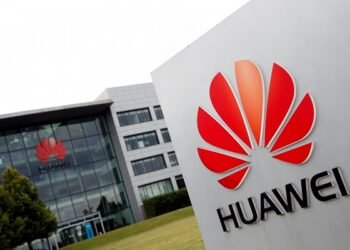
    The United States’ measures to restrict the export of advanced artificial intelligence (AI) chips to China are having a significant impact on the global semiconductor industry and geopolitical landscape. While the primary objective of these export controls is to limit China’s access to cutting-edge AI technology, they are also creating opportunities and challenges for key players in the AI chip market. One of the notable consequences of these restrictions is the potential opening it creates for Huawei Technologies, the Chinese tech giant, to expand in its $7 billion home market. Historically, Nvidia has been the dominant provider of AI chips in China, with a market share exceeding 90%. However, with the curbs affecting Nvidia’s operations and its ability to export AI chips to China, Chinese firms, including Huawei, have been developing their own versions of Nvidia’s best-selling chips.


    Huawei’s Ascend AI chips are comparable to Nvidia’s in terms of raw computing power, according to analysts and some AI firms. While they may not match Nvidia’s performance and compatibility entirely, they still offer a competitive alternative. Nvidia’s ecosystem, which has become the industry standard for AI chip programming, has given rise to a massive global network capable of training sophisticated AI models. In contrast, Huawei’s ecosystem, called CANN, is less extensive in terms of the AI models it can handle.


    The opening created by the U.S. restrictions offers potential for Huawei, but it comes with significant challenges. Many cutting-edge AI projects rely on Nvidia’s CUDA programming architecture, a foundation for the global ecosystem supporting AI model training. Huawei’s CANN is less versatile in this context, which means that switching from Nvidia to Huawei is not a plug-and-play solution. To win over Chinese clients from Nvidia, Huawei must replicate Nvidia’s ecosystem, provide technical support for data and model transition, and overcome intellectual property rights issues. Many key patents for GPUs are held by U.S. firms, making the path to full self-sufficiency a challenging one for Huawei.


    It’s important to note that while Huawei may stand to benefit from the situation, it is not the only player in the AI chip market in China. The country has been working to develop its own domestic AI chip industry, driven by concerns about over-reliance on foreign technology and geopolitical uncertainties. Chinese firms, such as Alibaba and Tencent, have also made strides in AI chip development, aiming to reduce their dependence on U.S. technology.


    However, Nvidia’s dominance in China’s AI chip market is significant, given its historical market share and extensive ecosystem. Huawei, in particular, has the potential to gain ground in this highly competitive landscape if it can offer a viable alternative to Nvidia. Winning the trust of Chinese clients will require a holistic approach, replicating not only the hardware but also the ecosystem and support system that Nvidia has built over the years.


    Huawei has been investing heavily in its chip development capabilities, and its Ascend GPUs are one of the homegrown products the company has introduced. The U.S. export controls imposed on Huawei since 2019 have spurred the company to accelerate its efforts to achieve self-sufficiency in chip design. This push for self-reliance aligns with China’s broader national strategy, which aims to reduce its reliance on foreign technology and ensure it has a strong domestic semiconductor industry.


    The outcome of this evolving landscape will depend on various factors, including the rate at which Huawei can replicate Nvidia’s ecosystem, the level of support it provides to Chinese clients, and the intellectual property challenges it may encounter. If Huawei can capture a significant portion of Nvidia’s market share, it would represent another geopolitical victory in the ongoing tech competition between China and the United States.

  • Google Unveils AI Innovations for Enterprises at Next Conference

    Google Unveils AI Innovations for Enterprises at Next Conference

    At the Google Next conference held in San Francisco, Google unveiled a series of new artificial intelligence (AI) technologies and collaborations with a focus on making these advancements more accessible to large enterprises.


    Key announcements from the conference, as reported by Reuters, include the adoption of Google’s cloud software by additional clients, including major companies like General Motors and Estee Lauder Companies. Google introduced a new version of its custom-built AI chips and unveiled an enterprise-scale tool for watermarking and identifying images generated with AI. The company also presented tools for enhancing security and its office suite.


    This wave of announcements is part of Google’s recent efforts to showcase its AI plans, as it aims to keep up with the ambitious AI strategy rolled out by Microsoft over the past year.


    Google Cloud chief Thomas Kurian emphasized the importance of large business customers moving deliberately and at their own pace in adopting AI technologies. He mentioned that it’s crucial for enterprises to approach AI as a strategic software development process rather than merely embracing AI for its own sake.


    To strengthen its enterprise cloud service, Google added 20 new AI models to its collection, bringing the total to 100. The AI infrastructure also includes partnerships to grant Google Cloud customers access to AI models from Meta Platforms and the startup Anthropic.


    Google also introduced improved versions of its foundational AI infrastructure, enhancing performance and adding new features. For instance, the new version of its text model, called PaLM, allows users to input larger amounts of text, making it suitable for processing longer documents such as legal briefs and books.


    Among the other innovations discussed at the conference, Google unveiled an AI-powered tool named SynthID, which adds invisible watermarks to AI-generated images. Additionally, AI updates were announced for Google’s suite of office software and security tools.


    Google’s efforts in the AI domain extended to AI chips, with the introduction of a specialized version of its upcoming fifth-generation tensor processing unit (TPU) known as TPU v5e. This chip is tailored to optimize AI and language models, and early access was granted to select users. The company also discussed its intention to offer powerful AI chips designed for training large models and processing their output efficiently.


    The Google Next conference showcased Google’s dedication to advancing AI technology and its commitment to supporting enterprises in adopting these innovations for strategic growth.