Tag: Aditya-L1

  • S Somanath Diagnosed with Cancer on Day of Aditya-L1 Launch

    S Somanath Diagnosed with Cancer on Day of Aditya-L1 Launch

    S Somanath, the chief of the Indian Space Research Organisation (ISRO), revealed a deeply personal and challenging journey amid the backdrop of India’s ambitious space missions. On the day of the Aditya-L1 solar mission launch, Somanath received a life-altering diagnosis: cancer. This revelation sheds light on the sacrifices and struggles faced by individuals at the forefront of India’s space exploration endeavors.


    The journey began with subtle health issues Somanath encountered in mid-2023, coinciding with the launch of the Chandrayaan-3 mission. However, it wasn’t until later, during India’s first solar mission, Aditya-L1, that Somanath became aware of a growth in his stomach. The juxtaposition of these monumental events in his professional life with the discovery of a grave health concern underscores the complexities of personal challenges faced by leaders in the scientific community.


    In a recent interview with Tarmak Media House, Somanath recounted the pivotal moment of realization that occurred on the day of the Aditya-L1 launch. It was during a routine scan that he gained a clue about the underlying issue. Despite the excitement surrounding the mission’s success, Somanath’s thoughts were consumed by the unsettling discovery within his own body. Following the launch, he promptly sought medical attention in Chennai to confirm his suspicions.


    The confirmation of cancer within a couple of days brought forth a new set of challenges for Somanath. Doctors recommended surgery as the next course of action, followed by chemotherapy. The physical and emotional toll of undergoing major surgery and subsequent treatment loomed large as Somanath grappled with the dual responsibilities of battling cancer while leading India’s space agency.


    Despite the daunting prognosis, Somanath’s commitment to his duties remained unwavering. He continued to steer ISRO through its missions, navigating the complexities of space exploration while simultaneously undergoing treatment for cancer. This steadfast dedication underscores the resilience and determination characteristic of leaders in the face of adversity.


    The Aditya-L1 solar mission, launched on September 2, marked a significant milestone in India’s space exploration endeavors. The spacecraft, equipped with seven payloads, embarked on a journey to Lagrange Point L1, approximately 1.5 million kilometers from Earth. Its mission: to study the Sun and unravel the mysteries of solar activity. Despite the personal challenges Somanath faced, the successful execution of the Aditya-L1 mission stands as a testament to the collective efforts of ISRO’s scientists and engineers.


    Looking ahead, India’s space ambitions continue to soar with the upcoming Gaganyaan mission. Prime Minister Narendra Modi recently announced the names of four Indian Air Force pilots selected to undergo training for the historic human spaceflight mission. Group Captains Prashanth Nair, Ajit Krishnan, Angad Pratap, and Wing Commander Shubhanshu Shukla are undergoing rigorous training, including flight simulations and physical fitness tests, in preparation for the mission scheduled for 2025.


    The Gaganyaan mission represents a significant leap for India’s space program, marking its foray into crewed space exploration. As astronauts undergo intensive training to embark on this historic journey, Somanath’s experience serves as a poignant reminder of the inherent challenges and sacrifices associated with pushing the boundaries of human knowledge and exploration.


    In the face of adversity, Somanath’s journey epitomizes resilience, determination, and unwavering commitment to the advancement of India’s space exploration endeavors. His courage in confronting personal challenges while leading ISRO’s ambitious missions serves as an inspiration to scientists, engineers, and aspiring space explorers across the nation. As India continues to make strides in space exploration, Somanath’s legacy will endure as a symbol of perseverance and dedication to the pursuit of knowledge beyond the confines of Earth.

  • PM Modi Praises Heroic Indian Navy Operation to Rescue Ship

    PM Modi Praises Heroic Indian Navy Operation to Rescue Ship

    Prime Minister Narendra Modi expressed admiration for the Indian Navy’s heroic operation that successfully freed a merchant ship from the clutches of pirates in the North Arabian Sea. Addressing the 58th conference of the DGPs and IGPs, Prime Minister Modi commended the bravery and efficiency of the Indian Navy and marine commandos in swiftly rescuing the distressed ship.


    Highlighting the details of the operation, Modi revealed that the Indian Navy received a distress signal from a merchant ship located approximately 2,000 km away from the Indian coast. The ship, with a total of 21 sailors on board, including 15 Indians, faced imminent danger from armed pirates. In response, the Indian Navy and marine commandos launched a heroic operation to rescue all 21 crew members from the perilous situation.


    “The Indian Navy completed a very successful heroic operation. When it got the message that a merchant ship was in distress, the Indian Navy and the marine commandos got active,” stated Prime Minister Modi during his address.


    The successful rescue mission became a testament to the courage and valor of the Indian Navy, with the rescued sailors expressing gratitude and hailing the bravery of the commandos. Modi shared that the Indian sailors, after their safe rescue, were chanting the slogan of “Bharat Mata ki Jai,” showcasing their appreciation for the daring operation.


    Shifting focus to India’s space achievements, Prime Minister Modi also acknowledged the success of India’s first solar mission craft, Aditya L1. He described the spacecraft’s recent arrival at its designated orbiting point, the L1 point, located approximately 1.5 million kilometers from Earth. From this vantage point, Aditya L1 will study the wonders of the Sun without interruptions from eclipses and occultations.


    “This is the spot from where Aditya L1 will be in clear view of the Sun. This is going to greatly help in scientific research like our moon mission,” explained Modi, emphasizing the strategic importance of Aditya L1’s positioning.


    The Prime Minister emphasized that the successful journey of Aditya L1 stands as a testament to India’s power and the prowess of Indian scientists. Modi highlighted the achievement as another remarkable example of India’s contributions to space exploration.


    In early January, Aditya L1 reached its designated location, marking a significant milestone for India’s space program. The spacecraft will now focus on studying the Sun’s phenomena, providing valuable insights into solar activities. The success of Aditya L1 follows the earlier triumph of Chandrayaan-3, where the Indian Space Research Organisation (ISRO) achieved a challenging soft landing on the lunar surface.


    The combination of the Indian Navy’s heroic operation and the achievements in space exploration adds to the nation’s pride, showcasing its capabilities in both maritime security and scientific endeavors. Prime Minister Modi’s acknowledgment and praise for these accomplishments underscore the importance of advancements in defense, security, and space exploration in India’s overall progress. The nation continues to demonstrate its commitment to excellence and innovation in various fields, contributing to its global standing.

  • Aditya-L1: ISRO Successfully Performs Second Orbit Maneuver

    Aditya-L1: ISRO Successfully Performs Second Orbit Maneuver

    The Indian Space Research Organisation (ISRO) continues to make significant strides in its Aditya-L1 solar mission, which aims to study the Sun’s outer atmosphere and space weather. The latest achievement is the successful completion of the second earth-bound maneuver (EBN#2) for the Aditya-L1 spacecraft.


    This crucial maneuver is part of Aditya-L1’s journey to its designated observation point known as Lagrangian Point 1 (L1). L1 is strategically located 1.5 million kilometers away from Earth in the direction of the Sun. At this point, the gravitational forces of the Earth and the Sun balance each other, providing a stable position for the satellite.


    The successful execution of this orbit maneuver is essential for the spacecraft to reach L1 and commence its mission of studying the Sun’s outer atmosphere. Aditya-L1 is designed to continuously observe the Sun without being obstructed by eclipses or occultation events, ensuring uninterrupted data collection.


    Aditya-L1’s mission objectives are ambitious and hold great scientific importance. The spacecraft will investigate the physics of the solar corona, the mechanism behind its heating, solar wind acceleration, dynamics of the solar atmosphere, solar wind distribution, temperature anisotropy, and the origin of Coronal Mass Ejections (CME) and solar flares. Additionally, the mission will provide critical insights into near-Earth space weather.


    Space weather refers to the conditions on the Sun and in the solar wind, magnetosphere, ionosphere, and thermosphere that can influence the performance and reliability of space-borne and ground-based technological systems and can endanger human life or health. Understanding and predicting space weather is vital for various sectors, including communication, navigation, and power infrastructure.


    The completion of the second orbit maneuver signifies ISRO’s precision and expertise in space exploration. Aditya-L1’s journey to L1 will take approximately 110 days, during which it will conduct a series of such maneuvers to reach its destination. Once stationed at L1, the spacecraft will provide real-time data on solar activities, contributing to our understanding of the Sun’s influence on space weather.


    ISRO’s Aditya-L1 mission is not only a testament to India’s growing capabilities in space research but also a crucial step in advancing our knowledge of the Sun’s behavior and its potential impacts on Earth. As space weather becomes increasingly relevant in our interconnected world, Aditya-L1’s observations will play a pivotal role in enhancing our preparedness and mitigating potential risks associated with solar events.

  • European Space Agency: Assist ISRO in Aditya-L1 Solar Mission

    European Space Agency: Assist ISRO in Aditya-L1 Solar Mission

    India’s successful launch of its first Solar mission, Aditya-L1, has garnered support from the European Space Agency (ESA), which will play a crucial role in assisting the Indian Space Research Organisation (ISRO). ESA’s contribution includes deep space communication services and assistance in validating critical new flight dynamics software for the mission.


    ESA highlights the significance of ground station support in acquiring scientific data from a spacecraft, as communication plays a vital role in every space mission. Ramesh Chellathurai, ESA Service Manager and ESA Cross-Support Liaison Officer for ISRO, explained that their global network of deep space tracking stations and adherence to internationally recognized technical standards enable them to assist partners in tracking, commanding, and receiving data from spacecraft across the solar system.


    Chellathurai stated, “For the Aditya-L1 mission, we are providing support from all three of our 35-metre deep space antennas in Australia, Spain, and Argentina, as well as support from our Kourou station in French Guiana and coordinated support from Goonhilly Earth Station in the UK.”


    The European Space Agency serves as the primary provider of ground station services for the Aditya-L1 mission, offering support throughout its various phases, from the critical ‘Launch and Early Orbit Phase’ to the spacecraft’s journey to L1 (a point near the Sun). ESA stations will continue to provide assistance during the routine operations of Aditya-L1 over the next two years.


    ISRO’s Aditya-L1 mission, launched on August 23, marks India’s ambitious endeavor in solar exploration. Following the successful completion of the first orbit maneuvering exercise, ISRO is preparing for the second such exercise on September 5. A total of five orbit maneuvering exercises are planned during the satellite’s orbit around the Earth.


    During the satellite’s 16-day stay in Earth orbit, these exercises will be conducted to gain the required velocity. Afterward, Aditya-L1 will commence its journey to the L1 point near the Sun. The satellite will undergo a trans-Lagrangian1 insertion maneuver, embarking on a 110-day trajectory to its destination.


    To ensure stability, Aditya-L1 will undergo another maneuver to be injected into the halo orbit near L1, where the gravitational forces exerted by the Earth and the Sun balance each other out. This crucial support from ESA enhances the prospects of a successful mission for ISRO and deepens international cooperation in space exploration.

  • ISRO Set to Launch Aditya-L1 Solar Mission

    ISRO Set to Launch Aditya-L1 Solar Mission

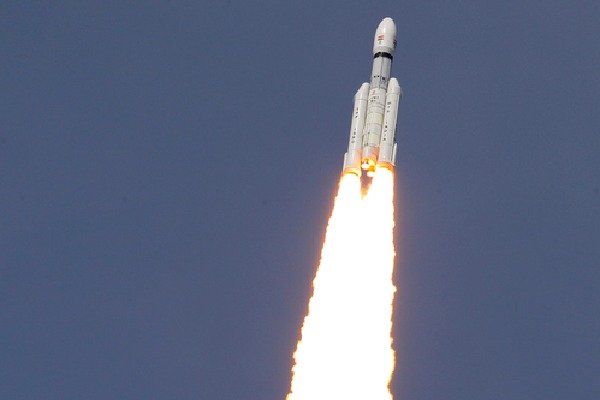
    Following the successful soft landing of Chandrayaan-3, the Indian Space Research Organisation (ISRO) is now poised to achieve another milestone with the upcoming launch of the Aditya-L1 solar mission. Scheduled for September 2, 2023, at 11:50 Hrs. IST from Sriharikota, Aditya-L1 is set to become India’s first space-based observatory dedicated to studying the enigmatic Sun.


    Shanti Priya, Head of Department Astronomy at Osmania University, highlighted the significance of this mission, referring to it as a turning point in solar research. She underscored the Sun’s essential role in sustaining life on Earth and emphasized the challenges and mysteries associated with studying it. As India takes on more ambitious space missions, Aditya-L1 is poised to usher in a new era of solar study.


    The Aditya-L1 spacecraft will orbit around the Lagrange point 1 (L1) of the Sun-Earth system, located approximately 1.5 million km from Earth. This strategic placement allows continuous and uninterrupted observation of the Sun without being affected by eclipses or occultations. The spacecraft’s seven advanced payloads are designed to scrutinize various layers of the Sun, from the photosphere and chromosphere to the outermost layer, the corona.


    The primary science objectives of the Aditya-L1 mission include:


    1. Study of solar upper atmospheric (chromosphere and corona) dynamics.
    2. Investigation of chromospheric and coronal heating, plasma physics, coronal mass ejections, and solar flares.
    3. In-situ particle and plasma environment analysis for studying particle dynamics from the Sun.
    4. Understanding the physics of the solar corona and its heating mechanism.
    5. Diagnostics of coronal and coronal loops plasma, including temperature, velocity, and density.
    6. Exploration of the development, dynamics, and origin of Coronal Mass Ejections (CMEs).
    7. Identifying the sequence of processes leading to solar eruptive events.
    8. Magnetic field topology and measurements in the solar corona.
    9. Studying the drivers for space weather, including the origin, composition, and dynamics of solar wind.


    The Aditya-L1 mission holds the promise of unveiling crucial insights into the Sun’s behavior and its impact on space weather, which can have significant implications for technologies and systems on Earth. By studying phenomena like CMEs, solar flares, and magnetic fields, scientists aim to enhance our understanding of space weather and its potential effects on communication systems, navigation, and power grids.


    As ISRO embarks on this ambitious solar mission, Aditya-L1’s continuous observations and real-time data collection are expected to contribute significantly to advancing our knowledge of the Sun and its complex dynamics. The mission’s outcomes could also have practical applications for space weather prediction and mitigation, benefitting various sectors on Earth that rely on space-based technologies.