Tag: 2024 Lok Sabha Elections

  • Prime Minister Modi’s Hat-Trick Victory Assured in Upcoming Elections, says Ashwini Vaishnav

    Prime Minister Modi’s Hat-Trick Victory Assured in Upcoming Elections, says Ashwini Vaishnav

    In a dazzling spectacle of intellect and insight, Indias leading Hindi news channel, News18 India, orchestrated its prestigious flagship summit, News18 India Chaupal, at ITC Maurya in Delhi on Monday. The eighth edition of this marquee initiative brought together a constellation of the nations luminaries, featuring thought leaders, policy strategists, news makers, industry experts, and youth icons. Against the backdrop of the impending Lok Sabha elections, this summit served as a pivotal arena for shaping the agenda that could propel India towards becoming a developed nation by 2047.


    The session commenced with an insightful discussion featuring Union Minister of Earth Sciences, Kiren Rijiju. Subsequently, Madhya Pradesh Chief Minister, Mohan Yadav, and Union Railways Minister, Ashwini Vaishnav, actively participated in the discourse.


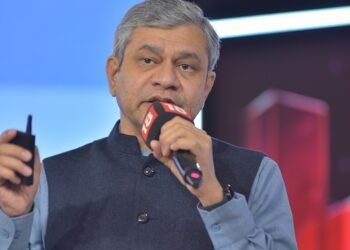
    During his session at News18 India Chaupal, Minister Vaishnav provided a comprehensive overview of the evolving landscape of the Railways and Telecom sector. He emphasized the changing face of these sectors, showcasing a progressive transformation. Expressing confidence, Vaishnav said, “The promise of Prime Minister Modis hat-trick victory would be fulfilled in the upcoming elections.”


    During the presentation on the accomplishments under his ministries, Vaishnav highlighted that Prime Minister Narendra Modi has been true to his commitments, delivering on promises made. He shared details about the ongoing initiatives, showcasing the expansion of Ayodhya Railway Stations capacity to accommodate three crore devotees annually. The station exemplifies modern infrastructure while encapsulating the cultural essence of Ayodhya.


    The Union Minister for Railways, a former IAS officer, provided insights into the swift progress of the Bullet Train project. Vaishnav announced that the work on the Bullet Train, including a groundbreaking 21-km undersea tunnel, is underway. He emphasized the significant increase in the Indian railway budget for 2024-25, reaching Rs. 2,52,000 crore compared to Rs. 15,674 crore during 2004-14. India is now the second-largest electrified network globally.


    Vaishnav highlighted the ongoing transformation of railway stations nationwide, incorporating modern facilities that reflect the cultural ethos of their respective regions. He underscored the design excellence of Vande Bharat Sleeper, featuring world-class interiors. The discussion also delved into the rapid development of digital infrastructure in India, with the imminent rollout of 5G. Vaishnav shared that over 4,15,000 towers have been installed to support this digital revolution.


    In a significant development, Vaishnav emphasized Indias foray into semiconductor production, with the country now set to export Made-in-India chips. He highlighted the remarkable achievement of commencing semiconductor production within 90 days, showcasing Indias prowess in the global technology landscape.


    As the political and intellectual luminaries convened, the event witnessed an illustrious conclave that could potentially shape Indias trajectory towards development. Prime Minister Narendra Modis vision of a developed India by 2047 became the focal point, aligning with the nations aspiration to become the third-largest economy by 2030 and overshadowing the US GDP by 2060.


    News18 India Chaupal strategically unfolded as India, the fastest-growing economy, showcased its prowess on the world stage. Prime Minister Narendra Modis vision to join the league of developed nations by 2047 echoed through the summit. Projections envision India as the third-largest economy by 2030, poised to surpass the US GDP by 2060.


    As the summit unfolded, it became a platform for thought leaders to deliberate on critical themes and topics, setting the stage for the 2024 general elections. News18 India Chaupal engaged forward-looking speakers, discussing a progressing, growing country, and exploring how the abundant energy in the nation can be channeled to drive development, growth, and prosperity.


    In essence, News18 India Chaupal emerged not just as an event but as a amalgamation of ideas, a convergence of intellect and insight that could potentially chart the course for Indias evolution into a developed nation by 2047. The summits strategic timing ahead of the elections added layers of significance, making it a catalyst for shaping Indias future.

  • AAP Leader Arrested Amidst Money Laundering Probe

    AAP Leader Arrested Amidst Money Laundering Probe

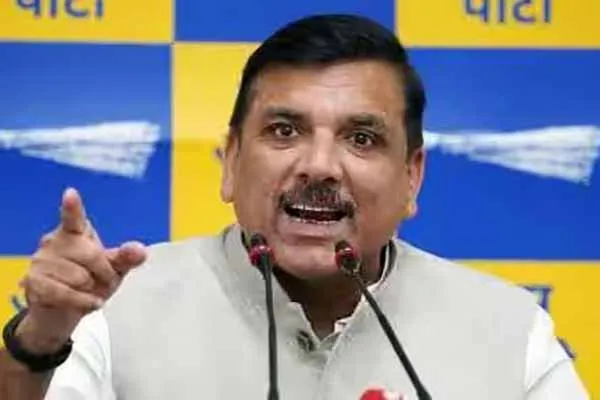
    In a significant turn of events, Aam Aadmi Party (AAP) leader Sanjay Singh was arrested on Wednesday following Enforcement Directorate (ED) raids on his residence. The raids were conducted as part of a money laundering investigation related to the Delhi Excise Policy 2021-2022, which was never implemented.


    The ED’s probe into the matter is connected to restaurateur Dinesh Arora, who had turned approver for the Central Bureau of Investigation (CBI) in the Delhi Excise Policy Scam case. A Delhi Court had granted approval for Dinesh Arora and Raghav Magunta Reddy, the son of a YSR Congress Party MP, to become approvers in the money laundering case being investigated by the ED.


    ED alleges that AAP MP Sanjay Singh had close ties to Dinesh Arora and had introduced him to former deputy chief minister Manish Sisodia.


    The timing of the arrests, occurring shortly after Arora and Reddy became approvers, has raised suspicions within the AAP. Party leaders have accused authorities of exerting “undue pressure” on businessmen to push them towards becoming approvers to protect themselves.


    However, the arrest of Sanjay Singh carries significant political implications, given the upcoming assembly elections and the 2024 Lok Sabha Elections. AAP is a part of the Opposition INDIA bloc, which aims to challenge the Bhartiya Janata Party (BJP)-led National Democratic Alliance (NDA) in their bid for a third consecutive term in office.


    Sanjay Singh has been a vocal member of the Rajya Sabha from AAP between 2018 and 2022. He played a crucial role in the anti-corruption movement led by Anna Hazare in Delhi in 2011 and has remained a prominent figure within AAP since its inception in 2012.


    Sanjay Singh is viewed as AAP’s link to other Opposition parties, making his arrest a significant development. A weakened AAP, with many of its leaders facing legal issues, could impact the effectiveness of the INDIA bloc’s “Mission 2024.”


    Sanjay Singh holds key positions within AAP, serving as a member of the party’s political affairs committee and the national executive. He also acts as the national spokesperson and oversees party affairs in Uttar Pradesh and Bihar.


    AAP has responded to Sanjay Singh’s arrest by suggesting that it reflects the BJP’s frustration as they face challenges from the INDIA bloc. This arrest carries particular weight as it unfolds ahead of crucial assembly elections and the 2024 Lok Sabha Elections, adding further uncertainty to the political landscape in India.

  • JD(S) Unanimously Continues Alliance with BJP for Lok Sabha

    JD(S) Unanimously Continues Alliance with BJP for Lok Sabha

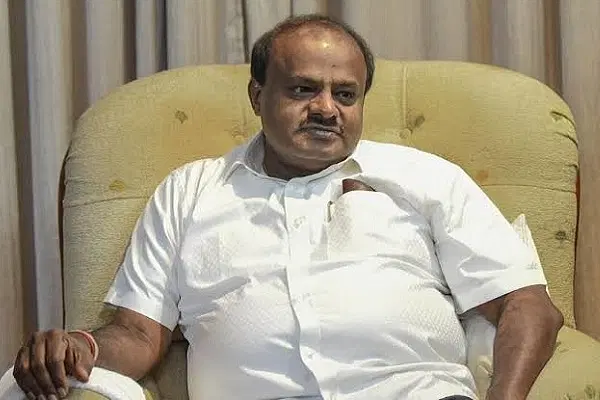
    In a significant development, the Janata Dal (Secular) or JD(S) leader and former Chief Minister of Karnataka, HD Kumaraswamy, declared on Sunday that the party members have collectively voted to continue their alliance with the Bharatiya Janata Party (BJP) for the upcoming 2024 Lok Sabha Elections.


    Kumaraswamy made the announcement, stating, “In today’s meeting, our senior party leaders unanimously have given an endorsement to continue the alliance between BJP and JD(S)… There is no difference in our party… All MLAs were present here.”


    This decision comes amidst reports of growing discontent among JD(S) party workers over the party’s participation in the BJP-led National Democratic Alliance (NDA) for the 2024 Lok Sabha Polls.


    JD(S) state president C M Ibrahim had previously mentioned that he would decide on the future course of action after meeting like-minded individuals on October 16. Notably, several prominent leaders, including NCP chief Sharad Pawar and Bihar Chief Minister Nitish Kumar, had communicated with him regarding the alliance.


    The dissent within the party ranks became evident when Karnataka’s Janata Dal (Secular) Vice President, Syed Shafiulla Saheb, resigned from the party. In his resignation, he highlighted the ideological differences between JD(S) and BJP, stating, “I have resigned from the Janata Dal (Secular) party following its decision to form an alliance with the BJP. The ideology of the JD(S) and BJP, which is based on Hindutva, are different.”


    Additional leaders, including M Srikanth and UT Ayesha Farzana, also resigned from the party, indicating discontent among several Muslim functionaries within the JD(S).


    However, JD(S) patriarch HD Deve Gowda dismissed allegations of unhappy workers quitting the party due to the BJP tie-up and accused the ruling Congress party in Karnataka of spreading false propaganda. He clarified that the decision to align with the Bharatiya Janata Party for the forthcoming Lok Sabha elections was made following consultations with his party colleagues.


    Deve Gowda remarked, “Before joining BJP, I took the views of our 19 MLAs and 8 MLCs who said that JD(S) should consider entering into an understanding with BJP.”


    It is worth noting that in the 2019 Lok Sabha polls, JD(S) had formed an alliance with the Congress, but both parties suffered a significant defeat as the BJP secured 25 out of the 28 seats in Karnataka. Even an independent candidate backed by the BJP won in the Mandya constituency, a traditional JD(S) stronghold.


    The JD(S) has a history of forming alliances with both the BJP and the Congress in Karnataka. Despite winning 19 seats in the recent Karnataka Assembly elections held in May, it marked the party’s worst performance in its history. Significantly, the JD(S) was not invited to either the NDA meeting in Delhi or the meeting of the Opposition-INDIA bloc in Bengaluru in July, indicating a complex political landscape in the state.

  • AIADMK Ends Alliance with BJP Over Chief Ministerial Candidate

    AIADMK Ends Alliance with BJP Over Chief Ministerial Candidate

    The All India Dravida Munnetra Kazhagam (AIADMK) has officially severed its alliance with the Bharatiya Janata Party (BJP) in Tamil Nadu, citing multiple reasons, including a dispute over the projection of K Annamalai as the chief ministerial candidate for the 2026 Assembly elections. A senior AIADMK leader, KC Karuppannan, provided insight into the reasons behind the dissolution of the alliance.


    Dispute Over Chief Ministerial Candidate:

    One of the primary factors leading to the dissolution of the AIADMK-BJP alliance was the BJP’s insistence on projecting K Annamalai, the state unit chief of the Tamil Nadu BJP, as the chief ministerial candidate for the 2026 Assembly polls. AIADMK leader KC Karuppannan revealed this information during a party event in Erode. The AIADMK was reportedly not in favor of accepting this proposal, which contributed to the breakdown of the alliance.


    Criticism of J Jayalalithaa:

    Another significant factor contributing to the rift between the two parties was K Annamalai’s criticism of the late AIADMK matriarch, J Jayalalithaa. The AIADMK found it unacceptable for a member of their alliance to criticize their revered leader, further straining the relationship between the two parties.


    Impact on Electoral Strategies:

    AIADMK’s decision to end the alliance with the BJP comes in the backdrop of upcoming elections. KP Munusamy, another AIADMK senior functionary, announced that party chief Edappadi Palaniswami would lead a separate alliance comprising smaller state parties in the 2024 Lok Sabha elections. Munusamy also rejected allegations made by the ruling DMK party that the AIADMK would patch up with the BJP ahead of the 2024 polls.


    Denial of Calls for Annamalai’s Removal:

    Contrary to reports that suggested AIADMK leadership had called for the removal of K Annamalai as the state unit chief of the BJP during a meeting with BJP president JP Nadda, AIADMK leader Munusamy denied such claims. He stated that it would be “childish” for a party as large as AIADMK to seek the removal of the state president of another party.


    Impact on AIADMK’s Voter Base:

    AIADMK’s decision to exit the National Democratic Alliance (NDA), as announced on September 25, was met with enthusiasm by the party’s supporters. Many within the AIADMK believed that the party was losing its grip on Dravidian and minority community voters due to its association with the BJP. The political landscape in Tamil Nadu is expected to undergo significant changes as parties reconfigure their alliances and strategies ahead of the upcoming elections.

  • Asaduddin Owaisi Accuses INDIA Bloc of Discrimination

    Asaduddin Owaisi Accuses INDIA Bloc of Discrimination

    In a scathing revelation, All India Majlis-E-Ittehadul Muslimeen (AIMIM) MP Asaduddin Owaisi has accused the Indian National Developmental Inclusive Alliance (INDIA) Bloc of indulging in bigotry by denying him a ticket for the upcoming 2024 Lok Sabha Elections. Owaisi alleged that the INDIA Bloc refused to provide him with a ticket, citing concerns that they would lose Hindu votes.


    Speaking at a conference in Delhi, the AIMIM chief explained his party’s decision to abstain from joining the INDIA coalition aimed at opposing the Bhartiya Janata Party (BJP)-led National Democratic Alliance (NDA) in the upcoming elections. He expressed his disinterest in the alliance, stating that it would be suffocating for him. Owaisi also questioned why the INDIA Bloc was not actively opposing the BJP based on their ideology.


    Asaduddin Owaisi asserted, “I am saying this openly, they say this behind closed walls.” He emphasized that his orientation advocates for Muslim participation in elections and encouraged Muslims not to refrain from contesting elections due to the fear of defeat. He stressed that standing up in elections is essential, even if one faces initial losses, as it is crucial for eventual success.


    Owaisi also delved into the political landscape in India, pointing out that sectarian politics against Muslims has been ongoing since 1950, insinuating that the Congress had a role in marginalizing Muslim politicians.


    Regarding Rahul Gandhi’s victory in Wayanad, Owaisi remarked, “Rahul Gandhi lost in Amethi but won in Wayanad. Asaduddin Owaisi did not contest elections there. I did not have any deal with the BJP there. He won from Wayanad because there is the Muslim League there. Muslim League saved him from drowning.”


    Earlier this year, Rahul Gandhi had defended the Congress’s alliance with the Muslim League in Kerala, describing it as a secular party. This statement garnered criticism from the BJP, which accused him of calling a religious party secular. The controversy resulted in a debate over the distinction between the Indian Union Muslim League (IUML) and Mohammad Ali Jinnah’s Muslim League.


    As Owaisi makes these allegations and the political landscape evolves, the upcoming Lok Sabha Elections in 2024 are expected to be closely watched for shifts in alliances and voter dynamics.

  • AIADMK Snaps Ties with BJP

    AIADMK Snaps Ties with BJP

    The AIADMK, a Dravidian party in Tamil Nadu, has announced the snapping of ties with the Bhartiya Janata Party (BJP), signaling the end of a political alliance between the two parties. This decision comes after a series of controversial remarks made by a senior BJP leader in Tamil Nadu, which led to tensions and disagreements between the AIADMK and the BJP.


    The rift began when Tamil Nadu BJP leader K Annamalai made comments about former Chief Minister J. Jayalalithaa and the late Chief Minister CN Annadurai, both of whom are revered figures in Tamil Nadu’s political history. Annamalai’s remarks were seen as disrespectful by AIADMK leaders and supporters.


    The specific comments that sparked controversy include:


    1. Comments on Jayalalithaa: Annamalai stated in an interview that “many administrations of Tamil Nadu were corrupt with former chief ministers convicted in courts of law.” This comment was perceived as an affront to Jayalalithaa’s legacy, and the AIADMK passed a condemnation resolution against Annamalai for his remark.


    2. Comments on Annadurai: During a demonstration against the participation of the Hindu Religious and Charitable Endowments Minister P K Sekar Babu in a conference, Annamalai made a comment related to Annadurai. He defended his statement, claiming that he was protecting Sanatan Dharma and Tamil culture.


    The AIADMK took offense to these remarks and expressed its strong objection. Senior AIADMK leader D Jayakumar emphasized that the party would not tolerate any insult to its leaders, particularly figures like Annadurai. He argued that the AIADMK could not continue its alliance with the BJP in the face of such criticism.


    In response, Jayakumar declared that the alliance between the AIADMK and the BJP no longer existed, stating, “As far as the alliance is concerned, it is not there. BJP is not with AIADMK. (The matter) can be decided only during the election. This is our stand.”


    Furthermore, Jayakumar criticized Annamalai’s leadership and suggested that the BJP would fare poorly in Tamil Nadu without the AIADMK’s support.


    The strained relationship between the AIADMK and the BJP in Tamil Nadu raises questions about the BJP’s electoral prospects in the state, especially in the upcoming 2024 Lok Sabha Elections. Tamil Nadu has a unique political landscape with a strong presence of Dravidian parties, and alliances play a crucial role in electoral success. The BJP’s ambitions in Tamil Nadu may face challenges if it cannot secure a strong alliance or maintain positive relations with regional parties.


    Overall, the AIADMK’s decision to cut ties with the BJP reflects the complexities of coalition politics in Tamil Nadu and the significance of maintaining the respect and legacy of prominent Dravidian leaders in the state. The outcome of this development will likely be closely watched as political dynamics evolve in the run-up to the 2024 Lok Sabha Elections.

  • Cracks Emerge in INDIA Coalition Ahead

    Cracks Emerge in INDIA Coalition Ahead

    The Indian National Developmental Inclusive Alliance (INDIA), a coalition of opposition parties formed with the goal of contesting the 2024 Lok Sabha Elections, is facing early challenges as reports of fissures within the coalition emerge.


    INDIA’s ‘Mission 2024’ aims to present a united front against the Bhartiya Janata Party (BJP)-led National Democratic Alliance (NDA) in the upcoming elections. However, the coalition has encountered internal differences even in its early stages.


    Recent media reports indicate that the Communist Party of India (Marxist) (CPI(M)) has chosen to distance itself from the INDIA coalition. The CPI(M) has cited difficulties in asking the ruling Left front to refrain from contesting seats currently held by the Congress, particularly in Kerala’s legislative assembly. This hints at the complexities arising from the Left Democratic Front (LDF) and United Democratic Front (UDF) arrangement in Kerala.


    In West Bengal, where the CPI(M) has a history of governing the state for a record thirty-four years, it has consistently maintained a distance from collaborating with either the Trinamool Congress (TMC) led by Mamata Banerjee or the Bharatiya Janata Party (BJP).


    Furthermore, concerns have been raised about the “as far as possible” clause in the INDIA coalition’s resolution to contest elections together. The resolution has triggered speculations about the coalition’s unity, particularly in state legislative assembly elections.


    The CPI(M) has also expressed reservations about the organizational structure of the INDIA bloc. While decisions are intended to be made by the leaders of constituent parties, the CPI(M) has called for organizational structures that do not impede these decisions.


    Another challenge facing the INDIA coalition is the rivalry between the Congress party and the Aam Aadmi Party (AAP). Maintaining a cordial relationship between these two parties is essential for the success of the coalition ahead of the 2024 Lok Sabha Elections.


    The emergence of fissures within the INDIA coalition highlights the complex dynamics of Indian politics, where regional rivalries, historical animosities, and differing organizational structures can strain the unity of opposition parties. Whether the coalition can navigate these challenges and present a formidable challenge to the ruling BJP-led NDA in the upcoming elections remains to be seen. The 2024 Lok Sabha Elections will serve as a crucial test for the coalition’s viability and effectiveness on the national stage.

  • Nitish Kumar Declines Convener Role in Opposition Coalition

    Nitish Kumar Declines Convener Role in Opposition Coalition

    Bihar Chief Minister Nitish Kumar has reaffirmed his commitment to opposition unity and clarified that he has no personal ambitions for any specific role within the coalition. Speaking about his approach to the opposition coalition INDIA, Kumar emphasized that his efforts are solely aimed at uniting political parties ahead of the 2024 Lok Sabha elections.


    Kumar expressed his desire for someone else to take on the role of convener for the opposition coalition. He stated, “I don’t want to become anything. I have no desire for myself…I have no personal ambitions… Somebody else could be given the responsibility (Convener post). My only wish is to unite the maximum number of parties (opposed to BJP) before the 2024 Lok Sabha polls.”


    He further emphasized that his focus is on the unity of opposition parties and working towards their collective goal rather than seeking any personal position or recognition.


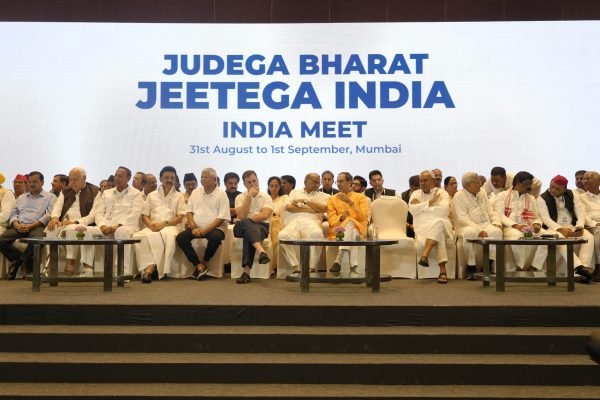
    The Bihar Chief Minister Nitish Kumar highlighted his dedication to opposition unity by mentioning his plans to attend the INDIA alliance meeting scheduled in Mumbai on August 31 and September 1. During this meeting, strategies for the 2024 Lok Sabha elections and other important issues, including seat sharing, are expected to be discussed. Kumar also hinted at the expansion of the alliance with the addition of more regional parties.


    Regarding comments made by Bihar BJP president Samrat Chaudhary about India’s independence, Kumar brushed aside such remarks, stating that he does not pay attention to what BJP leaders say.


    The INDIA alliance meeting in Mumbai is also expected to unveil the coalition’s logo. Nitish Kumar’s efforts to bring together various opposition parties reflect his commitment to creating a united front against the ruling party in the upcoming elections.