Category: SCIENCE

  • India’s Chandrayaan 3 has successfully soft landed on the Moon

    India’s Chandrayaan 3 has successfully soft landed on the Moon

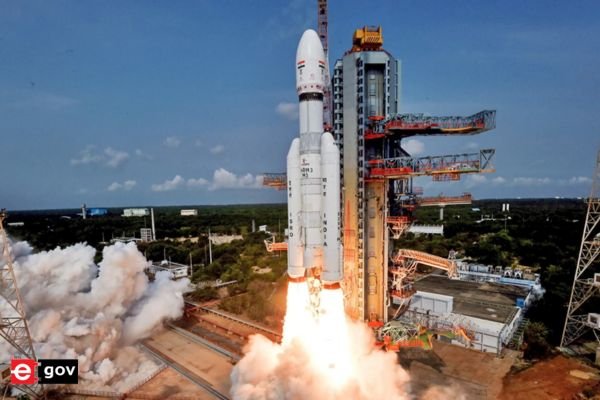
    Chandrayaan 3, India’s third lunar mission, successfully landed on the Moon on August 23, 2023. Vikram’s landing is a major achievement for India, which became the fourth country to successfully land a spacecraft on the Moon, and the first country to land on the South Pole of the Moon. The mission is also a major boost for India’s space program, which is rapidly becoming one of the world’s leading space powers.


    Vikram is carrying a number of scientific instruments, including a spectrometer to study the Moon’s surface, a camera to take images of the Moon’s surface, and a magnetometer to study the Moon’s magnetic field. The mission is expected to collect valuable data about the Moon’s history and geology. The successful landing of Chandrayaan 3 is a major milestone for India  It is a testament to the hard work and dedication of the Indian space program, and it marks a new era of exploration for India.


    The South Pole of the Moon is a very cold and dry place. It is also the most geologically active region of the Moon. The landing of Vikram with Pragyan rover is a major achievement for India’s space program and will help scientists to learn more about this mysterious region of the Moon.


    The Chandrayaan 3 mission is a major achievement for India and for the global space community. It puts India in the ranks of only a handful of countries that have successfully landed on the Moon. It is a testament to the hard work and dedication of the Indian space program, and it marks a new era of exploration for India.


    The landing of Vikram is also a major boost for India’s economy. The space program is a major source of employment and revenue for the country. The landing of Vikram is a proud moment for India. It is a sign of the country’s growing technological prowess and its ambition to explore space.
  • Chandrayaan-3: Following Nehru’s Vision

    Chandrayaan-3: Following Nehru’s Vision

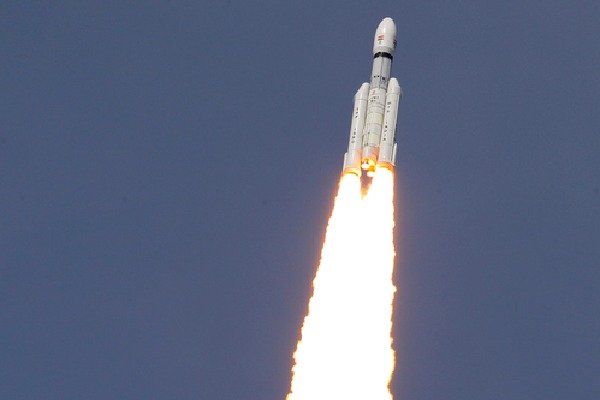
    Chandrayaan-3, India’s ambitious lunar mission, is poised to make history by achieving a successful landing on the unexplored southern region of the Moon. The significance of this feat is not only a testament to India’s advancements in space research but also a tribute to the visionary foundation laid by India’s first prime minister, Jawaharlal Nehru’s thinking. The mission is scheduled to achieve this pivotal moment on August 23 at 6:04 PM.

    The Indian Space Research Organisation (ISRO), responsible for Chandrayaan-3, was established under Nehru’s leadership in 1962, initially known as the Indian National Committee for Space Research (INCOSPAR). This legacy reflects Nehru’s forward-thinking vision and his commitment to fostering scientific exploration.

    India is on the brink of becoming the fourth nation to successfully achieve a lunar landing, following the United States, Russia, and China. What sets India’s mission apart is its unique aspiration to land on the lunar south pole, a region that no other country has ventured into. The Chandrayaan-3’s Lander Module, consisting of the Vikram lander and the Pragyan rover, is set to softly touch down near the Moon’s southern pole.

    Chhattisgarh Chief Minister Bhupesh Baghel lauded this achievement as a monumental triumph for the nation, acknowledging the unwavering dedication of Indian scientists. He emphasized how Nehru’s visionary foundation is resonating globally today. He extended his best wishes to the scientific community, highlighting the pride and anticipation surrounding this mission.

    Launched on July 14, 2023, under the guidance of ISRO, the Chandrayaan-3 mission has galvanized the nation with a sense of excitement and unity. The collective enthusiasm reflects the hopes and aspirations pinned on the success of this mission.

    For those eager to witness this historic event, the Chandrayaan-3 landing will be broadcast live on Doordarshan TV, ISRO’s official website, and various social media platforms. The event is a testament to India’s progress in space exploration and its commitment to pushing the boundaries of scientific discovery. You can also watch it here-


  • Chandraayan Mission: ISRO Establishes Two-Way Communication

    Chandraayan Mission: ISRO Establishes Two-Way Communication

    The Indian Space Research Organisation (ISRO) achieved a significant milestone on Monday as it successfully established a two-way communication link between the Chandrayaan-2 orbiter and the Chandrayaan-3 lander module. In a social media post on ‘X’, ISRO announced the achievement with the message, “‘Welcome, buddy!’ Ch-2 orbiter formally welcomed Ch-3 LM. Two-way communication between the two is established. MOX has now more routes to reach the LM.”


    Chandrayaan-2, ISRO’s previous lunar mission, was launched in 2019. Although the lander’s soft landing attempt on the Moon’s surface failed, the orbiter continued to orbit the Moon successfully. Now, this orbiter has established a crucial connection with the Chandrayaan-3 lander module, named Vikram, which carries a rover.


    The significance of this communication connection lies in the enhancement of communication routes for the upcoming Chandrayaan-3 mission. With the orbiter’s established connection, the lander module is now connected to the ISRO headquarters through multiple channels, ensuring better communication and coordination during the mission.


    The Mission Operations Complex (MOX) at ISRO Telemetry, Tracking, and Command Network (ISTRAC) in Bengaluru played a vital role in establishing these communication links. The precise launch and orbital maneuvers of Chandrayaan-2 have extended the orbiter’s mission life to seven years.


    ISRO has also provided details about the anticipated landing of the Chandrayaan-3 lander module. According to the space agency, the lander is expected to touch down on the Moon’s surface around 6.04 pm on August 23. The live telecast of the landing event will commence at 5.20 pm and will be available on various platforms including the ISRO website, YouTube channel, Facebook, and DD National TV.


    The Chandrayaan-3 mission marks a significant step in India’s lunar exploration journey. The lander module, Vikram, is tasked with landing on the Moon’s south pole, a challenging terrain. Once landed, Vikram will deploy various payloads to conduct scientific experiments and studies. These payloads include instruments to measure temperature, thermal conductivity, seismic activity, plasma density, and more.


    The successful establishment of communication between the Chandrayaan-2 orbiter and the Chandrayaan-3 lander brings ISRO closer to achieving its lunar exploration objectives and contributes to the advancement of India’s space exploration endeavors.

  • Chandrayaan-3’s ‘Vikram’ Lander Successfully Separates

    Chandrayaan-3’s ‘Vikram’ Lander Successfully Separates

    The Indian Space Research Organization (ISRO) achieved a major milestone in its Chandrayaan-3 mission as the ‘Vikram’ lander module successfully separated from the propulsion module. The Vikram lander, along with the rover Pragyan, had been journeying together for the past month from India’s Sriharikota to the Moon’s orbit. This separation signifies a critical step towards the spacecraft’s goal of achieving a soft landing on the Moon’s south pole.


    ISRO shared the exciting news on X (formerly Twitter), stating, “Thanks for the ride, mate!” The Lander Module (LM) has been successfully separated from the Propulsion Module (PM). The next phase involves the LM descending to a slightly lower orbit through a planned deboosting maneuver scheduled for tomorrow around 1600 Hrs., IST.”


    The upcoming soft landing on the Moon’s south pole is slated for 5:47 pm on Wednesday, marking a historic moment for India’s space exploration endeavors. If successful, Chandrayaan-3 will make India the fourth country in the world, after the United States, China, and the former Soviet Union, to achieve a soft landing on the lunar surface.


    The lunar south pole has drawn global interest due to its challenging terrain and potential scientific significance. The area is believed to contain substantial ice deposits, which could be invaluable for extracting resources like fuel, oxygen, and drinking water. While the rough lunar landscape poses difficulties for landing, reaching the south pole is particularly sought after for its potential resources.


    As India strives to achieve this milestone, it faces competition from other space-faring nations. Russia’s Luna-25 mission and China’s Chang’e 6-CNSA are both vying to make lunar landings, with China focused on returning samples from the Moon’s south pole to advance its ongoing lunar exploration efforts.


    The Chandrayaan-3 mission represents a significant undertaking by ISRO to demonstrate safe and successful lunar soft landing capabilities. Its success would not only position India as a key player in space exploration but also mark a remarkable feat in scientific and technological advancement. Soft-landing on the Moon’s south pole holds immense promise for future space endeavors, opening avenues for resource utilization and deeper lunar exploration.


    As the world watches, India’s Chandrayaan-3 mission stands on the cusp of making history by achieving an unprecedented lunar feat, a testament to the country’s growing prowess in space exploration.

  • Chandrayaan-3 Mission Reaches Crucial Milestone

    Chandrayaan-3 Mission Reaches Crucial Milestone

    The Chandrayaan-3 mission has marked a significant achievement as its Lander Module carrying the rover successfully separated from the Propulsion Module. This achievement brings the mission closer to its historic goal of achieving a soft landing on the lunar south pole, scheduled for 5.47 pm on Wednesday, August 23.


    Chandrayaan-3 is a follow-on mission to Chandrayaan-2 and holds the objectives of showcasing safe and soft landing on the lunar surface, rover mobility on the moon, and conducting in-situ scientific experiments.


    The mission carries added significance due to lessons learned from Chandrayaan-2, where ISRO’s lander ‘Vikram’ crashed during a soft landing attempt in 2019. According to ISRO Chairman S Somanath, the most critical aspect of the landing process involves transitioning the velocity of the lander from a horizontal to a vertical direction. This complex maneuver requires careful calculations and simulations to ensure a successful landing.


    Explaining the technical challenge, Somanath highlighted the need to shift the velocity of the lander from its horizontal orientation to a vertical one, which was a crucial point of failure in Chandrayaan-2. The Chandrayaan-3 mission addresses this challenge with improved calculations and simulations to ensure a successful landing.


    Unlike its predecessor, Chandrayaan-3’s Propulsion Module carries a significant payload named SHAPE (Spectro-polarimetry of HAbitable Planet Earth). This experimental payload aims to study Earth from the lunar orbit, analyzing spectro-polarimetric signatures in the near-infrared wavelength range. This addition enhances the scientific objectives of the mission, adding a unique dimension to India’s lunar exploration efforts.


    The successful completion of Chandrayaan-3’s mission would signify a major achievement for India’s space agency, ISRO. If the mission accomplishes a safe and soft landing on the moon’s surface, India will join the ranks of the US, China, and the former Soviet Union as one of the few countries to master the complex technology of lunar surface soft landings.


    The Chandrayaan-3 mission highlights India’s determination to overcome challenges and build upon its space exploration capabilities. It showcases the nation’s commitment to advancing scientific knowledge through space missions and contributing to humanity’s understanding of the lunar environment.

  • NASA’s Push for Nuclear-Powered Rockets

    NASA’s Push for Nuclear-Powered Rockets

    As private companies like SpaceX continue to dominate the space exploration scene, government space agencies like NASA are finding innovative ways to stay relevant and maintain their edge in the field. One such strategy is investing in cutting-edge technologies that may not yield immediate results but could revolutionize space travel in the long run. A prime example is the development of super-fast and maneuverable nuclear-powered rocket engines.


    In collaboration with the US Department of Defense, NASA has allocated nearly $500 million to Lockheed Martin to construct and test a nuclear-powered rocket engine by 2027. This initiative holds significant importance for both NASA’s space exploration goals and the US’s position in outer-space warfare.


    For decades, rockets have relied on conventional propulsion systems that use stored fuel to create thrust. However, the limitations of this approach have become increasingly apparent. Notably, missions requiring extensive fuel for activities like maneuvering and extended space travel have faced challenges due to the lack of refueling options in space. A more efficient alternative is needed to overcome these hurdles.


    Nuclear thermal propulsion (NTP) offers a solution. The concept involves using a small nuclear reactor to heat a propellant, such as liquid hydrogen, to higher temperatures than chemical rockets can achieve. This results in higher efficiency and faster acceleration, as nuclear engines can operate continuously for extended periods, unlike their chemical counterparts.

    While NTP research was active in the 1950s, safety concerns and political pressures led to its discontinuation in the 1970s. However, recent advancements in materials science and computing power have reignited interest in this technology. For NASA, the potential benefits are significant. A nuclear-powered rocket could reduce travel time to Mars from several months to just 45 days, revolutionizing future human missions.


    In addition to space exploration, the military also stands to gain from NTP. With China and Russia rapidly advancing their space technologies, the US’s upper hand in outer-space warfare is at stake. Nuclear-powered engines offer more rapid satellite relocation, providing a strategic advantage in countering anti-satellite weapons and jammers.


    While challenges remain, including untested space deployment and environmental safety concerns, the current state of technology and materials science makes building a nuclear-powered rocket more feasible than ever before. The collaboration between NASA and the Defense Department could potentially reshape the future of space travel and warfare, ensuring that the US maintains its leadership in this new era of space exploration and competition.

  • Rare Zero Shadow Day Phenomenon to Grace Bengaluru

    Rare Zero Shadow Day Phenomenon to Grace Bengaluru

    Zero Shadow Day, a rare celestial phenomenon, is set to grace Bengaluru on August 18, offering a unique experience for students and astrophiles in the region. This phenomenon occurs twice a year for individuals and objects located between the Tropic of Cancer and the Tropic of Capricorn (23.5 and -23.5 degrees latitude).


    On Zero Shadow Days, people erect vertical poles and various objects to witness this cosmic event, where the sun’s position leads to a momentary absence of shadows. Astrophysicist Debiprosad Duari explained that visible light typically produces shadows unless it falls exactly above the object. During these special days, the Sun’s declination is equal to the latitude of the observers, causing the sun to be directly overhead at noon. This alignment results in shadows disappearing for a brief period.


    The Astronomical Society of India elaborates that individuals residing between +23.5 and -23.5 degrees latitude experience this phenomenon, as the Sun’s declination matches their latitude twice annually. This unique occurrence is due to the Earth’s axial tilt and the way sunlight interacts with objects during specific solar alignments.


    Previously, Bengaluru experienced Zero Shadow Day on April 18 this year, when all vertical objects momentarily lost their shadows at 12.17 pm. Hyderabad also witnessed this phenomenon on August 3 at 12:23 pm and on May 9 this year. The phenomenon provides a captivating glimpse into the cosmic interactions that shape our daily experiences on Earth.

  • Most distant star Earendel detected, using the James Webb Space Telescope

    Most distant star Earendel detected, using the James Webb Space Telescope

    Earendel is the most distant star ever detected, and it was discovered by astronomers using the James Webb Space Telescope (JWST). The star is so distant that the light we see from it was emitted about 13.4 billion years ago, just a few hundred million years after the Big Bang. This means that Earendel is one of the first stars to form in the universe.


    Earendel is located in the Sunrise Arc galaxy, which is about 13.4 billion light-years away. The star was only visible because of a natural phenomenon called gravitational lensing. Gravitational lensing occurs when a massive object, such as a galaxy cluster, bends the light from more distant objects. In the case of Earendel, the galaxy cluster WHL0137-08 bent the light from the star, making it appear much brighter and closer than it actually is.


    The star’s name derives from Old English words that mean “morning star” or “rising light.” The Hubble Space Telescope first spotted Earendel in 2022. Webb’s observations have revealed new insights about the incredibly distant star. Earendel is a massive B-type star about 1 million times more luminous than our sun and more than twice as hot.


    The JWST’s NIRCam (Near-Infrared Camera) instrument was able to detect Earendel because it is sensitive to infrared light. Infrared light can penetrate through dust and gas, which makes it possible to see objects that would otherwise be invisible in visible light.


    Astronomers continue to analyze the data from Webb’s observation to determine the precise distance of the Sunrise Arc galaxy. Earendel is so distant that the starlight glimpsed by the Webb telescope was emitted within the first billion years of the universe. Previous estimates suggest the star is 12.9 billion light-years away from Earth, but given the expansion of the universe and how long the light has traveled to reach us, astronomers believe Earendel is currently 28 billion light-years away.


    The discovery of Earendel is a major breakthrough in astronomy. It is the first time that astronomers have been able to see a star from the very early universe. Earendel’s discovery is helping astronomers to better understand how the first stars formed and evolved. It is also helping them to better understand the history of the universe.


    The JWST is still in its early stages of operation, but it has already made some amazing discoveries. Earendel is just one of many exciting discoveries that the JWST is sure to make in the years to come. Studying extremely distant stars and galaxies that originated closer to the big bang can fill in gaps astronomers have about the early days of the universe and provide a glimpse of what our Milky Way galaxy might have looked like billions of years ago.

  • India Deploys MiG-29 Fighter Jets in Srinagar

    India Deploys MiG-29 Fighter Jets in Srinagar

    In a proactive measure to bolster its defense capabilities, India has initiated the deployment of MiG-29 fighter aircraft in Srinagar, effectively replacing the existing MiG-21 squadron at the air base. The decision aims to fortify the nation’s security apparatus by addressing potential threats from both the Pakistani and Chinese borders. The ‘Tridents’ squadron, renowned as the ‘Defender of the North,’ assumes the mantle of safeguarding India’s northern borders from the strategically located Srinagar air base.


    News agency ANI reported that the MiG-29 were relocated to the Srinagar air base in January this year. Since then, they have been actively patrolling the skies over the Kashmir valley and the Ladakh sector. Notably, these fighter jets play a pivotal role in being among the first responders to any airspace violation attempts from the Chinese side. This initiative follows the deployment of the MiG-29s to the Ladakh sector after the Galwan clash in 2020, where they successfully thwarted multiple threats.


    Speaking to ANI, Squadron Leader Vipul Sharma of the Indian Air Force highlighted the strategic reasoning behind the choice of the MiG-29s for the Srinagar air base. He explained, “Srinagar lies in the center of the Kashmir valley, and its elevation is higher than plains. It is strategically better to place an aircraft with a higher weight-to-thrust ratio and less response time due to proximity to the border and equipped with better avionics and long-range missiles.” He added that the MiG-29 fulfills these criteria, rendering the Indian Air Force capable of responding effectively to threats from both fronts.


    Squadron Leader Shivam Rana added insights into the advanced capabilities of the upgraded MiG-29s. These aircraft are equipped to operate at night with the assistance of night vision goggles and boast an extended operational range through air-to-air refueling capabilities. Additionally, the aircraft have been equipped with air-to-ground armaments, enhancing their versatility.


    Comparatively, the MiG-29s possess numerous advantages over their predecessor, the MiG-21s. The former has been outfitted with very long-range air-to-air missiles and upgraded air-to-ground weaponry. Furthermore, the MiG-29’s enhanced capabilities stem from a combination of advanced weaponry, night operational capabilities, and extended range due to air-to-air refueling capacity.


    The deployment of MiG-29s comes amid a context of upgrades and modernization in India’s defense forces. The move to replace the aging MiG-21s with MiG-29s signifies the nation’s commitment to enhancing its capabilities in the face of evolving security challenges. As the upgraded MiG-29s take on the role of safeguarding India’s borders, they stand as a testament to India’s dedication to securing its sovereignty and maintaining a strong defense posture.

  • Russia Successfully Launches Lunar Moon Mission

    Russia Successfully Launches Lunar Moon Mission

    Russia has achieved a significant milestone in space exploration by successfully launching its inaugural moon-landing spacecraft after a gap of 47 years. The primary objective of the moon mission is to achieve a gentle landing on the lunar south pole, a region believed to contain valuable reservoirs of water ice.


    The recent lunar mission from Russia is in competition with India, which launched its Chandrayaan-3 lunar lander to space last month. This race is part of a larger global competition involving the United States and China, both of which have well-established lunar exploration initiatives focused on the moon’s southern region.


    The launch of the Luna-25 spacecraft took place from the Vostochny Cosmodrome, located 3,450 miles (5,550 km) east of Moscow. A Soyuz 2.1v rocket was used for the successful launch, which occurred at 2:11 a.m. Moscow time on Friday (1111 GMT on Thursday).


    According to Yuri Borisov, the head of Russia’s space agency Roscosmos, the lunar lander is expected to make contact with the Moon’s surface on August 21, slightly differing from the earlier projected landing date of August 23.


    The Luna-25 spacecraft, about the size of a small car, is designed to operate on the moon’s south pole for approximately one year. This region has gained attention due to the detection of traces of water ice in the shadowed craters by scientists at NASA and other space agencies.


    The success of this lunar moon mission holds significance for Russia, particularly in the context of Western sanctions imposed due to the Ukraine conflict. The mission also showcases Russia’s growing self-reliance in space exploration, a strategy that gained momentum after reduced collaborations with Western nations following the invasion of Ukraine in 2022.


    The moon mission is not only a technological endeavor but also serves as an expression of national power on the global stage for Russia. Historian Asif Siddiqi notes that Russia’s aspirations toward the moon are intertwined with various factors.


    While Neil Armstrong’s moonwalk gained global recognition in 1969, the Soviet Union’s Luna-2 mission in 1959 was the first spacecraft to reach the moon’s surface, and Luna-9 achieved the first soft landing in 1966. With this lunar mission, Russia is redirecting its focus toward lunar exploration after a period of concentrating on Mars and refraining from launching probes beyond Earth’s orbit since the dissolution of the Soviet Union in 1991.


    The Luna-25 spacecraft’s departure from Earth’s orbit was anticipated to occur around 3:30 a.m. Moscow time. This achievement marks a significant step in Russia’s reinvigorated space exploration endeavors.

  • Virgin Galactic: Successful Spaceflight Marks Milestone

    Virgin Galactic: Successful Spaceflight Marks Milestone

    Virgin Galactic achieved a significant milestone in the realm of commercial space tourism as its rocket successfully carried passengers to the edge of space before gliding back to the runway landing at Spaceport America in the New Mexico desert. The successful spaceflight event marked a step forward in realizing the company’s promise of providing commercial space travel experiences.


    The rocket ship portion of the flight, which began with cheers from families and friends of the passengers, lasted around 15 minutes and reached a height of 88 kilometers, giving passengers a taste of the edge of space.


    Among the passengers was 80-year-old former British Olympian Jon Goodwin, who had purchased his ticket back in 2005 for $200,000. Despite being diagnosed with Parkinson’s disease, Goodwin embarked on the journey, hoping to inspire others with health challenges. He stated that his spaceflight sends a message that illnesses shouldn’t hinder one’s pursuit of experiences and dreams.


    Goodwin’s sentiment was echoed by other passengers, such as 46-year-old health trainer Keisha Schahaff and her 18-year-old daughter Anastatia Mayers, who won their seats through a charity drawing. Schahaff, who fulfilled a childhood dream of going to space, described the experience as “awesome” and reflective of her journey.


    The journey of Virgin Galactic to this milestone hasn’t been without its challenges. Founded in 2004, the company initially aimed to start flying passengers to space in 2007, but faced delays. In 2014, a Virgin Galactic spacecraft crashed during a test flight, leading to a suspension of ticket sales. However, in 2018, the company achieved spaceflight for the first time. In 2021, founder Richard Branson himself flew to space on a Virgin Galactic flight.


    After Branson’s flight, Virgin Galactic halted space missions for nearly two years to enhance its vehicle fleet. The company resumed operations in 2022, offering tickets at a price of $450,000. This latest successful spaceflight represents a significant step forward in the evolution of commercial space tourism, providing passengers with the opportunity to venture beyond Earth’s boundaries and experience the wonder of space.