Category: SCIENCE

  • India Selects First Astronauts for Gaganyaan Mission

    India Selects First Astronauts for Gaganyaan Mission

    The Indian Space Research Organisation (ISRO) made a significant announcement on Tuesday, revealing the names of the first four astronauts selected for India’s ambitious human spaceflight programme, Gaganyaan. These astronauts, all of whom are test pilots with the Indian Air Force (IAF), will play a pivotal role in India’s maiden manned space mission, scheduled for launch by the end of next year.


    At an event held at the Vikram Sarabhai Space Centre in Thiruvananthapuram, ISRO’s headquarters, Prime Minister Narendra Modi conferred designatory astronaut-wing badges upon the selected candidates. The astronauts, namely Group Captains Prashanth Balakrishnan Nair, Ajit Krishnan, and Angad Pratap, along with Wing Commander Subhanshu Shukla, were hailed for their dedication and commitment to India’s space exploration endeavors.


    These four astronauts emerged from a pool of 12 candidates who underwent rigorous selection processes and training, including sessions conducted in Russia between 2020 and 2021, followed by simulator training in Bengaluru. Their selection underscores India’s growing prowess in the field of space exploration and highlights the nation’s determination to venture into new frontiers of scientific discovery.


    Prime Minister Modi, in his address at the event, emphasized the transformative impact of India’s achievements in space exploration on the nation’s youth, fostering a culture of scientific inquiry and innovation. He lauded ISRO’s efforts in advancing space technology and expanding the horizons of human knowledge.


    The chosen astronauts bring a wealth of experience and expertise to the Gaganyaan mission. Group Captain Prashanth Balakrishnan Nair, the senior-most among them, is a distinguished aviator with over 3,000 hours of flying experience. Ajit Krishnan, a recipient of the President’s gold medal, and Angad Pratap, both seasoned pilots with thousands of flight hours, embody the spirit of excellence and dedication. Wing Commander Subhanshu Shukla, with his commendable track record, completes the quartet of pioneers poised to make history.


    The Gaganyaan mission represents a significant milestone in India’s space exploration journey. Scheduled to fly to a low-earth orbit aboard a human capsule module, these astronauts will demonstrate India’s indigenous space capabilities and pave the way for future manned missions into deeper space. Their mission holds symbolic importance as they become the first Indian citizens to journey into space since Wing Commander Rakesh Sharma’s historic flight in 1984.


    ISRO’s human spaceflight programme is poised to elevate India’s standing among the world’s leading space-faring nations. By joining the elite club of countries with active human spaceflight programmes, including the US, Russia, and China, India reaffirms its commitment to pushing the boundaries of scientific exploration and technological innovation.


    The selection of pilots for the Gaganyaan mission underscores ISRO’s meticulous planning and stringent standards for astronaut selection. With safety and preparedness as paramount considerations, ISRO is poised to lead India into a new era of space exploration with confidence and determination.


    Furthermore, ISRO’s emphasis on indigenous technology development sets it apart from its global counterparts. Unlike countries that rely on private firms for space missions, ISRO’s approach underscores India’s self-reliance and sovereignty in space exploration.


    As India continues to make strides in space exploration, collaborations with private space startups and industry stakeholders are poised to play a crucial role in advancing the nation’s space capabilities. By fostering a robust ecosystem of innovation and collaboration, India is poised to realize its ambitious vision of becoming a global leader in space exploration and research.


    The selection of astronauts for the Gaganyaan mission marks a historic milestone in India’s space exploration journey. With their expertise, dedication, and pioneering spirit, these astronauts embody India’s quest for excellence and its determination to conquer new frontiers of exploration and discovery in space.

  • February’s Full Moon: Snow Moon, Hunger Moon, and Minimoon

    February’s Full Moon: Snow Moon, Hunger Moon, and Minimoon

    February’s second full moon of 2024 is set to grace the night sky on February 24, presenting skywatchers with a celestial spectacle. Known by various names such as the Snow Moon, Hunger Moon, and Minimoon, this lunar event holds significance in different cultures and has captivated humans for centuries.


    As per NASA’s predictions, the full moon will reach its peak illumination on Saturday morning, February 24, 2024, appearing opposite the Sun at approximately 7:30 am EST. This moment marks the point when the Moon is directly on the opposite side of the Earth from the sun, fully illuminated by its light.


    One of the intriguing aspects of this particular full moon is its designation as a “minimoon” or “micromoon.” This term refers to a full moon that occurs when the Moon is at or near its apogee, the farthest point in its orbit from the Earth. Consequently, the Moon appears slightly smaller in the sky compared to a “supermoon,” which occurs when the full moon coincides with its perigee, the closest point to Earth.


    The nickname “Snow Moon” for February’s full moon has its origins in Native American folklore, particularly among the tribes of the northeastern United States. According to the Maine Farmers’ Almanac, which began publishing “Indian” names for full moons in the 1930s, this moon is called the Snow or Storm Moon due to the heavy snowfall typically experienced during this time of year. In these regions, February often brings harsh winter conditions, and the abundance of snow made hunting challenging, leading to the alternate name, the Hunger Moon.


    In addition to the Snow Moon and Hunger Moon, some cultures also associate other names with February’s full moon. In European folklore, it is sometimes referred to as the Wolf Moon, reflecting the increased howling of wolves amid the winter nights. Another European name for this full moon is the Candles Moon, tied to Candlemas on February 2nd, although this name could also apply to the previous month’s full moon, which was closer to the Candlemas date.


    Despite its various names, the significance of February’s full moon extends beyond cultural traditions. From an astronomical perspective, this full moon offers a fascinating glimpse into lunar dynamics and celestial mechanics. While the Moon orbits the Earth, its path is not perfectly aligned with the Earth’s orbit around the Sun. As a result, the Moon’s orbit is tilted by about five degrees relative to the plane of the Earth’s orbit. This tilt prevents the Moon from passing through Earth’s shadow during most full moons, ensuring that it remains illuminated by the Sun’s light.


    Although February’s full moon will not coincide with a lunar eclipse, as it misses the Earth’s shadow, it still provides an opportunity for skywatchers to marvel at its beauty and observe its subtle variations in size and brightness.


    As enthusiasts eagerly await the arrival of February’s full moon, astronomers and stargazers alike are reminded of the wonder and awe inspired by our closest celestial neighbor. Whether viewed through the lens of cultural mythology or scientific inquiry, the Snow Moon serves as a reminder of the timeless fascination humans have held for the mysteries of the night sky.

  • NASA Spots Super-Earth Orbiting Nearby Star

    NASA Spots Super-Earth Orbiting Nearby Star

    In a significant astronomical discovery, NASA’s Transiting Exoplanet Survey Satellite (TESS) has detected a Super-Earth orbiting a red dwarf star known as TOI-715. This exoplanet, named TOI-715 b, is about 1.5 times the size of Earth and is located approximately 137 light-years away from our solar system.


    The term “Super-Earth” refers to a planet that is larger than Earth but smaller than gas giants like Neptune and Jupiter. TOI-715 b falls within this category, with its size estimated to be between 30% to 70% larger than Earth. This discovery adds to the growing body of knowledge about exoplanets, which are planets located outside our solar system.


    One of the most intriguing aspects of TOI-715 b is its proximity to its host star. The exoplanet completes an orbit around its star in just 19 days, making it a close companion to the red dwarf. Despite its close proximity, scientists believe that TOI-715 b may have conditions suitable for liquid water to exist on its surface. This is due to its position within the habitable zone of its star, where temperatures could allow for the presence of liquid water.


    However, the presence of liquid water alone is not sufficient to determine the habitability of a planet. Other factors, such as the composition of the atmosphere and the planet’s geology, also play crucial roles in shaping its potential for supporting life. Scientists caution that while TOI-715 b is located within the habitable zone, further research is needed to assess its suitability for life as we know it.


    TOI-715 b’s host star, a red dwarf, differs from our Sun in several key ways. Red dwarfs are smaller and cooler than the Sun, and they are the most common type of star in the Milky Way galaxy. Despite their small size, red dwarfs can have planets orbiting closely around them, as is the case with TOI-715 b.


    The discovery of TOI-715 b was made possible through the TESS mission, which is designed to search for exoplanets using the transit method. This method involves detecting the slight dimming of a star’s light when a planet passes in front of it, blocking a small portion of the star’s brightness. By observing these transits, astronomers can infer the presence of orbiting planets and gather information about their size, orbit, and other characteristics.


    While TOI-715 b may appear as a mere dark dot when observed from Earth, its detection represents a significant milestone in our quest to understand the diversity of planetary systems beyond our own. The study detailing the discovery of TOI-715 b was published in the Monthly Notices of the Royal Astronomical Society, providing valuable insights into the nature of exoplanets and their potential for hosting life.


    Looking ahead, scientists are eager to study TOI-715 b in more detail using advanced telescopes like the James Webb Space Telescope (JWST). The JWST, set to launch in the near future, will have the capability to analyze the atmospheres of distant exoplanets, offering valuable insights into their composition and potential habitability.


    The discovery of TOI-715 b highlights the ongoing efforts to explore and understand the vast diversity of exoplanets in our galaxy. With advanced telescopes and innovative detection methods, scientists are making remarkable strides in uncovering the mysteries of distant worlds and expanding our understanding of the universe.

  • Alien Earthworms Threaten North American Ecosystems

    Alien Earthworms Threaten North American Ecosystems

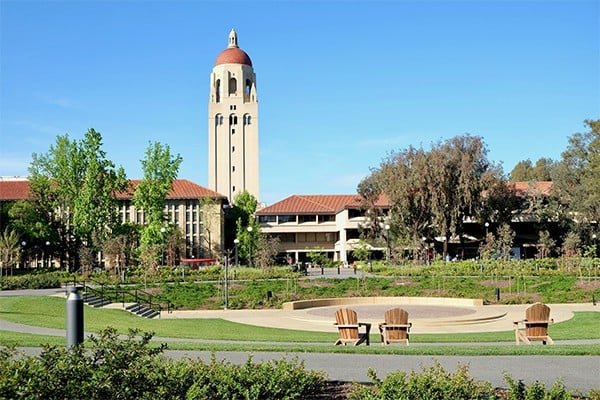
    The proliferation of non-native earthworm species, often referred to as “alien” earthworms, in the United States has emerged as a pressing ecological concern, according to a study conducted by scientists at Stanford University. These invasive earthworms, originating from regions such as Asia, Europe, and South America, have been identified as potential threats to native ecosystems due to their disruptive feeding habits and rapid spread across North America.


    The study, as reported by DailyMail, highlights the presence of approximately 70 different types of alien earthworm species in the US, accounting for 23 percent of the total earthworm species found in North America. These invasive species exhibit a voracious appetite for aboveground leaf litter, which plays a crucial role in ecosystem dynamics. By consuming excessive amounts of leaf litter, these earthworms can disrupt nutrient cycling processes and negatively impact plant communities.


    To understand the origin and spread of these invasive earthworm species, researchers utilized historical records of intercepted alien earthworms at the US border from 1945 to 1975. By employing machine learning techniques, they were able to analyze data from 2000 to 2021, revealing the widespread distribution of invasive earthworms in 97 percent of soil samples across North America.


    One notable example of an invasive earthworm species is the jumping worm, or Amynthas spp., which has been documented causing damage in regions such as Washington, DC. These worms have been implicated in the depletion of essential nutrients from the soil, leading to the decline of plant and tree species in affected areas.


    The introduction and spread of alien earthworms have largely been facilitated by human activities, including the trade of earthworms for various purposes such as fish bait and vermicomposting. Canada, in particular, exports over 500 million alien earthworms annually, contributing significantly to the spread of these invasive species, especially in neighboring countries like the US and Mexico.


    While initially perceived as beneficial for agriculture and gardening due to their role in soil aeration and nutrient cycling, the unchecked proliferation of alien earthworms poses significant ecological risks. These invasive species disrupt native ecosystems, particularly in broadleaf forests, where they can alter soil composition and impact biodiversity.


    Addressing the challenge posed by invasive earthworms requires a multifaceted approach, according to researchers. They emphasize the need for policymakers to reassess regulations surrounding the trade and distribution of alien earthworms. Encouraging the use of native earthworm species for composting and fishing bait could help mitigate the spread of invasive species and reduce their ecological impact.


    However, further research is needed to fully understand the extent of the effects of alien earthworms on native ecosystems. Scientists emphasize the importance of studying the interactions between invasive earthworms and other soil organisms to assess the broader ecological consequences of their presence.


    The proliferation of non-native earthworm species in the United States poses significant ecological challenges, threatening native ecosystems and biodiversity. Addressing this issue requires a coordinated effort involving policymakers, scientists, and the public to mitigate the spread of invasive earthworms and protect native ecosystems for future generations.

  • NASA and Lockheed Martin Unveil X-59 Supersonic Aircraft

    NASA and Lockheed Martin Unveil X-59 Supersonic Aircraft

    In a significant leap toward revolutionizing commercial air travel, NASA and Lockheed Martin have rolled out the X-59 supersonic aircraft, capable of reaching speeds up to 925 miles per hour. The unveiling took place in Palmdale, California, showcasing a 100-foot-long and 30-foot-wide plane designed to address the challenges and limitations that led to the retirement of the Concorde almost two decades ago.


    The Concorde’s Legacy:

    The Concorde, with a top speed of 1,350 miles per hour, retired in 2003 after a history marked by expensive maintenance and a fatal crash in 2000. The supersonic aircraft, which once offered transatlantic flights in just a few hours, faced constraints such as loud sonic booms and regulatory restrictions.


    X-59: A Game-Changing Successor:

    The X-59 supersonic aircraft aims to overcome the shortcomings of its predecessor, introducing advancements in design, shaping, and technologies. Officials highlight its capability to reach speeds of 925 miles per hour while generating less disruptive sonic booms in the communities below. This achievement addresses a longstanding concern as sonic booms are known to cause disturbances, including shattered windows on the ground.


    Redefined Feasibility of Commercial Supersonic Travel:

    Pam Melroy, NASA Deputy Administrator, emphasized the significance of the X-59, stating that it transcends its role as an aircraft and symbolizes the collective ambition to redefine the future of supersonic travel. Melroy sees the breakthrough as redefining the feasibility of commercial supersonic travel over land, envisioning a future where flight times, such as from New York to Los Angeles, are significantly reduced.


    Overcoming Regulatory Barriers:

    Supersonic flights have faced regulatory barriers due to the disruptive sonic booms they create. The United States banned civilian aircraft from reaching speeds exceeding the sound barrier (Mach 1, at 767 miles per hour) over land in 1973. The X-59’s design, with its v-shaped wing and elongated nose, aims to reduce the sonic boom to a subtle thump, potentially paving the way for the relaxation of existing restrictions.


    Lockheed Martin’s Role:

    Lockheed Martin secured a $250 million contract in 2018 to build the X-59 demonstrator plane. The aircraft, powered by General Electric Co.’s F414 engine, features room for one pilot and is designed to achieve 1.5 times the speed of sound. Despite some delays, the project is expected to cost about $632 million over eight years, covering development, testing, and eventual deployment.


    Global Regulatory Landscape:

    NASA has acknowledged that supersonic flights face restrictions globally due to the disruptive nature of sonic booms. However, the advancements showcased in the X-59, coupled with ongoing dialogue with international entities, could potentially influence a reconsideration of supersonic flight regulations in the future.


    The debut of the X-59 supersonic aircraft represents a promising step forward in reshaping the future of commercial air travel. With its potential to mitigate sonic boom disturbances and redefine the feasibility of supersonic flights, the aircraft could usher in a new era of faster and more efficient travel. As NASA and Lockheed Martin continue their efforts to address regulatory challenges and refine the technology, the X-59 stands as a symbol of ambition and innovation in the pursuit of transforming the aviation landscape.

  • US Lunar Lander: Propellant Hampers Mission to the Moon

    US Lunar Lander: Propellant Hampers Mission to the Moon

    The US lunar lander mission, developed by private company Astrobotic Technology, encountered a significant setback as it suffered a critical loss of propellant during its journey to the moon. This lunar mission, intended to be the first by a US spacecraft since Apollo 17 in 1972, faced challenges shortly after liftoff from Cape Canaveral, Florida, on the United Launch Alliance’s Vulcan rocket.


    According to statements from Astrobotic Technology, the setback was attributed to a “failure within the propulsion system.” The company reported that after separating from the booster, the lander faced issues likely caused by a propulsion failure, preventing it from achieving a stable sun-pointing orientation necessary to charge its onboard battery.


    The spacecraft, named Peregrine, was designed to carry scientific experiments, messages from Earth, human remains, and even a piece of Mount Everest to the moon. Additionally, it was expected to make history by landing on the lunar surface on February 23.


    However, shortly after liftoff, the mission encountered complications. The first visual evidence of the issue came from photographs of Peregrine from orbit, revealing a disturbance in the multi-layer insulation (MLI). This indicated a potential problem with the propulsion system.


    Astrobotic Technology acknowledged the challenges but expressed determination in addressing them. The company mentioned that the spacecraft’s battery had been recharged after initially running low and experiencing a communication blackout. The team utilized an improvised maneuver to direct Peregrine’s solar array toward the sun, utilizing the existing power to perform payload and spacecraft operations.


    NASA, the American space agency, responded to the situation by acknowledging the difficulty of space exploration, stating, “Space is hard.” They assured collaboration with Astrobotic to identify the root cause of the propulsion issue and evaluate its impact on the scientific investigations aboard the spacecraft.


    In the latest update, Astrobotic Technology revealed that an ongoing propellant leak was causing the spacecraft’s Attitude Control System (ACS) thrusters to operate beyond their expected service life cycles. These thrusters are crucial for maintaining the spacecraft’s orientation in a stable sun-pointing position.


    The company outlined the challenges and indicated that if the thrusters continued to operate, Peregrine could maintain its sun-pointing position for approximately 40 more hours. The goal is to get the spacecraft as close to lunar distance as possible before it loses the ability to maintain its orientation and subsequently loses power.


    Despite the setbacks, Astrobotic Technology is actively working on solutions to address the propellant leak and ensure the spacecraft’s stability during its journey to the moon. The complexities of space exploration, highlighted by this incident, underscore the challenges associated with pushing the boundaries of scientific and technological frontiers.


    The lunar mission had additional significance as it carried scientific instruments for five investigations, along with the remains of ‘Star Trek’ cast members and the DNA of former US presidents, including John F Kennedy. While setbacks are inherent in space exploration, the resilience and problem-solving capabilities of teams like Astrobotic are crucial for advancing humanity’s understanding of the cosmos. The mission’s progress will be closely monitored as efforts are made to overcome the current challenges and continue the exploration of the lunar surface.

  • Giant Planet Instability and Earth’s Moon Formation Linked

    Giant Planet Instability and Earth’s Moon Formation Linked

    New research analyzing meteorite data indicates that the instability of the solar system’s giant planets took place between 60 million and 100 million years after the system’s formation. Remarkably, this timing aligns with the period when Earth’s moon was formed, shedding light on an important milestone in the history of our solar system.


    Planetary scientist Alessandro Morbidelli from the Observatoire de la Côte d’Azur in Nice, France, highlights the significance of this giant planet instability, stating, “It is related to a complete reshaping of the solar system, the formation of the cometary reservoirs, the sculpting of the asteroid belt.” Understanding the precise timing of this event provides a crucial reference point in the solar system’s evolution.


    The theory of giant planet migration, which explains many aspects of the solar system’s structure and dynamics, was initially proposed by Morbidelli and colleagues in 2005. While it was widely accepted, scientists had believed that this instability occurred about 600 million years after the solar system’s inception.


    However, Morbidelli’s recent research suggests that the orbital instability took place much earlier. This hypothesis is based on the study of a specific type of meteorite known as EL enstatite chondrites. The unique combination of elements found in these meteorites implies their origin from a large rocky body, possibly several hundred kilometers in size, located near the terrestrial planets’ formation zone within the swirling dusty disk around the sun.


    In addition, research from 2018 indicates that if the giant planets had migrated later than previously thought, a pair of asteroids named Patroclus and Menoetius, which orbit each other while following Jupiter’s path around the sun, would have been torn apart during the instability period. This time frame of 60 million to 100 million years corresponds to the formation of the moon and makes the giant planet instability a plausible factor in the creation of Earth’s moon.


    Astrophysicist Matthew Clement from the Johns Hopkins Applied Physics Laboratory acknowledges the relevance of this timing, noting that many significant events occurred during the solar system’s early history. Yet, from a dynamic perspective, there is no strong evidence to suggest significant changes in the system after the moon-forming impact. This research enhances our understanding of the solar system’s evolution and the role of giant planet instability in shaping its history.

  • ISRO Successfully Relaunches Test Rocket for Gaganyaan Mission

    ISRO Successfully Relaunches Test Rocket for Gaganyaan Mission

    The Indian Space Research Organisation (ISRO) faced initial challenges during the launch of the ISRO TV-D1 rocket, connected to India’s ambitious Gaganyaan Mission. However, the space agency rectified the issues and successfully relaunched the rocket after 45 minutes. The Test Vehicle, carrying payloads related to the Gaganyaan human space flight program, fired again at 10 am on Saturday from Sriharikota.


    ISRO Chairman S Somanath expressed his happiness over the successful relaunch, stating, “I am very happy to announce the successful accomplishment of the Gaganyaan TV-D1 mission.” The space agency confirmed that the reasons for the initial launch hold were identified and corrected, and the second launch was scheduled for 10:00 Hrs on the same day.


    The initial launch delay was attributed to problems with engine ignition. However, ISRO’s swift identification and resolution of these glitches demonstrate its dedication to the success of the Gaganyaan Mission.


    The Gaganyaan Mission represents a significant milestone in India’s journey to demonstrate its capability to send humans into space. The project aims to demonstrate human spaceflight by launching a crew of three members into an orbit of 400 km for a 3-day mission, safely bringing them back to Earth by landing in Indian waters.


    Once successful, this mission will make India the fourth nation globally to launch a manned spaceflight, joining the ranks of the US, Russia, and China. Building on the achievements of previous Indian space initiatives, such as Chandrayaan-3 and Aditya L1 missions, Prime Minister Narendra Modi has directed ISRO to pursue new and ambitious goals.


    ISRO is now aiming to establish the ‘Bharatiya Antariksha Station’ (Indian Space Station) by 2035 and send the first Indian to the Moon by 2040. These initiatives showcase India’s determination to push the boundaries of space exploration and strengthen its position in the global space community.


    The Gaganyaan Mission is not only a testament to India’s technological capabilities but also a critical step toward developing a robust space ecosystem. As ISRO continues to overcome challenges and expand its horizons, it underscores India’s commitment to space exploration and innovation.


    The successful relaunch of the ISRO TV-D1 rocket sets a positive trajectory for the Gaganyaan Mission, demonstrating the resilience and technical expertise of ISRO’s scientists and engineers. It paves the way for a future where Indian astronauts may soon embark on space missions and bring glory to the nation.

  • NASA Discovers Water and Carbon in Ancient Asteroid Sample

    NASA Discovers Water and Carbon in Ancient Asteroid Sample

    NASA has reached a significant milestone in space exploration, revealing the secrets of a sample from the ancient asteroid Bennu. In the sample canister, NASA scientists found two crucial components: water and carbon.


    The sample was collected from the 4.5-billion-year-old asteroid Bennu, marking a historic achievement for the US space agency. Carbon, a fundamental element for life on Earth, was found in both organic and mineral forms and accounted for almost 5% of the sample’s total weight. Additionally, water was discovered locked inside the crystal structure of clay minerals.


    NASA Administrator Bill Nelson announced this groundbreaking discovery at the Johnson Space Center in Houston, where the first images of black asteroid dust and pebbles were revealed. The presence of these two vital components in the asteroid sample has profound implications for our understanding of Earth’s history and the origins of life.


    Scientists believe that Earth’s oceans, lakes, and rivers may exist because our planet was impacted by water-carrying asteroids approximately 4 to 4.5 billion years ago, making it a habitable world. Water is a crucial element for life as we know it, and the presence of water on an ancient asteroid like Bennu reinforces the idea that the ingredients for life may exist throughout the universe.


    Carbon is another vital element for life on Earth. It forms bonds with other elements, creating essential building blocks for proteins, enzymes, DNA, and RNA. The discovery of carbon in the asteroid sample suggests that carbon-rich asteroids could play a role in the distribution of life’s building blocks throughout the cosmos.


    The findings were made through a preliminary analysis that involved sophisticated techniques like scanning electron microscopy and X-ray computed tomography. This analysis has unveiled exciting prospects for future space exploration and research.


    The sample return mission, named OSIRIS-REx, marks the first time that the United States has successfully collected a sample from an asteroid and returned it to Earth. The spacecraft returned to Earth on September 24, and although it didn’t land, it continued on to a new mission to explore asteroid Apophis.


    While OSIRIS-REx’s mission was not the first of its kind, with Japan successfully achieving asteroid rendezvous twice, the amount of material collected was substantial—estimated at 250 grams (half a pound), dwarfing the samples returned by Japanese missions.


    Named after an ancient Egyptian deity, Bennu is considered a “primordial artifact preserved in the vacuum of space.” Its orbit, which intersects with Earth’s orbit, made it a compelling target for study.


    NASA plans to preserve at least 70% of the asteroid sample at the Johnson Space Center in Houston for future research, a practice that was initiated during the Apollo era with lunar rock samples. The study of this ancient asteroid material holds great promise for advancing our understanding of the solar system and the origins of life.

  • KCP Hands Over Integrated Air Drop Test – Crew Module Structure to ISRO, Meant for Gaganyaan Mission

    KCP Hands Over Integrated Air Drop Test – Crew Module Structure to ISRO, Meant for Gaganyaan Mission

    The Integrated Air Drop Test (IADT) of the Crew Module (CM) structure is a part of ISRO’s demonstration of its Technology Preparedness levels before carrying out the actual manned mission. While ISRO designed the IADT-CM structure, KCP-Heavy Engineering Unit fabricated and realised it at its in-house facility


    The Chennai-based KCP – Heavy Engineering Unit handed over the first Integrated Air Drop Test – Crew Module structure (IADT-CM) to Indian Space Research Organisation (ISRO) here today. Dr. V.L. Indira Dutt, Chairperson and Managing Director, The KCP Group handed over the structure to Mr. R. Hutton, Acting Director, Human Space Flight Center, ISRO, at a function held at KCP-Heavy Engineering Unit’s integrated facility in Thiruvotriyur.


    ISRO had earlier placed an order with KCP for the fabrication of two IADT crew module structures, both meant for the demonstration of its Technology Preparedness levels before carrying out Gaganyaan spacecraft, India’s first human space flight programme. The first IADT-CM is fabricated at KCP’s integrated facility for heavy casting, machining, and fabrication in Thiruvotriyur. The second one will be supplied to ISRO by March 2024.


    The first IADT-CM weighs 3,120 kg and measures 3.1 diameter and 2.6-meter height. It is made of light alloy (aluminum) and 15CDV6 steel. The structure comprises more than 100 components that were joined together with welding, riveting and threaded fastening techniques. It will accommodate major subsystems like parachute system, pyros, avionics, and buoyance augmentation system.


    While ISRO designed the IADT-CM structure, KCP-Heavy Engineering Unit fabricated and realised it at its in-house facilities. The fabrication of the structure is a challenging job, involving critical forming, precision machining, and stringent assembly required of both aluminum and high strength steel. Thanks to KCP’s infrastructure and skilled workmanship the realisation of this critical hardware is made possible.


    ISRO’s Gaganyaan Mission envisages launching a crew of two to three members to an orbit of 400 km for a 3-day mission and bringing them back safely to the earth by facilitating the landing in Indian sea waters. The spacecraft mainly consists of Crew Module and Service Module. The CM structure, fabricated at KCP, simulates the shape and size of the actual Gaganyaan crew module. The Integrated Air Drop Test will be performed using an Indian Air Force helicopter by taking the Crew Module structure to an altitude of 3.6 to 4 km to validate the deceleration system (parachute & pyro’s) performance.


    About KCP – Heavy Engineering Unit :

    KCP – Heavy Engineering Unit, Chennai, supplies equipment for the core engineering sector (such as cement, sugar, mineral, power & steel), oil & gas industries and Indian defence, space and nuclear establishments. It has an integrated facility for heavy casting, machining & fabrication under one proof.


    KCP has been in association with ISRO for the past three decades and supplies flight hardware for rocket vehicles like motor cases, nozzle divergent and inter stage structures. KCP supplied heavier ground parts for propellant casting & vehicle launching facilities like Mobile Launch Pedestal and 7.0m Dia Vacuum Chamber. It shows KCP’s presence in every sphere of Space. The company is planning to expand its facilities to participate in a larger way in ISRO’s future programmes. Specifically, it is planning to set up a precision machining unit and looking at the bigger diameter rocket motor casing and also the inter-stage and tank structure fabrication for ISRO’s Next Generation Launch Vehicles.

  • ISRO to Conduct Inflight Abort Test For Gaganyaan Program

    ISRO to Conduct Inflight Abort Test For Gaganyaan Program

    The Indian Space Research Organisation (ISRO) is gearing up for an important milestone in its ambitious Gaganyaan human spaceflight program—a crucial inflight abort test of the crew escape system. The test is scheduled to take place by the end of this month and is a significant step toward India’s goal of sending humans into space.


    S Unnikrishnan Nair, Director of the Vikram Sarabhai Space Centre (VSSC), which is the lead center of ISRO, confirmed the preparations for the test. He mentioned that all vehicle systems required for the test have reached the Sriharikota launch facility, and the final assembly is in progress. The test is expected to be conducted at the end of October.


    The crew escape system (CES) plays a pivotal role in the Gaganyaan program, as it ensures the safety of astronauts in case of an emergency during launch. The upcoming launch of the test vehicle TV-D1 marks the first of four abort missions in the Gaganyaan program. It will be followed by the second test vehicle TV-D2 mission and the first uncrewed mission of Gaganyaan (LVM3-G1).


    Subsequent to these missions, ISRO plans to conduct the second series of test vehicle missions (TV-D3 & D4) and the LVM3-G2 mission with a robotic payload. The crewed mission will be planned based on the outcomes of these successful test vehicle missions and uncrewed missions.


    The test vehicle itself is a single-stage rocket based on liquid propulsion, designed to validate the performance of the crew escape system under various critical Mach numbers. It is capable of reaching altitudes of up to 20 km during the test. Notably, Nair mentioned that this test vehicle could potentially serve purposes beyond the Gaganyaan program, including space tourism. It has the capability to transport a crew module to an altitude of 100 km and return it safely, making it suitable for space tourism if there is industry interest.


    The crew module in the Gaganyaan program is designed to create a habitable Earth-like environment for astronauts in space. It features a double-walled construction with a pressurized metallic inner structure, housing various systems such as crew interfaces, life support, avionics, and deceleration systems. It is designed to ensure the safety of the crew during re-entry and descent until touchdown.


    The Gaganyaan project aims to demonstrate India’s capability to send a crew of two to three members into a circular orbit around Earth at an altitude of approximately 400 km for missions lasting one to three days. The program is also focused on safely returning the crew to Earth, with designated splashdown points in Indian sea waters.


    The launch vehicle identified for the Gaganyaan mission is the Human Rated LVM3 (HLVM3), a variant of ISRO’s heavy-lift launcher, LVM3, which is adapted to meet human rating requirements.


    The successful execution of the upcoming inflight abort test will be a critical step toward ensuring the safety of future astronauts in the Gaganyaan program and advancing India’s capabilities in human spaceflight.