Tag: wealth management

  • Key insights for successful financial planning

    Key insights for successful financial planning

    As we step into the new year, its crucial to set ourselves up for financial well-being. Financial planning isn’t just for the experts; its something everyone can and should do. Here are some important points to guide you through the process of financial planning.


    Financial Planning

    Assess your current financial situation : Before diving into the future, take a moment to understand your present finances. List your income sources, monthly expenses, debts, and savings. This will help you lay the foundation of your financial plan.


    Set clear financial goals : What do you want to achieve financially in 2024 Whether its saving for a vacation, paying off debt, or building an emergency fund, having clear goals will help you stay focused and motivated.


    Create a budget : A budget is like a roadmap for your money. Allocate specific amounts to essential expenses, savings, and discretionary spending. Stick to your budget to avoid unnecessary financial stress.


    Emergency fund : Consider building or reinforcing your emergency fund. This fund acts as a safety net, providing financial security in unexpected situations. Aim for three to six months worth of living expenses.


    Importance of investments : Investing is a powerful tool for wealth creation. Explore various investment options based on your risk tolerance and financial goals. Diversifying your investments can help mitigate risks. You can consider investing in mutual funds to build wealth gradually.


    Mutual funds pool money from multiple investors to invest in a diversified portfolio of stocks, bonds, or other securities. They offer a convenient way for individuals to access professional portfolio management.


    Systematic Investment Plan (SIP) : An SIP helps you regularly invest a fixed amount at predefined intervals in your preferred mutual fund scheme. It helps in disciplined investing, reduces the impact of market volatility, and harnesses the power of compounding. SIP investments provide a disciplined approach to investing, allowing you to benefit from the markets ups and downs without trying to time it. It can be a good option for those looking to start investing with smaller amounts regularly.


    Consider starting an SIP : To generate long term capital appreciation by investing predominantly in equity and equity related instruments across market capitalization. However, there is no assurance that the investment objective of the scheme will be achieved.


    Tax planning : Understand the tax implications of your financial decisions. Utilize tax-saving instruments such as Equity-Linked Savings Schemes (ELSS), Public Provident Fund (PPF), or National Pension System (NPS) to optimize your tax liabilities. Also, keep track of your investments and submit proofs to your employer for tax benefits. This step is crucial to ensure you receive the tax deductions you are entitled to and avoid unnecessary tax burdens.


    Regularly review your finances : Financial planning isnt a one-time task. Set aside time periodically to review your financial plan. Assess whether you are on track to meet your goals and make adjustments as needed.


    In conclusion, financial planning is about making intentional choices with your money to achieve your desired future. By assessing your current situation, setting clear goals, and making informed investment decisions, you can pave the way for a more secure financial future in 2024 and beyond. Remember, the key is consistency and adaptability as you navigate the ever-changing financial landscape.


    *Mutual Fund investments are subject to market risks, read all scheme related documents carefully.

  • Is it the right time to invest in a balanced advantage fund

    Is it the right time to invest in a balanced advantage fund

    In todays ever-changing financial world, investing your hard-earned money requires careful consideration. One option gaining attention is the balanced advantage fund. Lets break down whether its the right time to start your investment in balanced advantage fund.


    Right time to invest in balanced advantage fund : Understanding balanced advantage funds

    Balanced advantage funds are a type of mutual fund that aims to maintain a balance between risk and return. These funds dynamically allocate between equity and debt instruments, adjusting based on market conditions. In simple terms, they try to navigate the markets ups and downs, offering a smoother investment experience for investors.


    Market conditions

    Before deciding to invest, its crucial to assess the current market conditions. If the market is volatile or uncertain, balanced advantage funds can be a suitable choice. Their ability to adjust the allocation between stocks and bonds can provide relative stability in unpredictable times.


    Benefits of balanced advantage funds

    Risk management : These funds aim to manage risk by adjusting the mix of assets, reducing exposure to equities during market downturns.


    Steady returns : The dynamic allocation strategy seeks to capture market opportunities, potentially providing steady returns over the long term.


    Diversification : Balanced advantage funds spread investments across asset classes, reducing the impact of poor performance in any single category.


    Suitable for all investors : Whether youre a seasoned investor or just starting out, these funds offer a balanced approach suitable for various risk appetites.


    Consider your financial goals : Evaluate your financial goals before investing in a balanced advantage fund. If youre looking for stable returns with a high level of risk, balanced advantage funds could align well with your objectives. However, if youre seeking high-risk, high-reward opportunities, other investment avenues might be more suitable.


    Market timing : While attempting to time the market perfectly is challenging, assessing the overall economic climate is essential. If economic indicators suggest stability or potential growth, it might be a favourable time to consider balanced advantage funds. However, always remember that predicting market movements with certainty is impossible.


    Long-term vs. Short-term view : Balanced advantage funds are essentially designed for the long haul. If you have a short-term investment horizon, these funds might not be an ideal fit. Patience is key when expecting returns from a balanced approach that adapts to market conditions over time.


    Risks involved : Like any investment, balanced Advantage Funds come with risks. Market fluctuations, interest rate changes, and economic downturns can impact their performance. Its crucial to be aware of these risks and invest accordingly.


    Consult with a financial advisor : Before making any investment decisions, it’s advisable to consult with a financial advisor. They can assess your individual financial situation, risk tolerance, and goals to provide personalized advice.


    Conclusion : When it comes to investments, theres no one-size-fits-all solution. Balanced advantage funds offer a middle ground for those seeking a mix of stability and growth. The right time to invest depends on your financial goals, risk tolerance, and the broader economic landscape. Take the time to analyse these factors and consider seeking professional guidance to make an informed decision.

    *Mutual Fund Investments are subject to market risks, read all scheme related documents carefully.

  • Should you consider opting for a balanced advantage fund

    Should you consider opting for a balanced advantage fund

    In the world of investing, it is wise to follow the principle of buying low and selling high. However, our decisions are often influenced more by emotions like fear and greed than by rational thinking. Indeed, emotional trading can lead to hasty decisions, potentially resulting in financial losses. But what if there was a way to counter these emotions Enter the balanced advantage fund, a dynamic investment vehicle designed to adapt and re-balance asset allocation based on market conditions.


    Balanced Advantage Fund : Let’s take a closer look at how these funds work

    The importance of asset allocation :

    To understand balanced advantage funds, it is crucial to understand the importance of asset allocation. Asset allocation is the strategy of dividing your investments among different asset classes like equity (stocks) and debt (bonds). Proper allocation can help investors manage risks and optimise the return potential. Diversifying across assets can ensure that when one asset class is underperforming, another may be doing well, balancing out the overall portfolio performance.


    How do balanced advantage funds work :

    Balanced advantage funds are unique because they dynamically adjust the allocation between equity and debt based on market valuations. In most cases, when equities are expensive, the fund reduces exposure, and when they are reasonably priced, the fund increases it. This automated approach helps reduce human emotional biases from the investment process.


    Why consider a balanced advantage fund :

    Balanced advantage funds have emerged as a popular choice among investors for several reasons.

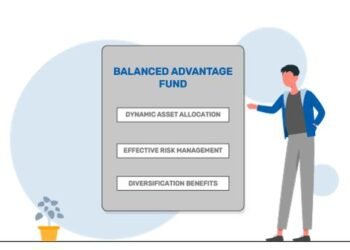
    Dynamic asset allocation: A unique feature of balanced advantage funds is their ability to dynamically shift between asset classes, such as equities and debt. Markets are ever-changing, and static asset allocation might not always be optimal. The adaptability of balanced advantage funds ensures that they remain aligned with current market conditions. Fund managers make use of various metrics and valuation models to determine market conditions. For instance, when the Price-to-Earnings (P/E) ratio of a market is high, it might suggest that equities are overvalued. Conversely, when the P/E ratio is low, equities might be undervalued. Using such indicators, fund managers adjust the asset allocation.


    Effective risk management: By adjusting the ratio of equity to debt based on market conditions, balanced advantage funds can reduce potential downturn risks during volatile market phases. Conversely, they can capture some part of the upside during bullish phases, offering a dual advantage.


    Diversification benefits: The inherent design of these funds ensures diversification across asset classes. Therefore, the underperformance of one asset can be potentially offset by the performance of another if the other asset class is performing, leading to a relatively stable investment experience over the long term.


    Potential for returns: With the capability to switch between asset classes based on valuations, balanced advantage funds can position themselves to capitalise on opportunities in both equity and debt markets. Moreover, the dynamic nature of these funds can lead to relatively consistent returns over the long term. While no investment can guarantee returns, the methodology behind balanced advantage funds is designed to smooth out the highs and lows of the market, leading to steadier growth over the long term.


    Managing emotional investing: One of the biggest challenges individual investors face is making objective decisions that are free from emotional biases. Balanced advantage funds, with their data-driven strategies, aim to make rational decisions based on metrics and valuations rather than emotions.


    What is an effective balanced advantage fund

    An effective balanced advantage fund blends the potential for returns with appropriate risk management. The focus is not just on the returns, but also on how those returns are achieved. When evaluating an effective balanced advantage fund, investors should consider factors like consistency, risk-adjusted performance, and the strategy and experience of the fund manager.


    Conclusion

    Balanced advantage funds offer a dynamic approach to investing, helping investors navigate the unpredictable nature of markets with a combination of equity and debt. By relying on data-driven strategies, these funds aim to overcome the emotional biases that often hinder investment success. Whether you are just starting out or are an experienced investor, balanced advantage funds can offer you a fulfilling investment experience that combines both relative stability and growth potential.

    * Mutual Fund investments are subject to market risks, read all scheme related documents carefully.

  • 6 Strategies to Build Wealth with Mutual Funds

    6 Strategies to Build Wealth with Mutual Funds

    Mutual funds are a popular method for wealth creation in financial investing. By combining multiple schemes, investors can access a professionally managed and diversified portfolio. Here, we aim to guide readers through the mutual fund wealth creation path by introducing six strategies to achieve your financial goals.


    Understanding mutual funds

    Mutual funds are financial instruments that pool various individuals’ money into assets like shares and bonds. These portfolios are professionally managed by fund managers who invest in securities aligned with investors’ objectives. Mutual funds offer benefits such as diversification, low minimum investment requirements, liquidity, cost reduction, regulated systems, and tax benefits. The following are the six strategies for easing the ways for mutual fund wealth creation.


    Strategy 1: Diversification

    Diversification is a risk management strategy of investing in various forms of securities within a portfolio. Diversification spreads risks beyond individual investments, offering the potential for better long-term results.


    While diversification may lessen the risk and volatility of asset price fluctuations, it is crucial to note that risk cannot be eliminated. Striking an ideal balance between risk and return is key to a stable long term investing strategy.


    Strategy 2: Regular investments (SIPs)

    When it comes to mutual funds, SIPs (Systematic Investment Plans) have become a popular option for Indian investors. They involve making equal monthly payments until an agreed-upon sum is reached. This approach encourages prudent investing despite market changes.


    Strategy 3: Long-term investment

    Long-term investment is a crucial strategy for mutual funds, as it increases the potential gain and return rate over time. Historical market data shows an increasing trend in equities over prolonged periods. This makes long-term investments a crucial tool for wealth creation.


    The significance of long-term mutual fund investments is shown by the industrys expanding AUM (Assets Under Management) and positive net inflows into equity schemes surpassing ₹46 lakh crore, as per AMFI. The industrys expansion and strong net inflows into equity schemes demonstrate the potential for considerable growth.


    Strategy 4: Balanced portfolio

    A balanced portfolio aims to balance risks and achieve desired returns. It diversifies assets into different classes based on an investors risk tolerance and objectives. Common asset classes include equity, bonds, and cash-equivalent securities. Equity usually offers relatively better return potential, while fixed income provides relative stability. Cash equivalents offer limited growth options and can help soften downside risk due to market shocks.
    Mutual funds offer different options for different risk appetites. This allows investors to select mutual funds with compatible risks and returns. Professional management of these funds includes portfolio allocation and rebalancing.


    Strategy 5: Reinvestment

    Reinvesting involves using income from investments in mutual funds and is crucial for long-term wealth creation. This method uses compound interest and has the potential to increase an investors total holdings. The compounding effect becomes stronger over time as dividends from securities or interest income from debt securities continue to enhance the investment.


    Strategy 6: Regular portfolio review

    Portfolio reviews and re-balancing are crucial for maintaining risk levels and optimizing performance. This is especially important for mutual funds, given their diversified nature.


    To review your portfolio, consider the following reviewing techniques:

    Frequent observation

    Evaluating asset allocation

    Checking fund performance

    Considering tax implications

    Selecting a systematic re-balancing approach


    For risk management, diversification across businesses, regions, and asset types is essential. Regular assessments can help realign portfolios with long-term objectives and risk tolerance. On the other hand, re-balancing can help identify funds that are under-performing or over-performing. This allows for adjustments to capitalize on growth opportunities or reduce losses.


    By adhering to these principles, investors can harness the full potential of mutual funds for long-term financial success. However, before making any investment decisions, it is recommended that you do your research and consult a financial advisor. All investments are subject to market risks, but consulting a financial advisor can help make the right choice and minimize losses.


    This document should not be treated as endorsement of the views/opinions or as investment advice. This document should not be construed as a research report or a recommendation to buy or sell any security. This document is for information purpose only and should not be construed as a promise on minimum returns or safeguard of capital.


    This document alone is not sufficient and should not be used for the development or implementation of an investment strategy. The recipient should note and understand that the information provided above may not contain all the material aspects relevant for making an investment decision. Investors are advised to consult their own investment advisor before making any investment decision in light of their risk appetite, investment goals and horizon. This information is subject to change without any prior notice.

  • Neo Asset Management Raises $35 Million in Growth Round

    Neo Asset Management Raises $35 Million in Growth Round

    Neo Asset Management Pvt. Ltd, a modern wealth and asset management firm, announced on Wednesday that it has successfully raised $35 million (approximately ₹300 crore) in a growth round led by Peak XV Partners, the former Sequoia Capital India & SEA. This infusion of capital will be used to accelerate growth initiatives, expand the wealth management business, strengthen the asset management franchise, and facilitate the recruitment of top talent.


    Founded in 2021, Neo Asset Management claims to have garnered a client base exceeding 1,000 individuals and entities across various segments, including high-net-worth individuals (HNIs), ultra-high net worth individuals (UHNIs), and multi-family offices. The company also serves global institutions such as pension funds, insurance companies, endowments, and sovereign wealth funds. Neo asserts that it oversees more than $3 billion (approximately ₹25,000 crore) in assets under advisement (AUA), including $360 million (around ₹3,000 crore) in assets under management (AUM).


    Neo Asset Management was established by Nitin Jain, the former CEO of Edelweiss Wealth and Asset Management. The company specializes in providing advisory and yield-based investment solutions to some of the country’s top billionaires. Additionally, it offers yield-based alternative investment solutions with a focus on the private credit and real assets space. In the near future, Neo intends to have a presence across the entire risk-return spectrum.


    Wealth management in India is a thriving market with a size of $2.8 trillion, experiencing year-on-year growth at a compound annual growth rate (CAGR) of 15 to 20%. Peak XV’s Managing Director, Sakshi Chopra, praised Nitin Jain and his team, who have extensive experience in the industry, for their goal of creating a trusted institution of choice for affluent clients. She also highlighted Neo’s impressive growth, managing ₹20,000 crore in AUA in its wealth business and ₹3,000 crore in AUM in the asset management business within a few years of its launch.


    In 2022, Neo Asset Management launched a Securities and Exchange Board of India (SEBI)-approved category-II alternative investment fund (AIF) known as the Special Credit Opportunities Fund. In September of the same year, the firm completed the first close of its maiden fund, securing ₹625 crore (approximately $78 million) from domestic high-net-worth individuals (HNIs) and multi-family offices. Neo’s goal is to raise ₹800 crore, with a green shoe option of ₹1,200 crore.

  • Morgan Stanley to Launch AI Chatbot in Partnership with OpenAI

    Morgan Stanley to Launch AI Chatbot in Partnership with OpenAI

    Morgan Stanley is preparing to debut an innovative generative artificial intelligence chatbot later this month, developed in collaboration with OpenAI, according to a report by Reuters. The bank has been testing this AI tool with approximately 1,000 financial advisers for several months, although specific details of the program have not been disclosed.


    The primary objective behind the chatbot is to enhance the efficiency of financial advisers’ interactions with clients. With clients’ permission, the AI bot is designed to perform various tasks, such as creating meeting summaries, drafting follow-up emails suggesting next steps, updating the bank’s sales database, scheduling follow-up appointments, and even learning to assist advisers in managing clients’ financial matters, including taxes, retirement savings, and inheritances.


    Additionally, Morgan Stanley employees will be able to utilize the chatbot to quickly access research or forms, eliminating the need to sift through extensive document archives.


    Morgan Stanley’s Chief Information Officer of Wealth and Investment Management, Sal Cucchiara, believes that the impact of AI in this context will be profound and potentially comparable to the transformative impact of the internet. He was quoted in the report as saying, “The impact (of AI) will be very significant.”


    Cucchiara also highlighted the pivotal role of OpenAI in this endeavor, stating that the partnership became evident after their initial discussions, as OpenAI was significantly ahead of other technology vendors.


    The partnership between Morgan Stanley and OpenAI was formalized last summer, granting the bank preferred access in product development for wealth management. This collaboration was celebrated during a dinner hosted by Andy Saperstein, Morgan Stanley’s co-president and head of wealth management, who is also a potential candidate for the bank’s next CEO.


    While the AI chatbot will provide valuable insights and administrative support to financial advisers, it’s important to note that investment advice will remain the responsibility of human professionals. Sal Cucchiara emphasized that the adviser remains at the center of the process, and employees view the technology as a helpful tool rather than a replacement for their roles.


    This AI initiative is part of Morgan Stanley’s broader strategy to bolster its wealth division. The company has seen a surge in net revenue and new client assets in recent quarters, aiming to reach $10 trillion in assets under management. Other major financial institutions, including JPMorgan Chase and Bank of America, have also been actively exploring the integration of AI technology into their operations.


    The partnership between Morgan Stanley and OpenAI represents a significant step forward in the financial services industry’s adoption of AI to enhance client services and operational efficiency while preserving the human touch in investment decision-making.