Tag: Taxation

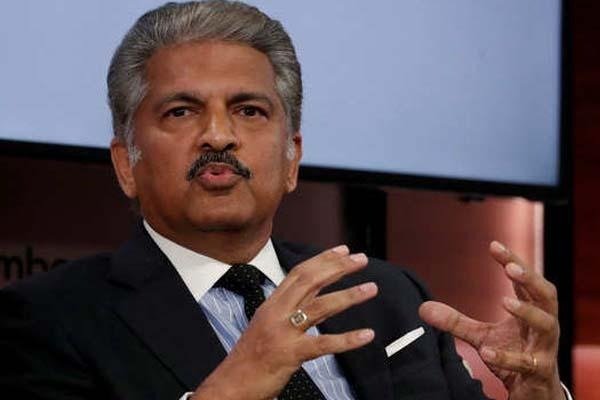
  • Anand Mahindra Lauds FM Sitharaman for Interim Budget

    Anand Mahindra Lauds FM Sitharaman for Interim Budget

    The Union Finance Minister, Nirmala Sitharaman, presented the Interim Budget for the fiscal year 2024-25 on Thursday, marking the last budget of the Modi 2.0 government as the Lok Sabha elections are likely to take place in May. Despite the approaching elections, the Finance Minister resisted the temptation to announce significant spending on schemes for the poor and instead concentrated on fiscal consolidation to attract investors, indicating the BJP’s confidence in securing a rare third term.


    Notably, Mahindra Group Chairman Anand Mahindra commended FM Sitharaman for keeping the budget short and crisp. He expressed that the Budget should not necessarily be the occasion for transformational policy announcements but an opportunity to plan finances prudently and with fiscal rectitude.


    Mahindra outlined five reasons why he was pleased with Sitharaman’s Interim Budget speech. First and foremost, he hailed the Finance Minister for delivering her shortest speech, emphasizing the brevity that communicates quiet confidence.


    Secondly, Mahindra appreciated that the Interim Budget included no populist measures. He expressed hope that avoiding such measures becomes a permanent norm in future budget speeches, promoting financial prudence.


    Thirdly, he commended the government for achieving a better fiscal deficit target than envisaged. The fiscal deficit target for 2024-25 is set at 5.1% of GDP, down from 5.8% in the current financial year.


    Given that the FM announced no changes in tax rates for direct and indirect taxes, Mahindra lauded the decision, stating that businesses value stability and predictability, qualities evident in this budget.


    The biggest announcement, according to Mahindra, was the higher Tax to GDP ratio. He emphasized that this development cements a strong foundation for fiscal flexibility and aggressive expenditure when needed. He urged FM Sitharaman to trumpet this achievement more loudly.


    The Interim Budget for 2024 increased by 6.1% to ₹47.66 lakh crore due to a rise in expenditure and higher allocation for capital expenditure and social sector schemes. FM Sitharaman highlighted that revenue receipts at ₹30.03 lakh crore are expected to be higher than the Budget Estimate, reflecting strong growth momentum and formalization in the economy.


    The nominal GDP growth for the next financial year has been pegged at 10.5%, slightly lower than the earlier estimate of 11%. Sitharaman stressed that the impact of all-round development is discernible in all sectors, with macro-economic stability, robust investments, and an overall flourishing economy.


    Anand Mahindra’s positive response to the Interim Budget underscores the importance of fiscal responsibility, stability, and confidence-building measures, especially as India navigates economic challenges and prepares for the upcoming elections.

  • Zomato and Swiggy Face ₹750 Crore GST Notices

    Zomato and Swiggy Face ₹750 Crore GST Notices

    In a recent development, Zomato and Swiggy, the two prominent players in India’s food delivery market, have reportedly been issued Goods and Services Tax (GST) notices totaling ₹750 crore by the Directorate General of GST Intelligence (DGGI). The tax authorities consider the delivery service provided by these platforms as subject to GST, leading to the issuance of the notices.


    Zomato, holding the largest share in the online food delivery market in India, has received a GST notice of ₹400 crore, while Swiggy has been served a notice of ₹350 crore, according to sources cited by CNBC-TV18. The taxation body has found both companies liable for GST payment for the period spanning from July 2017 to March 2023.


    The tax notices to Zomato and Swiggy come as the DGGI classifies food delivery as a service, making both companies subject to GST regulations. While the exact details of the allegations and assessments remain unclear, this development underscores the increased scrutiny faced by digital platforms and the evolving regulatory landscape in India.


    Neither Zomato nor Swiggy has responded immediately to the reports, and Livemint could not independently verify the information.


    Zomato, which is a publicly listed entity, recently announced its earnings for the quarter ending September 2023. The company reported a net profit of ₹36 crore, a significant improvement from the net loss of ₹251 crore during the same period last year. The revenue from operations witnessed robust growth, reaching ₹2,848 crore, marking a 72% increase compared to ₹1,661 crore in the corresponding period last year.


    On the other hand, Swiggy, an unlisted entity, achieved profitability, according to its CEO Sriharsha Majety. In a blog post from May, Majety mentioned that Swiggy turned profitable in the quarter ending March 2023.


    The scrutiny by tax authorities and the issuance of substantial GST notices indicate the challenges faced by food delivery aggregators in navigating regulatory frameworks and tax compliance. As the digital economy continues to evolve, these developments highlight the need for comprehensive and clear regulations governing the taxation of services provided by such platforms.


    In the trading session on November 22, Zomato’s stock settled at ₹115.25 on the BSE, experiencing a 1.07% decline from the previous day’s close. The implications of the GST notices on the financials and operations of both Zomato and Swiggy remain to be seen as the situation unfolds.

  • Inclusion of Petroleum Products in GST Unlikely

    Inclusion of Petroleum Products in GST Unlikely

    The inclusion of petroleum products under the Goods and Services Tax (GST) in India is unlikely to happen in the near future, according to two senior government officials who spoke to Mint. This decision is primarily driven by concerns that such a move could significantly increase state fiscal deficits and lead to substantial revenue losses for both state and central governments.


    Currently, the total taxation on petrol and diesel includes state-levied value-added tax (VAT) and the central government’s excise duty, which collectively accounts for approximately 35% to 50% of the final price. The specific percentages vary for petrol and diesel, with petrol being taxed at a higher rate, typically ranging from 45% to 50%, while diesel is taxed at around 35% to 40%.


    Even if petroleum products were subjected to the peak GST rate of 28%, there would still be substantial revenue shortfalls for both state and central governments. This would mean that the government would receive less tax revenue, even though the tax regime has changed. Achieving a “revenue-neutral” rate, where the government’s tax revenue remains the same before and after the inclusion of petroleum products in the GST, would require a significantly higher GST rate of approximately 56% to 60%.


    One of the officials noted, “If petroleum products like petrol and diesel are put under the ambit of GST, consumers may have limited benefit. But, it will end up ballooning the state government’s fiscal deficit.”


    The decision not to include petroleum products under the GST regime has implications for various sectors, including the petrochemical industry, which uses petroleum products as industrial inputs. Inclusion under GST would make these industries eligible for input tax credits.


    Industry representatives have advocated for including petroleum products under GST, citing potential benefits such as reduced inflation and lower costs for consumers. Earlier discussions had explored the possibility of applying the peak GST rate of 28% in addition to local sales tax or VAT on petrol and diesel, but this proposal did not materialize.


    The reluctance to include petroleum products in GST is primarily attributed to the significant revenue implications for state governments. State finances heavily depend on revenue generated from the taxation of petroleum products. The high tax rates on these products have been a crucial source of income for states.


    As of September 1, 2023, petrol prices in New Delhi stood at ₹96.72 per litre, including an excise duty of ₹19.90 and a VAT of ₹15.71. Similarly, diesel prices were ₹89.62 per litre, comprising an excise duty of ₹15.80 and a VAT of ₹13.11. The central government had reduced excise duties on both petrol and diesel on May 21, 2022, but prices have remained unchanged since then.


    The decision not to include petroleum products in the GST regime in India is primarily driven by concerns over revenue losses for state and central governments, as well as the potential impact on state fiscal deficits. While there are industry and consumer benefits associated with such a move, the financial implications for the government remain a significant barrier to implementation.

  • India’s Crypto Regulation: Navigating the Global Landscape

    India’s Crypto Regulation: Navigating the Global Landscape

    In the New Delhi Declaration, G20 leaders have signalled their commitment to establishing a “coordinated and comprehensive policy and regulatory framework” for crypto assets in order to commit to a crypto regulation. This commitment reflects a global effort to set international standards for the cryptocurrency industry. Additionally, G20 leaders have endorsed the guidelines proposed by the Financial Stability Board (FSB) for regulating crypto-asset activities. These guidelines primarily aim to mitigate systemic financial risks and provide G20 member countries with flexibility in crafting their domestic regulations.


    India’s Alignment with Global Recommendations

    India has already aligned its foundational policies with recommendations from global bodies such as the FSB and the International Monetary Fund (IMF). These organizations emphasize that crypto assets should not be treated as legal tender or banned outright. Recognizing the potential pitfalls of such extreme measures, India wisely abandoned its initial consideration of a crypto ban. Legal tender status for crypto assets can undermine domestic monetary policy, while outright bans may encourage illicit activities.


    Anti-Money Laundering (AML) and Tax Policies

    India has implemented AML and tax policies for crypto assets. AML rules require crypto exchanges to report suspicious activities to the Financial Intelligence Unit and respond to the agency’s information requests. However, the taxation of crypto transactions has been a point of contention, with a 30% income tax on annual profits from crypto-asset trading and a 1% deduction at source for each transaction.


    Focus on Financial Regulation

    The FSB and IMF highlight the shared vulnerabilities between the crypto-asset world and the traditional financial system. Prioritizing the regulation of market intermediaries, such as crypto exchanges, is a logical step. This aligns with the notification of entities dealing with crypto as persons engaged in a designated business under the Prevention of Money Laundering Act, 2002. This approach, akin to how traditional stock exchanges operate under the Securities and Exchange Board of India (Sebi), offers a template for regulating the diverse and complex crypto markets.


    Addressing Unique Challenges

    Crypto-assets pose unique challenges due to their technical characteristics. Regulated exchanges can play a pivotal role in demystifying the origins of these assets, ensuring that issuers provide sufficient transparency. For example, the EU’s regulation mandates crypto-asset issuers to produce a “white paper” detailing various aspects, including user rights, underlying technology, and risks.


    Revising IT Legislation for the Digital Age

    India’s ongoing revision of the Information Technology (IT) Act presents an opportunity to address the specific needs of crypto asset intermediaries, which operate primarily online. Specialized provisions can enhance user safety in these digital platforms. Future IT legislation can also offer legal clarity for emerging digital products, such as those related to Web 3.0, and explore overlaps with Web 2.0, like social media marketing.


    Challenges Remain with Stablecoins and DeFi

    Regulating stablecoins and decentralized finance (DeFi) poses additional challenges. Stablecoins, including algorithmic variants, have shown vulnerabilities to manipulation, as seen in the Terra Luna incident. DeFi operates without centralized intermediaries, making it complex to regulate effectively.


    As India navigates the evolving crypto landscape, crafting a regulatory framework that respects the unique challenges of this emerging market is essential. Active industry participation in shaping these regulations will be crucial for striking the right balance between innovation and risk mitigation.