Tag: Supreme Court of India

  • SC Overturns Gujarat’s Decision to Release Convicts

    SC Overturns Gujarat’s Decision to Release Convicts

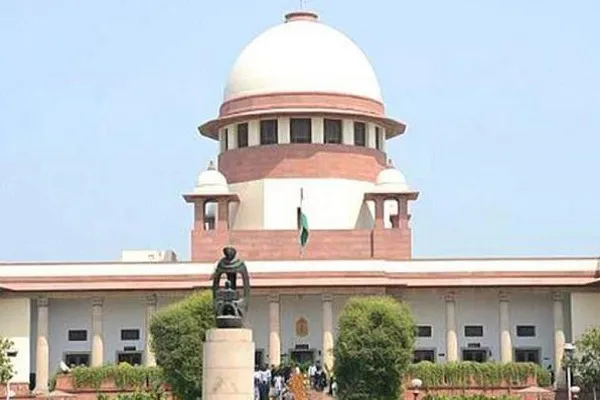
    The Supreme Court of India made a significant decision on Monday by quashing the Gujarat government’s move to grant remission and early release to 11 convicts in the Bilkis Bano rape case. The verdict was welcomed by various political figures, including Rahul Gandhi, who hailed it as a “victory of justice.”


    Rahul Gandhi expressed his views on the microblogging site X, stating, “The tendency to ‘kill justice’ for electoral gains is dangerous for the democratic system. Today the Supreme Court’s decision once again told the country who is the ‘patron of criminals’. Bilkis Bano’s tireless struggle is a symbol of the victory of justice against the arrogant BJP government.”


    Additionally, Priyanka Gandhi Vadra took to X to commend the Supreme Court’s decision, asserting that justice has ultimately prevailed. She remarked, “With this order, the veil over the anti-women policies of the Bharatiya Janata Party has been removed. After this, public confidence in the justice system will be further strengthened. Congratulations to Bilkis Bano for continuing her fight bravely.”


    The Supreme Court, in its ruling on Monday, declared the May 13, 2022 judgment of another bench null and void. This earlier decision had directed the Gujarat government to consider the remission applications of the 11 convicts in the Bilkis Bano gang-rape case and the murder of seven of her family members. The court stated that the judgment was obtained by “playing fraud on court.”


    In the May 13, 2022 verdict, a bench comprising Justices Ajay Rastogi (now retired) and Vikram Nath had instructed the Gujarat government to consider the plea of convict Radheshyam Shah for premature release based on its remission policy of July 9, 1992. The bench had held that the state where the offense occurred has the jurisdiction to decide the application.


    On Monday, the Supreme Court highlighted that Shah had initially approached the Gujarat High Court in 2019, seeking direction to consider his application for remission.


    The 11 convicts who were released prematurely included Bakabhai Vohania, Bipin Chandra Joshi, Kesarbhai Vohania, Govind Nai, Jaswant Nai, Mitesh Bhatt, Pradeep Mordhiya, Radheshyam Shah, Rajubhai Soni, Ramesh Chandana, and Shailesh Bhatt. All of them were granted remission by the Gujarat government and released on August 15, 2022.


    Apart from Bilkis Bano’s petition contesting the remission, several other PILs (Public Interest Litigations), including those filed by CPI(M) leader Subhashini Ali, independent journalist Revati Laul, and former vice-chancellor of Lucknow University Roop Rekha Verma, contested the relief. TMC leader Mahua Moitra also filed a PIL against the remission and premature release of the convicts.


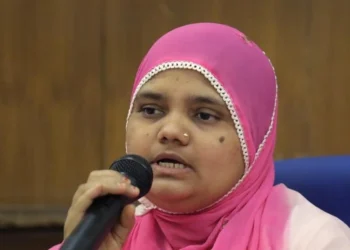
    Bilkis Bano’s horrific experience unfolded when she was only 21 years old and five months pregnant. She was gang-raped while fleeing the communal riots, during which her three-year-old daughter was among seven family members killed. The decision to release the convicts prematurely sparked widespread concern and legal challenges, leading to the Supreme Court’s recent judgment overturning the Gujarat government’s move.


    The development underscores the ongoing struggle for justice and accountability in cases of sexual violence, prompting reflections on the larger issues surrounding women’s rights and the integrity of the justice system.

  • Supreme Court of India refused to grant marriage equality rights to LGBTQ community

    Supreme Court of India refused to grant marriage equality rights to LGBTQ community

    The Supreme Court of India’s recent refusal to grant marriage equality rights to the LGBTQ community is a major setback for the movement for LGBTQ rights in India. The decision has been met with widespread condemnation from LGBTQ activists and allies, who argue that it is a violation of the fundamental rights of LGBTQ people.


    The Court’s decision is based on the interpretation of the Hindu Marriage Act and the Special Marriage Act, which both define marriage as between a man and a woman. The Court held that these laws are not discriminatory, as they apply to all people regardless of their sexual orientation or gender identity.


    However, LGBTQ activists argue that the Court’s interpretation of the law is narrow and ignores the reality of LGBTQ life in India. They point out that many LGBTQ people are already married to their partners, and that these marriages are often recognized by their families and communities. They also argue that the denial of legal recognition to these marriages is harmful to LGBTQ people, as it deprives them of important rights and benefits.


    The Court’s decision is also likely to have a negative impact on the fight against discrimination against LGBTQ people in India. LGBTQ people are already facing widespread discrimination in employment, housing, and education. The Court’s decision is likely to embolden those who discriminate against LGBTQ people, and to make it more difficult for LGBTQ people to access justice.


    Despite the setback, the movement for LGBTQ rights in India is not over. LGBTQ activists are vowing to continue fighting for their rights, and to challenge the Court’s decision. They are also calling on the Indian government to pass legislation that would grant marriage equality rights to the LGBTQ community.


    It is important to note that there are many different opinions on this issue, and that not everyone agrees with the Supreme Court’s decision. Some people believe that the Hindu Marriage Act and the Special Marriage Act should be amended to include same-sex marriage, while others believe that these laws should remain as they are. There is also a debate about whether or not the Indian government should pass legislation to grant marriage equality rights to the LGBTQ community.

  • SC Rejects 89-Year-Old Man’s Request for Divorce

    SC Rejects 89-Year-Old Man’s Request for Divorce

    The Supreme Court of India has rejected the request of 89-year-old Nirmal Singh Panesar to end his six-decade-long marriage to Paramjit Kaur Panesar by not granting a divorce, 82, AFP reported.


    The couple, who tied the knot in 1963, saw their marriage face turmoil when Nirmal claimed in legal documents filed in 1984 that their relationship had irretrievably broken down. The catalyst for this breakdown occurred in the same year when Paramjit refused to relocate with him to Chennai, where he was posted by the Indian Air Force, according to the report.


    Nirmal initially sought divorce in 1996, citing cruelty and desertion. Although a district court granted the divorce in 2000, it was overturned later that year following an appeal by Paramjit.


    Despite acknowledging the irreparable nature of their marriage, the Supreme Court, after two decades, denied Nirmal’s divorce petition, it added.


    Divorce still a taboo

    The court’s ruling emphasized the continued sanctity and emotional significance of marriage as a vital bond between husband and wife in Indian society. It argued that allowing the dissolution would be unjust to Paramjit, who expressed to the court her desire not to carry the “stigma” of being a divorcee until her death, the report said.


    Paramjit also affirmed to the apex court that she had exerted every effort to honor their “sacred relationship” and remained willing to care for her husband in his old age. The couple has three children.


    Divorce continues to be socially unacceptable in many parts of India, with only one out of every 100 marriages concluding in dissolution. This is frequently due to familial and societal expectations that couples endure unhappy marriages.


    Court cases drag on

    Approval from the courts is necessary for those seeking divorce in India, and it is generally only granted when evidence of cruelty, violence, or unreasonable financial demands is provided.


    Prolonged delays in India’s criminal justice system mean that some cases take several decades to be resolved. As of last year, the government reported a backlog of around 43.2 million cases pending in courts across the country.


    The Supreme Court’s decision in Nirmal and Paramjit’s case sheds light on the challenges and societal expectations surrounding divorce in India, where the institution of marriage remains deeply rooted in tradition and often takes precedence over individual happiness.