Tag: Strike

  • Alaska Air Flight Attendants Authorize Strike Mandate

    Alaska Air Flight Attendants Authorize Strike Mandate

    Alaska Air flight attendants have taken a significant step in their labor negotiations by authorizing a strike mandate for the first time in three decades. The move comes amid a broader wave of discontent among cabin crew across multiple airlines in the United States and Canada, with demands for higher pay being a central issue.


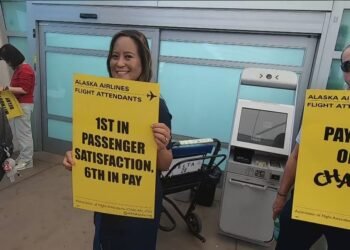
    On Tuesday, thousands of flight attendants, represented by three unions, picketed outside airports in the United States, the UK, and Guam, advocating for improved pay and working conditions. Among the picketing members were cabin crew from 24 airlines, including Alaska Air, Southwest Airlines, United Airlines, and American Airlines.


    The impact of this action was felt in the financial markets, with shares of Alaska Air falling by 2.1% in afternoon trade. Southwest, United Airlines, and American Airlines also experienced declines in their stock prices, highlighting the market’s reaction to the labor unrest in the aviation industry.


    Alaska Air reported that out of the 93.47% of participating flight attendants represented by the Association of Flight Attendants-CWA (AFA-CWA), a staggering 99.48% voted in favor of a strike. This resounding mandate underscores the severity of the concerns raised by flight attendants regarding their compensation and working conditions.


    However, despite the overwhelming support for a strike mandate, the likelihood of U.S. flight attendants walking off the job remains low due to the complexities of the labor process in the aviation sector. The intricacies of labor laws and contractual obligations make it challenging for airline workers to initiate strikes easily.


    Nevertheless, the decision by Alaska Air flight attendants to authorize a strike mandate sends a strong message to the airline management and the broader industry about the urgent need to address the grievances of cabin crew. The last time Alaska Air flight attendants voted for a strike mandate was in 1993, highlighting the significance of this recent development.


    The Association of Flight Attendants emphasized that the strike mandate reflects broader demands for higher pay across the industry. While pilots at major airlines have successfully negotiated new labor agreements with significant pay hikes and other benefits, many flight attendants have not received a raise in five years, according to the AFA.


    Flight attendants from other airlines, such as Southwest Airlines and Air Transat in Canada, are also engaged in negotiations seeking substantial pay raises. Recent developments indicate ongoing challenges in reaching agreements, as flight attendants at Air Transat rejected two earlier deals, leading to changes in the negotiation process.


    In a memo to Transat flight attendants dated February 9, it was revealed that an adviser assigned by the union was no longer part of the bargaining process following the rejection of previous agreements. However, the Canadian Union of Public Employees (CUPE), which represents Transat flight attendants, clarified that this change was related to internal union management and would not disrupt the negotiations’ continuity.


    The labor unrest among flight attendants underscores the critical role they play in the aviation industry and the importance of addressing their concerns to ensure a harmonious and sustainable working environment. As negotiations continue and tensions persist, both airline management and labor unions must work towards finding mutually beneficial solutions that prioritize the well-being and fair treatment of flight attendants. Ultimately, the outcome of these negotiations will have far-reaching implications for the future of labor relations in the airline industry.

  • Karnataka Truck Drivers Launch Indefinite Strike Against Law

    Karnataka Truck Drivers Launch Indefinite Strike Against Law

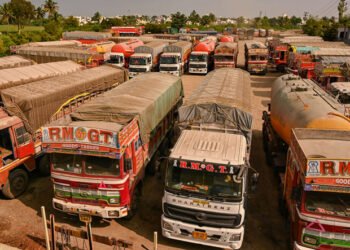
    Karnataka truck drivers have commenced an indefinite strike starting January 17, protesting against the new hit-and-run law proposed under the Bharatiya Nyaya Sanhita. This law, set to replace the Indian Penal Code, suggests severe penalties for drivers causing significant accidents through negligent driving and fleeing the scene without informing authorities. Under the new provisions, such drivers could face up to 10 years in prison or a fine of ₹7 lakh. This marks a substantial increase from the earlier punishment of two years specified in the British-era Indian Penal Code (IPC).


    The truckers’ strike is not isolated to Karnataka, as earlier this month, similar protests erupted in multiple states, including Maharashtra, Punjab, Madhya Pradesh, Uttar Pradesh, Himachal Pradesh, and others. The proposed changes have sparked widespread discontent among truck drivers and transport associations across the country.


    C. Naveen Reddy, the President of the Federation of Karnataka Lorry Owners’ Association, expressed dissatisfaction with the unilateral decision by the union government. Despite calls for discussions, Reddy claimed that officials did not provide any written assurances to address concerns raised by the trucking community. He labeled the decision as hasty and emphasized the lack of consultation with stakeholders before finalizing the new law.


    “We already informed all the truck drivers in the state, and we will be going on a strike. All heavy vehicles will go off-road from January 17,” stated Reddy, underlining the unanimous decision to withdraw services until their grievances are addressed.


    The new hit-and-run law has led to disruptions in the transportation sector, impacting fuel supplies and causing panic-buying at fuel stations. Additionally, the slowdown in truck movements has affected the supply chain, leading to concerns about essential commodities’ availability in various regions. Massive queues were witnessed at fuel stations, and traders reported a 10-15% rise in vegetable prices in Delhi due to supply chain disruptions.


    The protests by truck drivers highlight the broader challenges faced by the transportation industry, where stringent regulations and sudden policy changes can have cascading effects on logistics, commerce, and daily life. The All India Motor Transport Association (AIMTC) had earlier led nationwide protests against the new hit-and-run law. After a meeting with Union Home Secretary Ajay Bhalla on January 2, AIMTC decided to temporarily halt the protests.


    During the meeting, the government assured AIMTC members that the new laws had not been implemented yet and emphasized the need for consultations before their enforcement. The decision to suspend the protests reflected a tentative truce between the government and transport associations. However, with the initiation of a fresh strike in Karnataka, tensions have reignited, and the trucking community’s concerns continue to be a focal point of discussion.


    The trucking industry plays a pivotal role in the country’s economic ecosystem, facilitating the movement of goods and ensuring the supply of essential commodities. Any disruptions in this sector can have immediate and far-reaching consequences, affecting businesses, consumers, and the overall functioning of the economy.


    As the strike unfolds in Karnataka, it draws attention to the need for comprehensive dialogues between the government and stakeholders in the transportation sector. Balancing road safety concerns with the practical challenges faced by truckers requires a nuanced approach that considers the diverse perspectives within the industry.


    The ongoing protests underscore the importance of collaborative decision-making processes, where the concerns of truck drivers are taken into account while formulating and implementing policies related to road safety and transportation. Striking a balance between stringent regulations and the operational realities faced by the trucking community is crucial for maintaining the smooth functioning of the transportation network and ensuring the timely delivery of goods across the country.

  • Indefinite Strike by UAW Disrupts US Automakers’ Operations

    Indefinite Strike by UAW Disrupts US Automakers’ Operations

    Since Friday, an indefinite strike initiated by the United Auto Workers (UAW) union has severely impacted the operations of top US automakers. On September 15, the UAW launched the protest at three major US auto plants after failing to reach agreements on new contracts. This marks the first-ever labor action against the Detroit three automakers, comprising General Motors, Ford Motor, and Stellantis, the parent company of Chrysler.


    The strike comes amid a broader industry trend where automakers, both in the US and globally, are intensely focused on cost reductions, including job cuts, to accelerate the transition from gasoline-powered vehicles to electric vehicles (EVs).


    UAW’s Negotiations:

    The UAW, representing 46,000 GM workers, 57,000 Ford employees, and 43,000 Stellantis workers, initiated negotiations with these companies in July. Historically, contract talks between the UAW and the Detroit automakers have often extended beyond the strike deadline.


    The UAW’s previous contracts with General Motors, Ford Motor, and Stellantis expired on Thursday, prompting the labor action.


    Detroit Automakers’ Wage Offers:

    In their negotiations, the automakers have proposed significant wage increases, including a 20% raise over a four-and-a-half-year contract term, with an immediate 10% hike. The automakers contend that these proposals equate to a cumulative 21% increase over the contract duration.


    UAW’s Response:

    However, the union has rejected these offers, demanding a more substantial 40% wage hike, which includes a 20% immediate increase, along with improvements in benefits.


    UAW’s Key Demands:

    The UAW is pressing the automakers to eliminate the two-tier wage system, where new hires earn significantly less than veteran workers. They are also seeking substantial salary increases, given the automakers’ financial success, while highlighting generous executive compensation and federal subsidies for EV sales.


    The union’s demands include restoring defined benefit pensions for all workers, shorter 32-hour work weeks, cost-of-living increases, job security guarantees, and an end to the use of temporary workers. Moreover, the UAW has expressed concerns about the industry’s shift to EVs and has called on the Biden administration to revise proposed vehicle emission cuts.


    Automakers’ Goals:

    The Detroit Three automakers aim to narrow the cost gap they face compared to foreign automakers with non-unionized US factories. They are also seeking greater flexibility in utilizing their US workforces to enhance efficiency and reduce costs during the transition to EVs.


    Stakes Involved:

    A full strike would have significant financial repercussions, potentially costing each affected automaker approximately $400 million to $500 million per week if all production were halted. This could also impact quarterly profits for auto part suppliers. According to an analysis by the Anderson Economic Group, a 10-day strike by the UAW could result in more than $5 billion in losses for manufacturers, workers, suppliers, and dealers.


    The ongoing strike underscores the critical role of labor negotiations in shaping the future of the US automotive industry as it undergoes a transformative shift toward electric vehicles.

  • Hollywood Writers Mark 100th Day of Strike

    Hollywood Writers Mark 100th Day of Strike

    Hollywood writers marked the 100th day of their ongoing strike on Wednesday, labeling the occasion a “milestone of shame” for studios as the deadlock between the two sides continues. Since its commencement in early May, the Writers Guild of America (WGA) walkout has halted numerous film shoots and productions, resulting in significant financial losses for the California economy on a daily basis. Despite the extended duration of the strike, meaningful dialogue between the writers and studios remains scarce.


    Last month, the situation escalated as the Writers Guild of America was joined on the picket lines by the larger Screen Actors Guild (SAG-AFTRA). The WGA conveyed their frustration, emphasizing that the studios’ failure to seriously consider the writers’ proposals has perpetuated the strike’s duration and caused substantial hardship for workers and industry participants dependent on this sector.


    The primary demands of the writers and actors include improved compensation, residuals, and assurances regarding the future use of artificial intelligence in the industry. The WGA emphasized that resolving the strike would be economically advantageous compared to the damages caused by the prolonged impasse.


    In a parallel coincidence, the previous WGA strike in 2007-08 concluded after exactly 100 days. The impact of that strike was estimated to cost the California economy $2.1 billion, as calculated by the Milken Institute.


    While the parties recently met to discuss reopening formal talks, no tangible progress has emerged from the discussions. The writers have expressed skepticism about the studios’ willingness to negotiate in good faith, while the studios’ response to the writers’ rhetoric has been described as “unfortunate.”


    Outside Netflix’s offices, screenwriter Charlie Kesslering expressed the strike’s significance, framing it as an “existential fight” to ensure that careers in the entertainment industry remain viable and sustainable. Disney CEO Bob Iger, who had been criticized by strikers, expressed his commitment to resolving the issues that have contributed to the impasse.


    The WGA stressed that studios have no option but to arrive at a fair and reasonable agreement, underscoring the ongoing determination of the writers and the potential for a significant impact on the industry’s future.