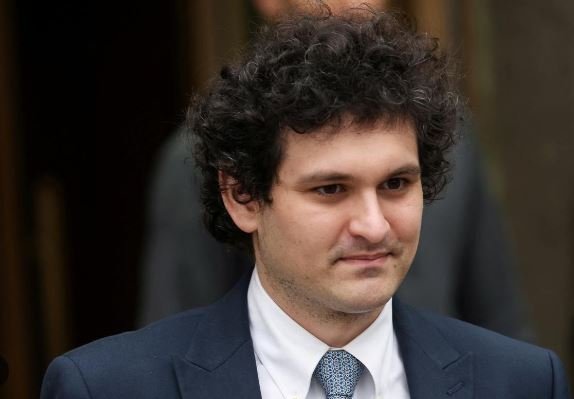
Tag: Sam Bankman-Fried

  • FTX Founder Testifies, Denies Fraud Allegations

    FTX Founder Testifies, Denies Fraud Allegations

    Sam Bankman-Fried, the founder of FTX cryptocurrency exchange, took the stand during his ongoing fraud trial, denying allegations of fraud and theft. While he acknowledged making mistakes, he maintained that he did not defraud anyone or steal billions of dollars from customers.


    In his first day of testimony, Bankman-Fried was questioned by his own lawyer with jurors present. He admitted to making “mistakes” during his tenure as the CEO of FTX but also sought to shift blame onto others, including Caroline Ellison, the former CEO of his crypto-focused Alameda Research hedge fund, who had previously testified for the prosecution.


    Bankman-Fried’s defense has revolved around the claim that he was an entrepreneur building a fast-growing company from scratch and, as a result, overlooked certain aspects of his business. He contended that his intent was never to steal from people but rather to build the best product on the market. Nevertheless, he acknowledged that things took a different turn, leading to harm to customers, employees, and ultimately the bankruptcy of the company.


    The 31-year-old former billionaire is facing two counts of fraud and five counts of conspiracy. If convicted, he could potentially face decades in prison.


    Prosecutors have accused Bankman-Fried of using FTX customer funds for various purposes, including propping up Alameda, making speculative venture investments, and contributing significant sums to U.S. political campaigns. Additionally, he is alleged to have schemed to deceive Alameda’s lenders and FTX investors.


    Bankman-Fried defended his actions by asserting that funds used for sponsorships and real estate did not come from FTX’s customers, as claimed by the prosecution. Instead, he stated that they originated from the company’s revenue or capital received from equity investors. He also explained that he borrowed from Alameda, which he owned, to make political donations.


    During his testimony, Bankman-Fried distanced himself from specific actions taken by three former colleagues who had pleaded guilty to fraud and testified against him. He portrayed himself as an aloof CEO who trusted his subordinates and did not directly involve himself in their actions.


    The defense’s strategy aims to counter the prosecution’s allegations by presenting Bankman-Fried as an entrepreneur who made mistakes but did not engage in criminal activities with the intent to defraud. The trial will continue with cross-examination by the prosecution, providing further insights into this complex case.

  • Sam Bankman-Fried to Testify in FTX Trial After Allegations

    Sam Bankman-Fried to Testify in FTX Trial After Allegations

    In a significant turn of events, Sam Bankman-Fried, the crypto entrepreneur facing multiple fraud charges linked to the downfall of FTX and Alameda Research, has decided to testify in his own defense during the ongoing trial. This decision comes in response to a barrage of damaging allegations from former associates who portrayed him as the mastermind behind a long-running fraudulent scheme.


    Bankman-Fried’s legal team announced during a conference call with the judge that their client would testify after the prosecution completes its case. The 31-year-old entrepreneur is potentially facing decades in prison due to allegations that he directed the transfer of FTX customer funds into Alameda Research, an affiliated hedge fund, for speculative investments, political contributions, and extravagant real estate purchases. This financial maneuver eventually led to the bankruptcy of both companies last year.


    Typically, defendants avoid testifying due to the potential risks involved. However, Bankman-Fried’s decision to testify could be seen as one of his final defense options after weeks of damaging testimonies from former members of his inner circle.


    Three of Bankman-Fried’s closest confidantes, including Alameda Chief Executive Officer Caroline Ellison, FTX’s former head of engineering Nishad Singh, and Gary Wang, a co-founder of the crypto exchange, have already pleaded guilty to fraud and cooperated with prosecutors. During their testimonies, all three individuals pointed to Bankman-Fried as the one orchestrating the misuse of customer funds.


    The prosecution revealed that they plan to call one more witness, an FBI agent, on Thursday morning. This agent will provide insights into deleted chats relevant to the case.


    Bankman-Fried’s legal team intends to call three witnesses before their client takes the stand. These witnesses include Joseph Pimbley, a financial expert, who will provide insights into Alameda’s line of credit and FTX’s spot margin program.


    Closing arguments are expected to take place early next week, with the jury beginning deliberations shortly thereafter.


    Bankman-Fried’s testimony will offer the public a chance to hear his perspective in greater detail, as he has largely refrained from speaking about the case due to a gag order issued in July. This order restricted his interactions with the media. Additionally, he spent time in jail following the revocation of his bail due to allegations of witness tampering.


    The damaging testimonies from his former colleagues appear to have left Bankman-Fried with few alternatives but to take the stand and present his own account of events. The allegations against him include directing individuals to commit crimes, falsifying financial records, and facilitating the transfer of customer funds between Alameda and FTX. As the trial unfolds, the cryptocurrency community and the public await the outcome with keen interest.

  • Sam Explored Paying Donald Trump to Not Run for President

    Sam Explored Paying Donald Trump to Not Run for President

    Sam Bankman-Fried, the founder of the now-bankrupt cryptocurrency exchange FTX, has recently made headlines due to revelations that he explored the possibility of paying former U.S. President Donald Trump to abstain from running for re-election in 2020. This startling revelation comes from an excerpt from author Michael Lewis’ book titled “Going Infinite: The Rise and Fall of a New Tycoon,” which was published in The Washington Post. Bankman-Fried, who is currently facing fraud charges and a high-profile trial, has become a prominent figure in the cryptocurrency industry.


    The story begins with Sam Bankman-Fried, a young entrepreneur who rose to prominence in the world of cryptocurrencies. He founded the cryptocurrency exchange FTX, which quickly gained a reputation for innovation and high trading volumes. Bankman-Fried’s success in the crypto space made him a billionaire and a well-known figure in the financial industry.


    However, Bankman-Fried’s fortunes took a sharp turn when FTX faced financial troubles and eventually filed for bankruptcy. The collapse of the cryptocurrency exchange shocked the markets and raised questions about the security and reliability of crypto platforms. It also tarnished Bankman-Fried’s reputation as a legitimate operator in an industry often associated with scams and fraudulent schemes.


    As if the bankruptcy of FTX were not enough, Bankman-Fried found himself entangled in a legal battle. Federal prosecutors accused him of embezzling billions of dollars from FTX customers over the years. The charges allege that he used customer funds to prop up his hedge fund, Alameda Research, purchase luxury properties, and make substantial political donations.


    The trial, which is scheduled to commence on October 4, has garnered significant attention from the cryptocurrency community and beyond. Bankman-Fried faces seven counts of fraud and conspiracy, all of which he has vehemently denied. While he has acknowledged shortcomings in risk management, he maintains that he did not steal customer funds. His defense team has signaled their intention to argue that FTX’s treatment of customer funds was proper and that other individuals at FTX and Alameda bear the primary responsibility for their failure.


    The trial is expected to last up to six weeks and will feature testimony from former members of Sam Bankman-Fried’s inner circle. These individuals have already pleaded guilty to fraud charges and agreed to cooperate with the Manhattan U.S. Attorney’s office, which further complicates Bankman-Fried’s legal predicament.


    Amid these legal challenges and the looming trial, the revelation that Bankman-Fried explored the idea of paying Donald Trump not to run for re-election in 2020 adds another layer of intrigue to his story. According to the book excerpt, Bankman-Fried’s team had established a back channel to the Trump operation and learned that Trump might be open to stepping aside for a substantial sum, estimated at $5 billion.


    It’s worth noting that the book excerpt does not provide detailed information about why Bankman-Fried did not pursue these plans or whether any negotiations with Trump actually took place. The motivations behind such a proposal remain a subject of speculation.


    In the cryptocurrency industry, where innovation and disruption often go hand in hand with regulatory scrutiny and legal challenges, Bankman-Fried’s case stands as one of the most high-profile examples of a crypto entrepreneur facing significant legal and reputational consequences. As the trial unfolds, the cryptocurrency community will closely watch the outcome and its potential implications for the broader industry.

  • Sam Bankman-Fried in Custody for Witness Tampering

    Sam Bankman-Fried in Custody for Witness Tampering

    In a significant development, Sam Bankman-Fried, co-founder of FTX, finds himself in custody after a federal judge revoked his bail over suspicions of witness tampering. US District Judge Lewis A. Kaplan’s decision followed a hearing in Manhattan that has underscored the complex legal landscape surrounding the embattled crypto mogul.


    During the hearing, Bankman-Fried removed his jacket, tie, and shoelaces before being placed in handcuffs as marshals led him away from the courtroom. His mother’s tears in the public gallery were met with comfort from Bankman-Fried’s father, highlighting the emotional gravity of the situation.


    The judge’s decision stems from his belief that Bankman-Fried likely attempted to influence two witnesses, former Alameda Research Chief Executive Officer Caroline Ellison and the former FTX general counsel. Kaplan argued that Bankman-Fried aimed to have them “back off” and “hedge their cooperation” with the government. While the defense immediately filed an appeal over the bail revocation, their application to stay Kaplan’s order was unsuccessful.


    Bankman-Fried’s detainment means he will remain incarcerated while his legal team seeks to reverse the revocation in the 2nd US Circuit Court of Appeals. Following the court proceedings, he is expected to be transferred to the Metropolitan Detention Center (MDC) in Brooklyn, a prominent federal prison for defendants awaiting trial. The MDC’s detainment history includes notable figures such as British socialite Ghislaine Maxwell.


    Prosecutors had requested the bail revocation, alleging that Bankman-Fried leaked documents to discredit Ellison, a key government witness. The leak was believed to be an attempt at witness tampering. The recent legal developments are rooted in a New York Times story that quoted personal diary notes made by Ellison on Google Docs, which Bankman-Fried allegedly accessed and shared with the media.


    Bankman-Fried’s legal battles and the subsequent bail revocation have sparked discussions about the limits of speech protection when intent could lead to criminal activity. The case raises questions about the extent to which speech intended to influence witnesses or manipulate evidence is shielded by free speech rights.


    The circumstances surrounding Bankman-Fried’s case reflect the intersection of legal and technological complexities, with implications that extend beyond the world of cryptocurrency. As the case unfolds and the legal system navigates these intricate issues, the boundaries of speech protection, witness tampering, and due process remain at the forefront of legal debates.

  • FTX Founder Sam Bankman-Fried Argues Against Jail

    FTX Founder Sam Bankman-Fried Argues Against Jail

    Sam Bankman-Fried, the indicted founder of bankrupt FTX, is facing the possibility of a jail term as he prepares for his October fraud trial. In a bid to avoid imprisonment, Bankman-Fried presented arguments to a US District Judge in Manhattan on Tuesday.


    One of the key issues raised in court was his contact with a New York Times reporter, where he handed over writings from his former romantic partner, Caroline Ellison, who is expected to testify against him in the trial. Bankman-Fried’s lawyer stated that his intentions were mischaracterized by prosecutors and clarified that it was not an attempt to intimidate Ellison or taint the jury pool.


    According to the defence, Sam Bankman-Fried only exercised his rights of making “fair comment on an article already in progress.” The 31-year-old founder has pleaded not guilty to allegations of stealing billions of dollars in FTX customer funds, which he supposedly used to compensate losses at his hedge fund, Alameda Research, where Ellison served as the chief executive.


    Since his arrest in December 2022, Bankman-Fried has been largely confined to his parents’ Palo Alto, California home on a $250 million bond. Ellison, along with three former members of Bankman’s inner circle, has pleaded guilty to fraud charges and agreed to cooperate with the US Attorney’s office in Manhattan.


    Bankman-Fried was barred from speaking about the case during the trial, and both sides have submitted written arguments about possible jail time. In his defense, Laurence Tribe, a Harvard University constitutional law professor, argued that Bankman-Fried has the right to avoid projecting a false image of guilt by shunning the media.


    Another argument against imprisonment raised by Bankman-Fried is the restricted internet access at the Metropolitan Detention Center in Brooklyn, where he would be held, making it difficult for him to adequately prepare for his trial.


    The prosecution is expected to respond to Bankman-Fried’s letter by Thursday as the court determines whether he will face jail time ahead of his fraud trial.

  • FTX Trading Lawsuit Alleges $1 Billion Misappropriation

    FTX Trading Lawsuit Alleges $1 Billion Misappropriation

    The decision of FTX Trading to take legal action against its founder, Sam Bankman-Fried, and former executives has sent shockwaves through the cryptocurrency industry. The company seeks to reclaim more than $1 billion that it alleges was misappropriated before the company faced bankruptcy. The lawsuit, filed in a Delaware bankruptcy court, names Caroline Ellison, Zixiao “Gary” Wang, and Nishad Singh as defendants alongside Bankman-Fried.


    The allegations are severe, with FTX claiming that the accused individuals utilized the misappropriated funds for personal indulgences, such as acquiring luxury condominiums, making political contributions, and engaging in speculative investments. Describing it as one of the most substantial financial frauds in history, FTX Trading is determined to seek justice for its shareholders and investors who suffered significant losses due to the alleged misconduct.


    The timeline of the fraudulent transfers spans from February 2020 to November 2022, leading to FTX’s eventual filing for Chapter 11 protection. FTX firmly believes that these transfers can be voided under the US bankruptcy code or Delaware law, and it has vowed to pursue this avenue vigorously.


    In the wake of these shocking revelations, FTX has undergone significant changes in its leadership. The current CEO, John Ray, who previously steered Enron through its tumultuous bankruptcy in 2001, now leads the company. The US prosecutors have placed the blame for FTX’s collapse squarely on Bankman-Fried, accusing him of orchestrating the entire fraud, including the misappropriation of substantial amounts of customer funds.


    While Bankman-Fried continues to maintain his innocence, the other defendants, Ellison, Wang, and Singh, have taken a different path by pleading guilty to the charges and cooperating with the prosecutors’ investigation. Their cooperation may play a pivotal role in shedding light on the extent of the alleged wrongdoing.


    The fraudulent transfers involved staggering sums, with over $725 million of equity awarded without any apparent value in exchange and $546 million utilized for purchasing shares of Robinhood Markets. Furthermore, it has been revealed that Bankman-Fried’s criminal defense expenses are being funded by a $10 million gift given to his father.


    FTX has emphasized that these transfers were executed while FTX-related entities were already in a state of insolvency, with the defendants fully cognizant of the grave financial situation.


    As the case unfolds in the US Bankruptcy Court, District of Delaware, legal experts and cryptocurrency enthusiasts alike await the outcome of this high-profile trial, which could have far-reaching implications for the cryptocurrency industry as a whole. The spotlight on FTX and its founder serves as a stark reminder of the importance of transparency, accountability, and ethical practices within the rapidly evolving world of digital assets.