Tag: recommendations

  • Committee to Address Challenges of Rapid Population Growth

    Committee to Address Challenges of Rapid Population Growth

    In a significant move during the interim budget presentation, Union Finance Minister Nirmala Sitharaman announced the establishment of a high-powered committee to delve into the challenges arising from fast population growth and evolving demographics in India. The committee’s primary objective is to provide recommendations to effectively address the issues posed by these demographic shifts.


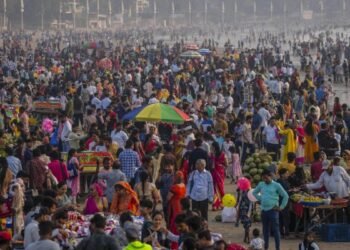
    India, according to United Nations estimates, surpassed China in April 2023 to become the world’s most populous country. While China’s population has peaked and is expected to decline, India’s population continues to grow, with a substantial portion comprised of individuals under the age of 35.


    Sitharaman emphasized the need for a comprehensive understanding of the challenges associated with rapid population growth. The committee is expected to play a crucial role in formulating strategies to navigate these challenges and provide a roadmap for the government’s approach to demographic changes.


    The economic affairs secretary, Ajay Seth, explained during a press briefing that the committee would have an extensive mandate to consider the challenges arising from population growth and recommend specific measures. However, detailed information regarding the committee’s timeline, specific focus areas, and its resemblance to a potential population control bill remains undisclosed.


    India’s demographic landscape is marked by having the largest youth population globally, with approximately 66% of the total population below the age of 35, as reported by the International Labour Organization. This demographic dividend presents both opportunities and challenges for the country’s economic and social development.


    While India’s youth population offers a potential workforce advantage, it also underscores the importance of effective policies to harness this demographic dividend. The high-powered committee is expected to assess these dynamics and formulate recommendations to ensure that India can capitalize on its youthful demographic profile.


    The United Nations projects continued population growth in India over the coming decades, with the workforce expected to expand by 8 million individuals annually for the next ten years. Managing this growth and aligning it with economic development goals will be a critical aspect of the committee’s deliberations.


    As India grapples with the complexities of demographic shifts, there is a need for a nuanced approach that considers not only the quantitative aspects of population growth but also the qualitative dimensions, such as healthcare, education, and employment opportunities. The committee’s recommendations are anticipated to provide valuable insights into policy measures that can effectively address these multifaceted challenges.


    The formation of this high-powered committee reflects the government’s proactive stance in acknowledging and tackling issues related to population growth. As the terms of reference for the committee are awaited, it is expected to engage in a comprehensive review of existing policies and propose innovative solutions to foster sustainable development in the context of India’s evolving demographics.


    The announcement of the high-powered committee in the interim budget underscores the government’s commitment to addressing the challenges posed by rapid population growth. The committee’s recommendations are eagerly awaited, as they are likely to shape policy decisions aimed at leveraging the demographic dividend and steering India toward inclusive and sustainable development.

  • TRAI Recommends Overhaul of DTH Licence Fees and Policies

    TRAI Recommends Overhaul of DTH Licence Fees and Policies

    The Telecom Regulatory Authority of India (Trai) has presented a series of recommendations aimed at reshaping the licence fees and policy framework for Direct-to-Home (DTH) services in India. These recommendations, in line with recent amendments introduced by the Department of Telecommunications (DoT), aim to streamline Adjusted Gross Revenue (AGR) calculations, redefine Bank Guarantee (BG) prerequisites, and gradually reduce licence fees for DTH operators.

    DTH operations in India are governed by established policy guidelines that dictate the acquisition of licenses for offering DTH broadcasting services. These guidelines impose a licence fee (LF), constituting a non-tax fee imposed on service providers as a consideration for the privilege to engage in licensed activities. According to the guidelines, DTH operators are obligated to remit an LF amounting to 8% of their Adjusted Gross Revenue (AGR) on a quarterly basis to the Ministry of Information and Broadcasting (I&B).


    A Bank Guarantee (BG) serves as a financial instrument to ensure prompt payment of dues by service providers and adherence to licence agreement stipulations. Under the existing DTH guidelines, an initial BG of ₹5 crore is required for the first two quarters, followed by an equivalent amount to the LF for the subsequent two quarters and other outstanding dues not covered by security.


    The recommendations propose that Gross Revenue (GR) be inclusive of all income and revenue stemming from operations, encompassing interest, dividends, rent, and gains from asset sales. Furthermore, the concept of Applicable Gross Revenue (ApGR) is introduced, which aids in calculating licence fee revenue by deducting specific components such as revenue from DoT-issued licenses or permissions, government reimbursements, and other forms of income.


    Trai suggests that DTH licensees should pay an annual licence fee amounting to 3% of their AGR. Over a three-year period, the licence fee should be gradually reduced to zero. By the conclusion of the financial year 2026-2027, DTH licensees would no longer be subject to any licence fees.

    Trai also recommends streamlining the reporting process by revising Form-D, the Statement of Revenue and Licence Fee for DTH licensees. The submission process for Form-D should be transitioned to an end-to-end online format, with the ability to upload relevant documents digitally through a single window system. Verification mechanisms should be enhanced through this digital portal.

    The recommendations propose a shift toward electronic Bank Guarantees to facilitate ease of business. Licensees should submit an Initial Bank Guarantee of ₹5 crore for the initial two quarters and later transition to a Performance Bank Guarantee. Once licence fees reach zero, a fixed amount BG should be maintained to ensure adherence to licence conditions.


    Trai’s recommendations seek to modernize and optimize the DTH licensing framework in India, ensuring more efficient fee structures, simplified processes, and greater flexibility for operators in the evolving media landscape.

  • Opposition Leaders to Visit Violence-Hit Manipur

    Opposition Leaders to Visit Violence-Hit Manipur

    On Saturday, a delegation comprising twenty opposition leaders is slated to undertake a crucial visit to the violence-stricken state of Manipur. The primary objective of the visit is to closely assess the ground situation and subsequently present recommendations to both the government and Parliament, aimed at finding effective solutions to the prevailing issues in the state. The delegation is a diverse representation of leaders hailing from various political parties, including Congress, TMC, JMM, DMK, NCP, RLD, RJD, RSP, VCK, JD(U), CPI, CPI(M), Samajwadi Party, IUML, AAP, Shiv Sena-Uddhav Thackeray, and Phulo Devi Netam from Congress.


    Before embarking on this significant journey, Gaurav Gogoi, Congress’ deputy leader in Lok Sabha, has vocally called for a thorough investigation into the violence in Manipur, with the involvement of a retired Supreme Court judge. Expressing deep concern over the persisting violence, he has raised questions regarding the state government’s response to the crisis and the apparent easy access to weapons in the region. The opposition delegation is determined to delve into the matter personally, seeking to understand the true extent of damage caused and the devastating loss of lives and property, while also intending to visit the relief camps where the victims are striving to rebuild their lives.


    It is essential to note that the opposition leaders had been persistently requesting permission for their leaders to visit Manipur, and now, with the visit finally scheduled, they aim to gain first-hand insights into the situation and proffer pragmatic solutions and recommendations to tackle the challenges at hand. The state of Manipur has been grappling with ethnic violence since May 3, resulting in the heartbreaking loss of over 160 lives. This visit by the opposition delegation is an expression of their solidarity with the people of Manipur, as well as their sincere commitment to finding viable avenues for restoring peace and normalcy in the region.


    The opposition’s demand for a statement from the prime minister in Parliament concerning the situation in Manipur, coupled with a comprehensive discussion on the matter, underscores the seriousness and urgency with which they are approaching this critical issue. The delegation’s efforts are geared towards addressing the root causes of the violence and advocating for tangible actions to safeguard the lives and well-being of the people of Manipur. As the delegation embarks on its journey, it carries the weight of responsibility to champion the cause of peace and reconciliation in the region, striving to pave the way for a brighter and safer future for the citizens of Manipur.