Tag: public-private partnerships

  • Maharashtra, UP, and Andhra Pradesh Lead Highway Projects

    Maharashtra, UP, and Andhra Pradesh Lead Highway Projects

    In a significant move to revitalize infrastructure development, Maharashtra, Uttar Pradesh, and Andhra Pradesh are set to lead highway projects in India under the Build-Operate-Transfer (BoT) model. This initiative comes after the Ministry of Road Transport and Highways made substantial efforts to reinvigorate toll projects following a hiatus since 2014.


    With 53 proposed projects spanning approximately 5,200 kilometers and a total worth of ₹2.1 trillion, the government aims to attract private sector participation in undertaking construction risks for promising returns. Maharashtra is poised to account for 14 of these projects, covering 522 kilometers of highways, with an investment of ₹39,477 crore. Uttar Pradesh will undertake six BoT projects, spanning 1,344 kilometers and valued at ₹50,333 crore. Andhra Pradesh, on the other hand, will oversee seven projects under the BoT model.


    This move signals a departure from the previous trend where the BoT model was the preferred choice, representing 96% of all projects awarded in 2011-12. However, its popularity steadily declined over the years as investor appetite for undertaking risks waned. Consequently, the government transitioned to the hybrid annuity model (HAM) to revive investments in road infrastructure projects.


    Kushal Kumar Singh, a Partner at Deloitte India, highlighted that while the HAM model has been successful, it may not cater to certain investors seeking upside in highway projects and willing to take traffic risks. The proposed changes in the BoT model have received positive feedback from the market, indicating potential demand for such projects. Singh emphasized the importance of the government’s flexibility in adapting the model to evolving market dynamics for its success.


    Under the BoT contract, large infrastructure projects are developed through public-private partnerships. In this arrangement, a private firm receives an initial concession from a public entity to build and operate the project. After a specified period, control of the project reverts to the public entity. The investor typically enjoys a concession period of 20 years or more, during which tolls are collected to recoup construction and operating costs and generate profits.


    The National Highways Authority of India (NHAI) last attempted to allocate BoT road projects in 2020 in Maharashtra, Uttar Pradesh, and Andhra Pradesh. These projects were eventually awarded in March 2021 at a premium, with developers paying the government in addition to constructing the road. However, there were several challenges, including multiple extensions to bidding deadlines and the inclusion of incentives. Since then, projects have predominantly been awarded under the Engineering Procurement Construction (EPC) and HAM models due to implementation challenges with BoT projects.


    To revive BoT projects, several initiatives have been undertaken, including schemes such as harmonious substitution, one-time fund infusion, rationalized compensation, premium deferment, and refinancing. These efforts aim to create a conducive environment for private sector participation and attract investments in infrastructure development.


    The government’s ‘Vision 2047’ Plan outlines ambitious goals for the development of high-speed corridors and a world-class highway network in India. A robust public-private partnership in the roads sector will be pivotal in realizing this vision. By leveraging the BoT model and encouraging private sector involvement, India can accelerate infrastructure development and strengthen its transportation network to support economic growth and development.

  • Anticipation Builds for India’s Interim Budget 2024

    Anticipation Builds for India’s Interim Budget 2024

    As India eagerly awaits the interim budget for 2024, industry experts in the fields of research and development (R&D), healthcare, and pharmaceuticals are voicing their expectations for increased allocations in these crucial sectors. Finance Minister Nirmala Sitharaman is set to present the budget on February 1, and stakeholders anticipate a strong focus on fostering innovation and addressing the dynamic healthcare needs of the country.


    Vibcare Pharma CEO Siddharth Singhal emphasized the significance of government support for the pharmaceutical and healthcare sector. He highlighted the need for increased funding in areas critical to the industry, such as regulatory reforms and healthcare funding. Singhal stated, “The budget’s emphasis on research and development offers us an exceptional chance to innovate.” He expressed hope for the government to align its policies with the mission of introducing better and more cost-effective medicines to cater to India’s evolving healthcare landscape.


    Singhal also emphasized the transformative opportunity presented by the budget, envisioning growth in innovation, sustainability, and global competitiveness for the pharmaceutical industry. The industry’s current valuation stands at approximately $50 billion, with ambitious growth targets of $120 billion to $130 billion by 2030 and a staggering $450 billion by 2047, according to government estimates.


    Healthium Medtech CEO and MD Anish Bafna underscored India’s potential to become a global hub for the medtech sector. He called for a collaborative action plan involving public-private partnerships to drive expansion, growth, investment opportunities, and technological innovation in the healthcare sector during the fiscal year 2024-25. Bafna emphasized the importance of conducive policies to support local manufacturing and facilitate faster accessibility of new medical devices for patients and healthcare providers.


    Dr. Joy Shah, founder of Beagle Lasers, highlighted the expected focus on strengthening the availability of quality healthcare, especially in rural areas. He anticipated changes in the GST tariff and services covered under healthcare, with a potential strengthening of import regulations to reduce the influx of imported medical equipment. Dr. Shah emphasized the importance of creating a conducive environment for local manufacturers to thrive, aligning with the “Make in India” initiative and contributing to enhanced employment opportunities and healthcare service quality.


    VarcoLeg Care CEO Veeky Ganguly expressed anticipation for policy measures that simplify the adoption of health technologies. Streamlined regulatory processes and incentives for healthcare providers to embrace digital solutions were cited as potential measures that would benefit the industry and contribute to a more patient-centric healthcare approach.


    Vikram Thaploo, CEO- Telehealth, Apollo Hospitals Enterprises Limited, emphasized the need for increased funding to boost domestic manufacturing of medical equipment. Thaploo looked forward to potential changes in GST tariffs and services covered under healthcare, expecting measures to strengthen import regulations and create an environment conducive to the growth of indigenous manufacturers. He urged the government to prioritize investments in public health infrastructure, primary healthcare facilities, essential medicines, and the expansion of Production-Linked Incentive (PLI) schemes to cover advanced digital technologies like Generative AI.


    As the Union Budget 2024-25 approaches, the healthcare industry’s collective optimism is centered around the hope that the government’s fiscal measures will pave the way for enhanced innovation, accessibility, and growth in India’s crucial healthcare sectors. The budget, with general elections on the horizon, is expected to strike a delicate balance between fiscal prudence and populist measures.

  • Sanoj Kumar Jha Stresses Stringent Food Safety Standards

    Sanoj Kumar Jha Stresses Stringent Food Safety Standards

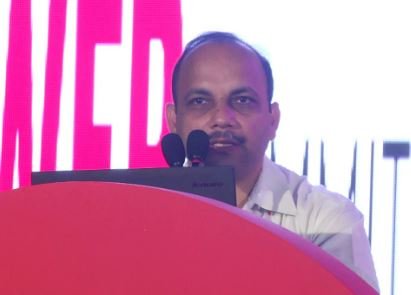
    Sanoj Kumar Jha, the additional secretary of the ministry of food processing industries, stressed the importance of implementing stringent food safety standards to build trust among consumers both within India and internationally. He emphasized that food safety plays a pivotal role in propelling the rapid growth of the Indian food processing sector.


    During Sanoj Kumar Jha address at the ‘FICCI conference on Capability Enhancement for Safe Food Business and Accession Ceremony of All India Cadre of Safe Food Business Professionals,’ Jha highlighted the significance of India’s agriculture and processed food industries, particularly in the context of the pandemic. He noted that many countries are now keen on establishing robust food security measures and emphasized the need to adhere to export-related food safety standards prevalent in various nations.


    “It is not just for exports, but also for domestic consumption and health concerns that we must ensure the food we eat and export meets minimum standards. Complying with the standards set by countries like Europe, the US, or Africa is critical for successful exports,” asserted Jha.


    He also underlined the dynamic nature of food safety regulations and norms set by the food safety and standards authority of India (FSSAI). Jha mentioned that the FSSAI continually improves regulations to strengthen food safety measures.


    “The norms will continue to become more stringent in the future,” he stated, emphasizing the importance of ensuring food safety even among local street food vendors.


    Jha called on all stakeholders to collaborate and work together to ensure safe food consumption and export practices.


    Prabhat K Nema, director at the National Institute of Food Technology, Entrepreneurship, and Management (NIFTEM), highlighted the significance of public-private partnerships in enhancing capacity in the food processing industry. He pointed out NIFTEM’s collaborations with leading institutions and industry partners to develop courses aimed at nurturing skilled business leaders capable of meeting the evolving needs of the industry.

  • Asian Development Bank Commits $200 Million

    Asian Development Bank Commits $200 Million

    On Friday, the central government and the Asian Development Bank (ADB) entered into an agreement, signing a $200 million loan to provide additional financing for the ongoing Rajasthan Secondary Towns Development Sector Project. The main objectives of this funding are to expand water supply and sanitation systems and enhance urban resilience and heritage preservation in selected towns, as stated by the Ministry of Finance.


    The loan agreement was signed by Vumlunmang Vualnam, the additional secretary of the Department of Economic Affairs in the Ministry of Finance, representing the Indian government, and Takeo Konishi, the country director of Asian Development Bank India Resident Mission.


    Vualnam, after the signing, expressed that the additional financing will aid the Rajasthan government in its efforts to bridge basic infrastructure gaps in secondary towns. This will be achieved through the expansion of water supply and sanitation services and an improvement in the overall livability of selected urban local bodies.


    Konishi emphasized that the project will incorporate innovative and climate-resilient solutions to enhance basic urban services. It will also include nature-based approaches to restore heritage structures and explore the implementation of public-private partnerships in the water and sanitation sector to foster increased private sector involvement.


    The ongoing project, which was initially approved in September 2020, has already made significant progress, having laid down 1,451km of water supply pipes, 1,110km of sewer pipes, and provided water services to 68,098 households in selected secondary towns in Rajasthan.


    The additional financing will further enhance the water supply systems in at least seven towns. This will involve converting all groundwater sources to surface water, replacing approximately 700 km of leaking water pipes, installing 1,400 km of new water supply pipelines, and providing water meter connections to 77,000 households. Additionally, three new water treatment plants will be established.


    Furthermore, at least eight towns will witness improved sanitation systems, including the rehabilitation of around 580 km of sewers, the construction of seven sewage treatment plants equipped with co-treatment units to process fecal sludge and septage, and connecting approximately 54,000 households to the sewage system.


    Moreover, the project aims to rehabilitate at least 20 heritage or heritage-like structures to enhance the living environment and attract more tourists to the region, ultimately contributing to its cultural and economic growth.