Tag: Monopoly

  • Lina Khan Targets Amazon’s E-commerce Monopoly in Lawsuit

    Lina Khan Targets Amazon’s E-commerce Monopoly in Lawsuit

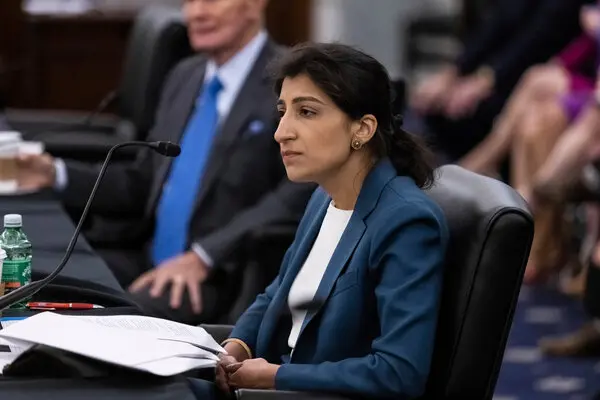
    Lina Khan, the chair of the Federal Trade Commission (FTC) and a prominent figure in the world of antitrust enforcement, has filed a lawsuit against Amazon, marking another significant step in the ongoing scrutiny of big tech companies. Khan, known for her prior critique of Amazon’s practices, has accused the e-commerce giant of abusing its monopoly power in the online retail market.


    Khan’s legal criticism of Amazon initially gained attention in 2017 when she was a law student at Yale, and the company was rapidly expanding its reach in the retail sector. In her academic paper, Khan accused Amazon of engaging in predatory pricing strategies, where it lowered prices to a level where competitors couldn’t compete, thus hurting consumers. However, she acknowledged that predatory pricing was almost obsolete as a legal theory due to high legal barriers.


    Fast forward to 2023, and the FTC’s lawsuit presents a different perspective. Instead of accusing Amazon of harming consumers with low prices, the lawsuit asserts that Amazon has hurt consumers by imposing higher prices, mainly through punitive measures against marketplace sellers who offer lower discounts elsewhere. Additionally, it claims that Amazon benefits from its monopoly by mandating sellers to use its fulfillment services.


    This change in focus has led to discussions about the evolution of antitrust enforcement, with experts highlighting the complexity of antitrust theory and practice. While Khan’s 2017 paper criticized Amazon for aggressive discounting to gain a monopoly, the company later shifted to raising prices after establishing market dominance. This shift aligns with the most common theory of antitrust harm, which centers on consumer harm, often through higher prices or reduced quality.


    The FTC’s lawsuit further claims that Amazon’s advertising practices have contributed to its violations. Amazon’s shopping results pages are described as “cluttered with advertisements,” making it challenging for consumers to find the products they want. Additionally, it suggests that Amazon’s advertising creates a pay-to-play system for sellers who must pay for better search placements through advertising.


    Amazon has strongly contested the FTC’s claims, arguing that they are baseless and would force the company to raise prices or offer worse service to consumers. The company has emphasized its role in helping marketplace sellers offer competitive prices.


    It’s worth noting that the FTC’s complaint does not address certain practices that Lina Khan criticized in her 2017 paper, such as Amazon’s alleged use of third-party seller data to create competing products. Transforming these claims into antitrust violations presents legal challenges.


    Overall, Lina Khan’s lawsuit against Amazon reflects the evolving landscape of antitrust enforcement, especially in the digital age where online platforms act as intermediaries between buyers and sellers. While the outcome of this legal battle remains uncertain, it underscores the broader debate about the power and practices of tech giants in the digital economy.

  • Air India’s Merger with Vistara Faces Scrutiny from CCI

    Air India’s Merger with Vistara Faces Scrutiny from CCI

    Air India’s Chief Executive, Campbell Wilson, has engaged in talks with India’s antitrust head regarding the airline’s planned merger with sister airline Vistara. The Competition Commission of India (CCI) has been closely examining the merger, which involves Tata Group’s takeover of Air India and its joint venture with Singapore Airlines, Vistara. The proposed merged entity aims to challenge the market leader, IndiGo.


    Recent details of the CCI’s concerns have emerged, with the watchdog expressing worries about the combined airline’s market power on various international and domestic routes. Additionally, the CCI’s preliminary review has indicated that the Tata Group’s market share could exceed 50% in at least seven domestic markets, raising competition concerns.


    In response to the CCI’s concerns, Air India’s CEO Wilson and Tata Group’s General Counsel, Sidharth Sharma, held meetings with CCI chief, Ravneet Kaur, to discuss the ongoing merger process. These meetings are an effort to address the concerns and find a way forward.


    The CCI’s scrutiny comes amid industry concerns about the potential duopoly formed by a merged Air India-Vistara and IndiGo, controlling over 75% of the domestic market. Smaller rivals like SpiceJet and Go First are facing challenges as a result.


    IndiGo currently holds 58% of the market share, while Tata Group airlines, including AirAsia India, account for 25% in the first half of 2023.


    Air India is yet to respond to the CCI’s concerns. Once they submit their response, the watchdog will review their submissions and decide on the merger. If unsatisfied, the CCI has the option to order a broader review. Vistara’s CEO, Vinod Kannan, stated that regulatory approvals for the Air India-Vistara merger are expected to be obtained by April 2024.