Tag: Insolvency and Bankruptcy Code

  • Insolvency Proceedings Initiated Against Vadraj Cement

    Insolvency Proceedings Initiated Against Vadraj Cement

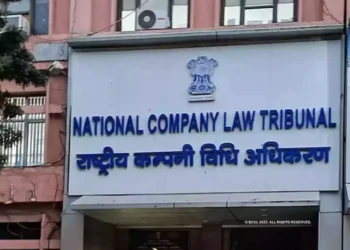
    The Mumbai bench of the National Company Law Tribunal (NCLT) has initiated corporate insolvency proceedings against Vadraj Cement, a group company of the insolvent ABG Shipyard, after the cement manufacturer defaulted on dues of over ₹87 crore to Punjab National Bank. The NCLT’s decision, which came in response to an application filed by Punjab National Bank under the Insolvency and Bankruptcy Code (IBC), marks a significant development in the ongoing financial challenges faced by Vadraj Cement.


    The NCLT bench, led by Justices KR Saji Kumar and Sanjiv Dutt, found that the default by Vadraj Cement had been established, and the application filed under Section 7 of the IBC deserved to be admitted. The tribunal, therefore, ordered the commencement of the corporate insolvency resolution process (CIRP) for Vadraj Cement. Pulkit Gupta, a partner at EY (debt and special situations), was appointed as the interim resolution professional (IRP) to manage the day-to-day affairs of the company during the resolution process.


    Punjab National Bank had filed the application under the IBC, stating that Vadraj Cement had defaulted on its dues despite repeated requests. The bank’s move was prompted by the company’s failure to repay the outstanding amount, leading to financial stress and a prolonged non-performing asset (NPA) status. Vadraj Cement had been classified as an NPA in December 2017, and despite subsequent requests for repayment, the default persisted.


    The initiation of the CIRP is a significant step to address the financial distress faced by Vadraj Cement. This process, guided by the IBC, aims to provide a structured framework for the resolution of outstanding dues, allowing for the equitable distribution of funds among creditors. The appointment of an interim resolution professional is crucial in managing the affairs of the company during this period and facilitating negotiations between the creditors and the debtor.


    Vadraj Cement, headquartered in Gujarat, has been grappling with financial challenges for some time. In August 2018, the Bombay High Court initially ordered the winding-up of Vadraj Cement after a trade creditor, Beumer Technologies India, sought legal intervention to recover dues. However, the court later recalled the winding-up order and transferred the matter to the NCLT bench.


    The company’s total debt reportedly stands at ₹7,000 crore, with lenders including Punjab National Bank, Union Bank of India, Central Bank of India, Indian Overseas Bank, Bank of India, and Bank of Baroda. The financial strain faced by Vadraj Cement is part of a larger trend in the Indian corporate landscape, where companies, particularly those in sectors like cement and steel, have grappled with economic challenges and debt-related issues.


    The decision to initiate CIRP against Vadraj Cement highlights the significance of the IBC in addressing corporate insolvency and providing a legal framework for the resolution of financial distress. The process involves the identification of a resolution professional, who, in this case, is Pulkit Gupta from EY, to oversee the operations during the resolution period. The resolution professional works closely with the creditors, company management, and other stakeholders to formulate and implement a resolution plan that ensures the maximization of value for all parties involved.


    While Vadraj Cement faces a challenging period ahead, the initiation of CIRP provides an opportunity for the company and its creditors to engage in negotiations, explore restructuring options, and work towards a sustainable resolution. The NCLT’s decision serves as a crucial step in the insolvency resolution process and reinforces the importance of a robust legal framework to address financial distress in the corporate sector.

  • PM Modi Highlights India’s Economic Growth Story at BRICS

    PM Modi Highlights India’s Economic Growth Story at BRICS

    Prime Minister Narendra Modi showcased India’s robust economic growth trajectory during his participation in the BRICS Business Forum Leaders’ Dialogue in Johannesburg. The event took place as part of his visit to South Africa for the 15th BRICS Leaders’ Summit.


    Modi confidently asserted that India is poised to be a significant growth engine for the global economy. Despite the prevailing challenges in the international economic landscape, India has emerged as the fastest-growing major economy, showcasing its resilience and potential.


    During his address, the prime minister highlighted his government’s commitment to implementing key reforms that have positively impacted India’s business environment. He mentioned the successful introduction of the Insolvency and Bankruptcy Code and the Goods and Services Tax (GST), which have streamlined business processes, improved ease of doing business, and bolstered investor confidence.


    Modi also emphasized the strides made in public-service delivery, attributing much of the progress to the integration of technology. He underscored the reduction in corruption and highlighted the significant achievements of direct benefit transfers, amounting to over $360 billion, to citizens.


    The success story of Unified Payments Interface (UPI) transactions, a hallmark of India’s digital financial revolution, found mention in Modi’s speech. He highlighted UPI’s international partnerships and proposed potential collaborations with other BRICS countries to further enhance this innovative platform.


    Discussing India’s multifaceted progress, Modi touched upon the country’s thriving startup ecosystem, advancements in gender equality, and the ambitious “Make in India” initiative, which seeks to promote domestic manufacturing and position India as a global manufacturing hub.


    During the forum, Prime Minister Modi shared the stage with President Cyril Ramaphosa of South Africa and President Lula da Silva of Brazil. While President Xi Jinping of China did not attend the business forum event, President Vladimir Putin of Russia participated virtually in the BRICS Summit. The collective engagement of these leaders signifies the commitment to mutual growth and cooperation within the BRICS framework.

  • Banking Sector: From Havoc to Good Financial Health

    Banking Sector: From Havoc to Good Financial Health

    Prime Minister Narendra Modi emphasized on Saturday that the pursuit of power at the expense of national interest had severely impacted India’s banking sector during the UPA government. However, his administration successfully restored the sector’s financial health through a series of measures. Speaking at a Rozgar Mela where over 70,000 recruits received appointment letters virtually, PM Modi highlighted the banking sector’s remarkable turnaround under his government’s corrective actions. He praised the employees for their dedication in implementing various government schemes, such as providing loans under the ‘Mudra’ scheme and supporting women self-help groups.


    PM Modi pointed out the previous government’s “phone banking” scam, where large loans were granted to favorites of powerful individuals without any intention of repayment. His government, on the other hand, took decisive steps to strengthen banks’ management, merge small banks, and introduce professionalism to aid the sector. As a result, public sector banks that were once notorious for losses and non-performing assets (NPAs) are now known for record profits.


    He also highlighted how India’s growing global trust and attraction present numerous opportunities in various fields. India’s banking sector has significantly improved, a stark contrast from nine years ago when it faced destruction due to the greed for power over national interest. To protect banks from NPAs, the government implemented laws such as the Insolvency and Bankruptcy Code and took stringent actions against those involved in swindling banks.


    The prime minister assured the young recruits that their future is intertwined with the nation’s progress as it aims to become a developed country. He emphasized the rise of India’s economy under his government’s tenure, and experts predict it may soon become the third-largest global economy. This growth will generate employment opportunities across sectors and increase citizens’ income.


    PM Modi lauded the government servants’ efforts in uplifting millions of Indians from poverty through various welfare measures. He stressed the significance of the neo-middle class, which is driving the manufacturing sector with their increasing demand and aspirations. India’s young population holds great potential, and the government has focused on enhancing their skills through the establishment of more professional education institutes.


    As the nation marks a historic day when the ‘Tiranga’ was adopted in its current form in 1947, PM Modi emphasized the crucial role of government employees in shaping India’s future and eliminating poverty from the country. He expressed confidence in India’s potential to achieve monumental progress in the coming years, creating new opportunities and a prosperous future for its citizens.