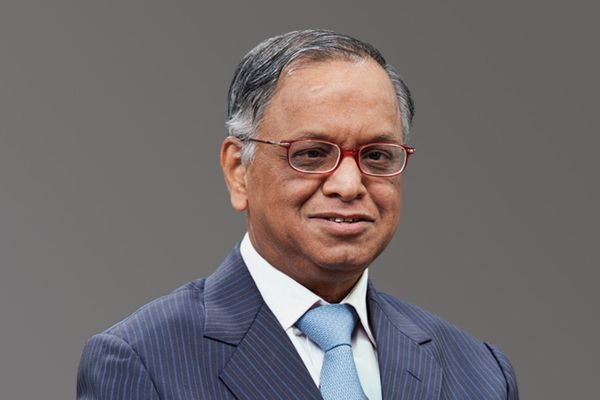
Tag: Infosys

  • Sudha Murty Shares Story to Narayana Murthy for Infosys

    Sudha Murty Shares Story to Narayana Murthy for Infosys

    At the India Today Conclave 2024, Rajya Sabha MP Sudha Murty shared a remarkable anecdote about her pivotal role in the founding of Infosys, a leading global IT company. Sudha Murty recounted a significant moment in 1981 when she took a bold step that would change the course of their lives forever. She revealed how she provided financial support to her husband, NR Narayana Murthy, to kickstart the venture that would later become Infosys.


    During her speech, Sudha Murty reminisced about an argument she had with Narayana Murthy back in 1981. At that time, Narayana Murthy expressed his desire to establish a software company, despite the couple having stable and well-paying jobs. Sudha Murty, initially hesitant about taking such a risk, voiced her concerns to her husband. However, Narayana Murthy remained determined to pursue his entrepreneurial dreams.


    Despite her reservations, Sudha Murty took a leap of faith and decided to support her husband’s vision. She revealed that she had ₹10,250 in her savings at that time. Out of this amount, she set aside ₹250 for herself and gave the remaining ₹10,000 to Narayana Murthy. This decision was not without apprehension, especially considering Narayana Murthy’s previous venture, Softronics, had ended in failure. However, Sudha Murty chose to take a risk, believing in her husband’s capabilities and vision for the future.


    Sudha Murty’s decision to invest in Narayana Murthy’s venture proved to be transformative. As Infosys began to grow and thrive, it brought significant changes to their lives. Sudha Murty reflected on how her life drastically changed with the success of Infosys, describing it as a newfound responsibility and commitment.


    Her story serves as a testament to the power of belief, risk-taking, and unwavering support in the journey of entrepreneurship. Sudha Murty’s willingness to take a chance on her husband’s dreams not only laid the foundation for Infosys but also symbolizes the strength of their partnership and mutual trust.


    Meanwhile, NR Narayana Murthy, the co-founder of Infosys, expressed his pride and admiration for his wife’s contributions during her oath-taking ceremony as a Rajya Sabha MP. He fondly recalled how Sudha Murty had always been his superior and referred to her as the “better half.” Narayana Murthy’s words highlight the deep respect and admiration he holds for Sudha Murty and her accomplishments.


    Reflecting on Infosys’ journey, Narayana Murthy shared his proudest moment, which was when the company became the first Indian company to be listed on Nasdaq, the American stock exchange. He described the experience of sitting in front of the scorching lights on a high stool at Nasdaq as a significant milestone for the company and the Indian IT industry as a whole.


    Narayana Murthy also spoke about Infosys’ unique culture, emphasizing the importance of operating as an enlightened democracy. He acknowledged that while there may have been daring decisions they could have taken to accelerate growth, the company’s commitment to democratic principles ultimately shaped its trajectory.


    Overall, Sudha Murty’s story of giving ₹10,000 to Narayana Murthy to start Infosys and Narayana Murthy’s reflections on the company’s journey offer valuable insights into the entrepreneurial spirit, partnership, and values that have guided Infosys to success. Their story serves as an inspiration for aspiring entrepreneurs and underscores the significance of belief, resilience, and collaboration in achieving one’s dreams.

  • Karnataka BJP MLA Criticizes Infosys for Lack of Job Creation

    Karnataka BJP MLA Criticizes Infosys for Lack of Job Creation

    In a significant criticism levied against IT behemoth Infosys, Arvind Bellad, a Karnataka BJP MLA representing the Hubli-Dharwad West constituency, raised concerns over the company’s failure to generate employment at its Hubballi campus despite acquiring substantial land. Speaking during the Budget session of the Karnataka Assembly, Bellad, who also serves as the Deputy Leader of the Opposition, expressed disappointment over the lack of job creation initiatives by Infosys and called for government intervention to address the issue.


    Highlighting the specific issue at hand, Bellad pointed out that Infosys had been granted 58 acres of land in his constituency with the primary objective of fostering employment opportunities for the entire North Karnataka region. However, he lamented that the company had failed to deliver on its commitment to job creation, thereby leaving the local community disillusioned. Bellad emphasized the significance of job creation in stimulating economic growth and improving livelihoods, particularly in regions like North Karnataka that are often marginalized in terms of development opportunities.


    Of particular concern to Bellad was the disparity between the land’s allocated value and its actual worth. He revealed that Infosys had acquired the land at a significantly discounted rate of ₹35 lakh per acre, substantially lower than its market value of ₹1.5 crore per acre. This revelation raised questions about the terms of the land acquisition deal and whether adequate measures were in place to ensure accountability and compliance with agreed-upon commitments, including job creation targets.


    Bellad’s remarks underscored the broader implications of such discrepancies, particularly in relation to the livelihoods of local farmers who had willingly parted with their land under the assumption that it would contribute to the socio-economic development of the region. He emphasized the need for transparency and accountability in such dealings, particularly when public resources and interests are involved.


    In response to Bellad’s concerns, the Karnataka IT-BT Minister acknowledged the gravity of the situation and suggested that incentives provided to companies like Infosys could be subject to review or withdrawal if they fail to fulfill their commitments. This acknowledgment reflects a willingness on the part of the government to address the issue and hold companies accountable for their actions, thereby upholding principles of fairness and equity in economic development initiatives.


    Furthermore, Industries Minister MB Patil assured that a thorough investigation would be conducted into the matter to determine the extent of Infosys’ compliance with its obligations following the land acquisition. He pledged to issue notices and take appropriate action if it is found that insufficient progress has been made in terms of job creation or fulfilling other stipulated conditions.


    The discussion surrounding Infosys’ alleged failure to create jobs despite acquiring land at a discounted rate highlights broader concerns about corporate accountability and the efficacy of government incentives in promoting socio-economic development. It underscores the importance of ensuring that public resources are utilized effectively and transparently to benefit local communities and foster inclusive growth.


    The case also serves as a reminder of the challenges and complexities inherent in balancing economic development objectives with social and environmental considerations. While initiatives such as land acquisition and incentives for job creation are intended to spur investment and stimulate growth, they must be implemented with careful planning and oversight to ensure that they deliver tangible benefits to the communities they are intended to serve.


    Arvind Bellad’s criticism of Infosys’ alleged failure to create jobs at its Hubballi campus highlights the need for greater accountability and transparency in corporate dealings. It underscores the importance of ensuring that economic development initiatives prioritize the interests of local communities and contribute to inclusive growth and sustainable development.

  • Labour Alleges Favouritism towards Infosys

    Labour Alleges Favouritism towards Infosys

    The UK’s Labour Party has raised concerns over potential favoritism towards Infosys, an India-based software services company, allegedly due to familial connections between Prime Minister Rishi Sunak and the company’s co-founder. The controversy stems from revelations that Sunak’s wife, Akshata Murty, holds a significant stake in Infosys, valued at around GBP 500 million. Murty, the daughter of Infosys co-founder Narayana Murthy, reportedly received millions in dividends from the company in the past financial year.


    A recent report by the ‘Sunday Mirror’ suggests that Trade Minister Lord Dominic Johnson discussed the UK operations of Infosys during a meeting at the company’s offices in Bengaluru. The report indicates that Lord Johnson expressed a desire to see an expanded presence of Infosys in the UK and offered assistance to facilitate such growth.


    Labour’s shadow minister Jonathan Ashworth expressed concern over the perceived special treatment given to Infosys, especially in light of previous controversies surrounding government contracts awarded to companies with close ties to Conservative Party members. Ashworth emphasized the need for transparency and accountability, stating that the public deserves answers regarding the circumstances surrounding Infosys’ apparent VIP access.


    Lord Johnson’s alleged advocacy for Infosys during the meeting raises questions about potential preferential treatment afforded to the company. The fact that Akshata Murty’s familial connection to Infosys intersects with her husband’s position as Prime Minister Rishi Sunak adds fuel to the controversy. Critics argue that such connections could lead to conflicts of interest and undermine public trust in the government’s decision-making processes.


    The discussion surrounding Infosys and its relationship with the UK government comes amidst broader debates about corporate influence in policymaking and the ethical responsibilities of public officials. In particular, concerns have been raised about the potential implications of Infosys seeking visa benefits under the proposed India-UK free trade agreement (FTA). Some opposition members have questioned whether the company’s ties to influential figures could result in preferential treatment in trade negotiations.


    In response to the allegations, a spokesperson for the Department for Business, Trade, and Investment (DBT) defended Lord Johnson’s engagement with Infosys, emphasizing the government’s commitment to promoting the UK as an attractive investment destination. The spokesperson highlighted the role of trade ministers in fostering relationships with businesses and international investors to stimulate economic growth and job creation.


    However, Labour and other critics remain skeptical, calling for greater transparency regarding the nature of discussions between government officials and companies like Infosys. They argue that clear guidelines and safeguards are necessary to prevent conflicts of interest and ensure fair treatment for all businesses operating in the UK.


    Meanwhile, Infosys has yet to respond to the latest allegations. The company’s silence on the matter further fuels speculation and adds to the urgency of addressing concerns about potential favoritism and undue influence in government decision-making processes.


    Overall, the controversy surrounding Infosys and its perceived VIP access underscores the importance of transparency, accountability, and ethical governance in the relationship between government and businesses. As public scrutiny intensifies, policymakers must take steps to uphold the integrity of the decision-making process and maintain public trust in the institutions responsible for regulating and facilitating economic activities.

  • Rishi Sunak Faces Scrutiny Over Alleged Favoritism

    Rishi Sunak Faces Scrutiny Over Alleged Favoritism

    British Prime Minister Rishi Sunak is facing renewed scrutiny following allegations that the Indian IT giant Infosys received preferential treatment for its growth in the UK due to familial connections. The Opposition Labour Party has raised concerns, asserting that Infosys was effectively granted “VIP access” with discussions involving Trade Minister Lord Dominic Johnson during a visit to Infosys offices in Bengaluru last April. The details of the meeting have been brought to light through freedom of information (FOI) requests.


    A ‘Sunday Mirror’ report claimed that Lord Johnson discussed Infosys’ UK operations during the meeting and expressed a desire to see a larger Infosys presence in the UK, offering assistance in facilitating that growth. The meeting’s readout reportedly mentioned that Lord Johnson was keen to support Infosys and enhance its presence in the UK.


    This development has triggered questions about potential preferential treatment and connections between the British government and Infosys. The situation is further complicated by the fact that Akshata Murty, the wife of Rishi Sunak, holds a 0.91% stake in Infosys, valued at over £500 million. Akshata Murty, who is the daughter of Infosys co-founder Narayana Murthy, received millions in dividends from Infosys in the last financial year.


    Labour’s shadow minister Jonathan Ashworth expressed concerns about potential impropriety, especially in the context of previous controversies involving government contracts awarded during the coronavirus pandemic. Ashworth stated, “After the Tories handed billions in taxpayers’ cash to cronies for duff PPE (personal protective equipment), the public will wonder why an outfit so personally close to Rishi Sunak appears to have been granted this VIP access. There are serious questions to answer.”


    It’s important to note that Lord Johnson outlined the advantages of the UK’s high-potential individual visa scheme for Infosys during the meeting. The FOI documents indicate that the meeting aimed to reassure Infosys about the prospects for the UK economy and highlight the support available through the Department for Business and Trade (DBT).


    The controversy surrounding Infosys and Rishi Sunak is the latest in a series of issues related to the Prime Minister’s wife’s association with the Indian IT firm. Last year, Akshata Murty’s non-domicile tax status, which allowed her to avoid UK tax on her Indian income, drew attention and criticism. Following public scrutiny and opposition pressure, she relinquished her non-dom tax status and committed to paying all her taxes in the UK.


    The timing of this latest controversy is particularly sensitive as it comes amid ongoing debates about government integrity, accountability, and potential conflicts of interest. The allegations raise questions about whether Infosys received special treatment due to its connection with the Sunak family and the potential influence of familial ties in government decisions.


    A spokesperson for the Department for Business and Trade (DBT) defended the meeting, stating that the investment minister regularly engages with businesses and international investors to promote the UK as an investment destination. The DBT emphasized that such engagements aim to drive investment, create jobs, and boost the UK economy.


    This situation adds another layer to the political challenges facing Rishi Sunak, who has been navigating controversies surrounding his family’s financial dealings and potential conflicts of interest. The Prime Minister, in his response to the allegations, underscored the independence of investigating agencies and emphasized that investigating is the work of these agencies. He stated that the agencies are independent, and the Constitution has kept them so, emphasizing that it is for the courts to judge their actions.


    As the political landscape evolves, the allegations against Rishi Sunak and the connections between government officials and private entities are likely to remain in the spotlight. The Prime Minister’s assurances of the agencies’ independence and his commitment to fighting corruption will be closely watched as the government addresses these concerns and navigates potential fallout from the ongoing controversies.

  • Narayana’s Advice to Daughter Akshata and UK PM Rishi Sunak

    Narayana’s Advice to Daughter Akshata and UK PM Rishi Sunak

    Infosys founder Narayana Murthy and his author wife Sudha Murty recently shared insights into the advice they gave to their daughter Akshata Murty and her husband, UK Prime Minister Rishi Sunak, on handling increased public scrutiny. The family came under fresh limelight in 2022 when Rishi Sunak assumed the role of Prime Minister of Britain.


    Sudha Murty, known for her strong recommendations on lifestyle, revealed that she advised Akshata and Rishi to be honest in their work, serving the nation, and to ignore what people might say.


    “I always tell them [Akshata and Rishi], people talk because of your position. And if you’re honest, if you’re helping your country, your job – what you’re doing – people will always talk. ‘Kuch toh log kahenge, logon ka kaam hai kehna.’ So, ignore that,” Sudha Murty told NDTV in an interview.


    “As long as the work you do is ethical and legal, do that. You don’t need anyone as a witness; God is the witness. Do your work, let them talk. It may affect you for some time, but in the long run, you should learn to let them talk, and you do your work,” the renowned author added.


    These remarks by Sudha Murty come at a time when British Prime Minister Rishi Sunak is facing scrutiny from opposition parties in the UK over the closure of Catamaran Ventures, a company co-founded by Rishi Sunak and his wife Akshata Murty with backing from Narayana Murthy.


    The operations of Catamaran Ventures UK came under examination due to revelations that several startups it supported obtained financial injections through government-supported programs.


    “It was revealed that the firm run by the Prime Minister’s wife received GBP 2m through government Covid support schemes devised by Rishi Sunak himself. It then emerged businesses in which Ms. Murty had invested went bust, costing taxpayers GBP 1m… My colleagues and I have written numerous correspondence to government ministers and bodies. Alongside the outstanding questions, the decision by Ms. Murty to liquidate her company raises several others that I believe need to be clarified in the public interest,” said Labour’s national campaign coordinator and shadow minister, Pat MacFadden.


    The advice from Sudha Murty seems to underscore the importance of integrity and a focus on ethical and legal work in the face of public scrutiny. It reflects the family’s philosophy of staying committed to one’s responsibilities and principles while dealing with the challenges that come with public life. As Akshata Murty and Rishi Sunak navigate these challenges, Sudha Murty’s words highlight the resilience required in public service, emphasizing the long-term impact of ethical conduct and dedicated work.

  • Opinions: Narayana Murthy’s 70-Hour Work Week Suggestion

    Opinions: Narayana Murthy’s 70-Hour Work Week Suggestion

    Narayana Murthy, the co-founder of Infosys, recently stirred up a debate with his suggestion that India’s workforce should commit to a 70-hour work week to enhance the country’s productivity. This proposal received a diverse range of reactions, with some industry leaders supporting the idea and others expressing reservations about work-life balance and potential burnout.


    During an interview with former Infosys CFO Mohandas Pai in the inaugural episode of 3one4 Capital’s podcast ‘The Record,’ Narayana Murthy emphasized the need for young people to put in extra hours at work to compete with leading economies. He cited India’s relatively low work productivity on the global scale and stressed that improving productivity is essential for India to compete with nations like China, Japan, and Germany, which have made significant progress.


    “I wholeheartedly endorse Mr. Narayana Murthy’s statement on 70-hour work week. It’s not about burnout; it’s about dedication. We have to make India an economic superpower that we can all be proud of by 2047. A 5-day week culture is not what a rapidly developing nation of our size needs,” commented Sajjan Jindal, Chairman of the JSW Group.


    Bhavish Aggarwal, CEO of Ola Cabs, also expressed his agreement with Narayana Murthy’s views regarding the 70-hour work week. Aggarwal emphasized that it is a crucial moment for India to focus on hard work and dedication, rather than working less and indulging in entertainment.


    In his statement, Bhavish Aggarwal said, “Totally agree with Mr. Murthy’s views. It’s not our moment to work less and entertain ourselves. Rather, it’s our moment to go all in and build in one generation what other countries have built over many generations! So therefore, my request is that our youngsters must say, ‘This is my country. I’d like to work 70 hours a week.”


    Despite this support from industry leaders, Narayana Murthy’s suggestion also faced criticism from various quarters, with concerns about work-life balance and the potential for burnout. Many people argued that a more balanced approach to work and personal life is essential for overall well-being.


    However, it’s worth noting that Narayana Murthy’s proposal found support not just from industry figures but also from within his own family. Sudha Murty, an acclaimed author of children’s literature and the wife of Narayana Murthy, offered her perspective on the matter. She noted that her husband has always lived a life of hard work and passion, working 80 to 90 hours a week during his career. She emphasized that Narayana Murthy has shared his experiences and beliefs, which are grounded in real hard work.


    Sudha Murty explained, “He has worked 80 to 90 hours a week, so, he doesn’t know what less than that is. He believes in real hard work, and he lived like that. Hence, he has told what he felt.” Sudha Murty backed her husband’s perspective, highlighting his dedication and passion for his work.


    The debate sparked by Narayana Murthy’s suggestion reflects the ongoing discussions around work-life balance, productivity, and the future of work in India. While there are diverse views on the matter, it remains a topic of significant interest and importance in the context of India’s economic and workforce development.

  • N.R. Narayana Murthy: The Visionary Behind Infosys

    N.R. Narayana Murthy: The Visionary Behind Infosys

    N.R. Narayana Murthy, a visionary and co-founder of Infosys, founded the iconic Indian IT company in 1981 with a bold vision – to conduct an experiment in entrepreneurship. He described Infosys as a company “of the professionals, for the professionals, and by the professionals.” Infosys was established in Pune but is currently headquartered in Bangalore, and it has consistently ranked as the second-largest Indian IT company by revenue, trailing only Tata Consultancy Services as of 2020.


    In a recent interview with Mohandas Pai of 3one4 Capital on an episode of The Record, Narayana Murthy reminisced about the inception of Infosys. He explained his motivation, stating, “When I founded Infosys, it was to conduct an experiment in entrepreneurship.” His aspiration was to create a unique enterprise that catered to professionals and was run by professionals.


    Infosys specializes in providing software development, maintenance, and independent validation services to companies across various sectors, including finance, insurance, and manufacturing. Its journey from a small experiment in entrepreneurship to a global IT giant is nothing short of remarkable.


    In the conversation with Mohandas Pai, Narayana Murthy touched upon the role of technology and described it as a “great leveller.” He emphasized the significance of individual expertise and the creative role played by architects in the execution of a project. He explained that while committees may be unable to make critical decisions, an architect’s creative design is crucial for the successful execution of a project. This analogy underscores the importance of individual expertise and creativity in technology-driven enterprises.


    Infosys began its journey with a modest initial capital of $250, primarily borrowed from the co-founders’ spouses. Over the years, it has grown to become India’s second-largest IT firm, a testament to Narayana Murthy’s pioneering vision and the unwavering dedication of the company’s founders and employees.


    Beyond Infosys, Narayana Murthy has shared his thoughts on the importance of democracy. In a different context, he highlighted the significance of creating a democratic environment that upholds the values of pluralism. According to him, democracy thrives when citizens have the freedom to practice their beliefs and faith without imposing them on others, thus allowing for the progress of all. He referred to the four freedoms defined by former U.S. President Franklin D. Roosevelt – freedom of expression, freedom of faith, freedom from fear, and freedom from want. Narayana Murthy’s vision extends beyond entrepreneurship, encompassing the broader principles of democracy and freedom.


    As Narayana Murthy reflects on the founding principles of Infosys and the broader values of democracy, his impact on India’s IT industry and society as a whole remains enduring and inspirational. His experiment in entrepreneurship has not only shaped the IT landscape but also instilled a spirit of innovation and excellence in the generations that followed.

  • Infosys ADRs Dip as Company Trims Revenue Growth Guidance

    Infosys ADRs Dip as Company Trims Revenue Growth Guidance

    Infosys, one of India’s leading IT services companies, experienced a significant decline in its American Depository Receipts (ADRs) on the New York Stock Exchange (NYSE) following the announcement of its September quarter results. Infosys ADRs plummeted by 7%, reaching $16.25 per share as of 7:30 pm (Indian Standard Time). This substantial drop was a direct response to Infosys trimming its revenue growth guidance for the fiscal year 2024 (FY24).


    The IT firm’s revenue growth guidance for FY24 was revised to a range of 1% to 2.5%, down from the previous estimate of 1% to 3.5%. This unexpected reduction in revenue expectations had an immediate impact on the company’s stock performance. Infosys’ shares on the Bombay Stock Exchange (BSE) also took a hit, closing at ₹1,464.55 per share, down nearly 2% on Thursday.


    The decision to cut the revenue guidance for FY24 was indeed a surprise. The IT industry had been closely watching Infosys as it navigated the challenging business environment brought about by the ongoing global uncertainties. In constant currency terms, the company now anticipates revenue growth in FY24 to fall between 1% and 2.5%. However, Infosys managed to maintain its operating margin guidance for the year, which is set at 20% to 22%. In the company’s Q1 FY24 results, it had already downgraded its revenue outlook for FY24 from a range of 4% to 7% to a more modest 1% to 3.5%.


    American Depositary Receipts (ADRs) serve as a means for foreign companies to trade on U.S. stock markets, functioning similarly to regular shares of U.S. companies. These ADRs are certificates issued by U.S. banks, making it possible for investors to access shares of foreign companies conveniently. The 7% drop in Infosys ADRs on the NYSE underscored the concerns and apprehensions about the company’s performance and the wider IT sector.


    The September quarter results did have some positive aspects, with Infosys achieving a 3.2% year-on-year increase in its consolidated net profit, which reached ₹6,212 crore compared to ₹6,021 crore in the same period of the previous year. Additionally, the company’s consolidated revenue from operations grew to ₹38,994 crores during the quarter ending in September, up from ₹36,538 crore in Q2 FY23, reflecting a 2.8% increase sequentially from ₹37,933 crore in Q4 FY23.


    However, the challenges faced by Infosys in discretionary programs, particularly in the final transformation programs, coupled with a persistently sluggish decision-making process, have impacted the company’s performance. Salil Parekh, CEO and Managing Director of Infosys, acknowledged these challenges in a press conference following the results announcement. He also attributed the company’s guidance for the rest of the fiscal year to factors like the constraints on volumes experienced by Infosys in the September quarter.


    Parekh highlighted the company’s future prospects, emphasizing the significance of recent major and mega contract wins. He mentioned that the ramp-ups associated with these contracts, which were previously disclosed, could be pushed out, affecting the revenue outlook. Despite these headwinds, Infosys remains confident in its future growth potential, as it navigates the evolving landscape of the IT sector.


    The IT industry is facing a rapidly changing environment, with digital transformation and the acceleration of technology adoption due to the ongoing global situation. Businesses and organizations are relying on IT services companies like Infosys to adapt to these challenges and deliver innovative solutions. Infosys’ ability to respond effectively to these dynamics while maintaining profitability remains a key focus for investors and industry observers.