Tag: IMF

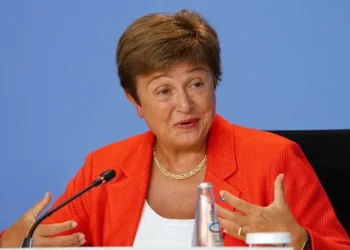
  • Kristalina Georgieva’s Future at IMF

    Kristalina Georgieva’s Future at IMF

    With just seven months remaining in Kristalina Georgieva’s term as head of the International Monetary Fund (IMF), she conveyed on Tuesday that she isn’t preoccupied with whether to pursue a second term. Georgieva, whose five-year tenure concludes in October, emphasized her focus on the current responsibilities as the IMF managing director.


    In an interview with Reuters during a meeting of finance officials from the Group of 20 major economies, Georgieva stated, “Look, I have work to do right now. I have always been of the view that you do the job you have – not some hypothetical in the future. So let me do my job.”


    Georgieva, an affable economist from Bulgaria, holds the distinction of being the second woman to lead the IMF and the first individual from an emerging market economy. The possibility of extending her tenure for a second term would address longstanding concerns raised by emerging market and developing countries regarding the dominance of the US-European duopoly in the two global financial institutions, the IMF and World Bank.


    Throughout her tenure, Georgieva has navigated significant challenges to the global economy, including the onset of the COVID-19 pandemic shortly after assuming office and the Russian invasion of Ukraine in February 2022. She remains committed to enhancing prospects for medium-term growth, addressing sovereign debt challenges, and overseeing a complex quota revamp at the IMF.


    Kristalina Georgieva’s advocacy for integrating climate change considerations into surveillance reports on member countries’ economies and her deep engagement with emerging market and developing economies have garnered both praise and criticism. She has played a pivotal role in facilitating financial assistance for Ukraine, restructuring Argentina’s substantial loan program, and supporting China’s approach to sovereign debt restructurings.


    Despite facing scrutiny over allegations of exerting pressure on World Bank staff to manipulate data in favor of China during her previous role at the institution, Georgieva received a vote of confidence from the IMF’s executive board in 2021. Since then, she has fostered a positive relationship with US Treasury Secretary Janet Yellen.


    Traditionally, European countries nominate a candidate for the IMF leadership, while the US nominates a candidate for the World Bank presidency. However, the ultimate decision rests with the institutions’ boards of directors. Georgieva herself was a compromise candidate selected by European leaders in 2019 to succeed Christine Lagarde as IMF chief.


    As discussions surrounding leadership succession unfold, there is a consensus that decisions should be made before the IMF and World Bank’s spring meetings in April to prevent the leadership issue from overshadowing the extensive agenda for the meetings.


    Kristalina Georgieva’s tenure as IMF managing director has been marked by significant achievements and challenges. While her future remains uncertain, her leadership has been instrumental in navigating complex global economic dynamics and fostering cooperation among member countries.

  • India’s Jammu and Kashmir Budget vs. Pakistan’s IMF Bailout

    India’s Jammu and Kashmir Budget vs. Pakistan’s IMF Bailout

    India’s announcement of an interim budget totaling $14 billion for fiscal 2024-25 for the Union Territory of Jammu and Kashmir has drawn significant attention, particularly as it dwarfs Pakistan’s recent IMF bailout. The $14 billion budget allocation for Jammu and Kashmir is approximately 4.5 times larger than the $3 billion bailout package approved by the IMF for Pakistan to address its ongoing economic challenges. This stark contrast highlights the divergent economic trajectories of the two neighboring nations.


    Finance Minister Nirmala Sitharaman, while unveiling the interim budget, emphasized the substantial commitment to the economic development of Jammu and Kashmir. She credited crucial reforms undertaken in 2019 for enabling path-breaking measures by the Union Territory Government, including decentralization of the governance structure, promotion of inclusive development, revenue generation enhancement, and infrastructure development scaling up.


    Sitharaman also underscored the government’s commitment to maintaining law and order for security while implementing initiatives for economic and social development, with a policy of zero tolerance against terrorism. She noted that effective and continuous action by security forces has significantly improved the security situation in the region.


    In contrast, Pakistan recently received the second tranche of a $3 billion bailout package from the IMF, aimed at addressing its cash-strapped economy. The IMF’s approval of a $700 million loan tranche followed the completion of the first review of Pakistan’s economic reform program. This disbursement brings the total amount received under the Stand-By Arrangement to $1.9 billion. The bailout package comes as Pakistan grapples with economic challenges, with the first tranche of $1.2 billion released in July 2023.


    The disparity in budget allocations and economic assistance underscores the differing economic landscapes and priorities of India and Pakistan. While India’s focus on bolstering the economy of Jammu and Kashmir reflects its commitment to development and stability in the region, Pakistan’s reliance on IMF support highlights the urgency of addressing its economic woes. As both countries navigate their economic trajectories, the significant contrast in financial assistance underscores the complex dynamics shaping the South Asian region’s economic landscape.

  • IMF Deputy Managing Director Meets Chanel CEO Leena Nair

    IMF Deputy Managing Director Meets Chanel CEO Leena Nair

    The ongoing World Economic Forum (WEF) in Davos has witnessed a notable encounter between two influential leaders, showcasing the convergence of economics and fashion. Gita Gopinath, the Deputy Managing Director of the International Monetary Fund (IMF), and Leena Nair, the CEO of Chanel, crossed paths during this prestigious annual gathering, highlighting the diverse connections fostered at Davos.


    Gita Gopinath: Economist Extraordinaire

    Born and raised in India, Gita Gopinath has emerged as a trailblazer in the field of economics. At 52, she holds the distinction of being the first deputy managing director of the IMF, a position she assumed after serving as the chief economist at the organization from 2019 to 2022. Gopinath’s academic credentials include a PhD from Princeton University, and her contributions to the field have significantly influenced global economic policies.


    Leena Nair: Breaking Barriers in Fashion Leadership

    Leena Nair, a 54-year-old British citizen of Indian origin, has left an indelible mark in the corporate world. In 2021, she made history by becoming the first female and youngest-ever chief executive of Chanel, the iconic French luxury fashion house. Prior to her role at Chanel, Nair served as the chief human resources officer at Unilever, showcasing her leadership prowess and breaking barriers in the corporate hierarchy.


    The convergence of these two leaders from distinct sectors—economics and fashion—illustrates the interdisciplinary nature of discussions at Davos. The annual forum serves as a melting pot of ideas, bringing together leaders from diverse fields to address global challenges and opportunities.


    Davos Encounter: Gopinath and Nair

    Gita Gopinath took to social media to share a moment from her encounter with Leena Nair at Davos. In a tweet, she expressed, “Great to finally meet ⁦@LeenaNairHR⁩. Only in Davos does an economist run into a fashion mogul.” This candid acknowledgment encapsulates the unique interactions and connections that unfold at Davos, transcending professional boundaries.


    Beyond the casual meeting, Gopinath has been actively engaged in discussions at Davos, providing insights into crucial economic matters. Recently, she issued a cautionary note regarding central banks and their approach to interest rate cuts in the coming year. Her perspective is rooted in the persistent concerns about inflation and the need for a measured approach to monetary policies.


    Caution on Interest Rates: Gopinath’s Insights

    In an interview with the Financial Times, Gita Gopinath highlighted the importance of caution when considering interest rate cuts in the current economic landscape. She pointed out that inflation is anticipated to decelerate less sharply than in the previous year. This projection is attributed to tight labor markets and heightened services inflation in regions such as the US and the euro area.


    Gopinath emphasized that, based on existing data, a more prudent timeline for rate cuts would be in the second half of the year rather than the first. Her nuanced understanding of global economic trends adds a valuable perspective to the ongoing discourse at Davos.


    Optimism Amid Challenges: Gopinath’s Stance

    While acknowledging the challenges posed by inflation, Gita Gopinath expressed optimism about the global economy. She asserted that the likelihood of a deep recession is less probable, contributing a sense of reassurance amid economic uncertainties. Her insights align with the broader theme of navigating challenges with resilience and strategic policymaking.


    Leena Nair’s Dynamic Presence

    Leena Nair’s presence at Davos brings a dynamic perspective from the realm of fashion and luxury. As the CEO of Chanel, she represents an industry that intersects with various aspects of business, culture, and global trends. The inclusion of leaders from diverse sectors, including fashion, underscores the comprehensive nature of discussions at Davos.


    The intersection of Gita Gopinath’s economic insights and Leena Nair’s leadership in the fashion industry highlights the multidimensional nature of the global landscape. Davos continues to serve as a platform where leaders from different fields come together to share ideas, foster collaborations, and address the multifaceted challenges shaping the future of the global economy.


    The encounter between Gita Gopinath and Leena Nair at Davos exemplifies the richness of connections and conversations that define this annual gathering. As these leaders contribute their perspectives to the global dialogue, Davos remains a symbol of cross-disciplinary collaboration and collective problem-solving.

  • India’s Crypto Regulation: Navigating the Global Landscape

    India’s Crypto Regulation: Navigating the Global Landscape

    In the New Delhi Declaration, G20 leaders have signalled their commitment to establishing a “coordinated and comprehensive policy and regulatory framework” for crypto assets in order to commit to a crypto regulation. This commitment reflects a global effort to set international standards for the cryptocurrency industry. Additionally, G20 leaders have endorsed the guidelines proposed by the Financial Stability Board (FSB) for regulating crypto-asset activities. These guidelines primarily aim to mitigate systemic financial risks and provide G20 member countries with flexibility in crafting their domestic regulations.


    India’s Alignment with Global Recommendations

    India has already aligned its foundational policies with recommendations from global bodies such as the FSB and the International Monetary Fund (IMF). These organizations emphasize that crypto assets should not be treated as legal tender or banned outright. Recognizing the potential pitfalls of such extreme measures, India wisely abandoned its initial consideration of a crypto ban. Legal tender status for crypto assets can undermine domestic monetary policy, while outright bans may encourage illicit activities.


    Anti-Money Laundering (AML) and Tax Policies

    India has implemented AML and tax policies for crypto assets. AML rules require crypto exchanges to report suspicious activities to the Financial Intelligence Unit and respond to the agency’s information requests. However, the taxation of crypto transactions has been a point of contention, with a 30% income tax on annual profits from crypto-asset trading and a 1% deduction at source for each transaction.


    Focus on Financial Regulation

    The FSB and IMF highlight the shared vulnerabilities between the crypto-asset world and the traditional financial system. Prioritizing the regulation of market intermediaries, such as crypto exchanges, is a logical step. This aligns with the notification of entities dealing with crypto as persons engaged in a designated business under the Prevention of Money Laundering Act, 2002. This approach, akin to how traditional stock exchanges operate under the Securities and Exchange Board of India (Sebi), offers a template for regulating the diverse and complex crypto markets.


    Addressing Unique Challenges

    Crypto-assets pose unique challenges due to their technical characteristics. Regulated exchanges can play a pivotal role in demystifying the origins of these assets, ensuring that issuers provide sufficient transparency. For example, the EU’s regulation mandates crypto-asset issuers to produce a “white paper” detailing various aspects, including user rights, underlying technology, and risks.


    Revising IT Legislation for the Digital Age

    India’s ongoing revision of the Information Technology (IT) Act presents an opportunity to address the specific needs of crypto asset intermediaries, which operate primarily online. Specialized provisions can enhance user safety in these digital platforms. Future IT legislation can also offer legal clarity for emerging digital products, such as those related to Web 3.0, and explore overlaps with Web 2.0, like social media marketing.


    Challenges Remain with Stablecoins and DeFi

    Regulating stablecoins and decentralized finance (DeFi) poses additional challenges. Stablecoins, including algorithmic variants, have shown vulnerabilities to manipulation, as seen in the Terra Luna incident. DeFi operates without centralized intermediaries, making it complex to regulate effectively.


    As India navigates the evolving crypto landscape, crafting a regulatory framework that respects the unique challenges of this emerging market is essential. Active industry participation in shaping these regulations will be crucial for striking the right balance between innovation and risk mitigation.