Tag: FTC

  • Sundar Pichai Defends Chrome Browser Against Microsoft

    Sundar Pichai Defends Chrome Browser Against Microsoft

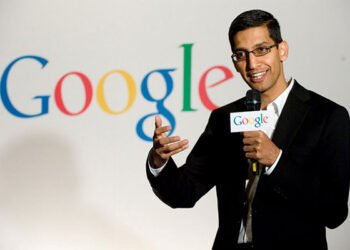
    Google’s CEO, Sundar Pichai, found himself in the spotlight during an antitrust hearing in Washington, where he defended Google’s Chrome browser against Microsoft and emphasized its role in reinvigorating a stagnant market. Google’s Chrome browser has been a dominant player in the web browser market since its launch in 2008, surpassing Microsoft’s Internet Explorer.


    Pichai pointed out that at the time Chrome was introduced, the web browser market had hit a plateau. Microsoft’s Internet Explorer had enjoyed its status as the top web browser for years, but innovation and improvement had waned.


    “The browser market at the time had kind of stagnated,” Reuters quoted Pichai as saying. “They (Microsoft) were not that incented to improve the browser,” the top Google executive added. The launch of Chrome brought about a “pretty dramatic improvement” in the browser landscape.


    Sundar Pichai’s testimony was part of an ongoing antitrust case led by the United States’ Federal Trade Commission (FTC), accusing Google of violating regulations to maintain its dominance in the online search engine market and the associated online advertising sector. If Google is found guilty, it may be compelled to alter certain business practices.


    The inquiry also delved into the substantial investments made by Google to secure and preserve its dominance in the online search engine sector. Pichai faced questions regarding the strategies and measures taken by the company to stay ahead, especially in a rapidly evolving digital landscape influenced by high-tech smartphones and innovative search advertising methods.


    Google has consistently rejected the allegations of violating antitrust laws. The company asserts that it has made substantial investments to uphold its market share. Additionally, Google maintains that its revenue-sharing agreements with its stakeholders are fully compliant with the law.


    Sundar Pichai’s participation in this antitrust hearing highlights the increasing scrutiny and legal challenges faced by technology giants like Google. They are constantly under the microscope due to concerns about their market dominance and business practices. The outcome of this case may have far-reaching implications for Google, shaping its future strategies and operations.


    As tech giants continue to face intense regulatory scrutiny and legal battles, they must adapt and find innovative ways to navigate complex legal landscapes and maintain their competitive edge in the digital arena.

  • Lina Khan Targets Amazon’s E-commerce Monopoly in Lawsuit

    Lina Khan Targets Amazon’s E-commerce Monopoly in Lawsuit

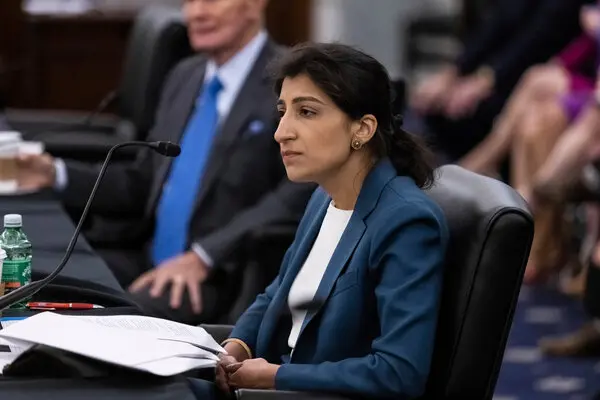
    Lina Khan, the chair of the Federal Trade Commission (FTC) and a prominent figure in the world of antitrust enforcement, has filed a lawsuit against Amazon, marking another significant step in the ongoing scrutiny of big tech companies. Khan, known for her prior critique of Amazon’s practices, has accused the e-commerce giant of abusing its monopoly power in the online retail market.


    Khan’s legal criticism of Amazon initially gained attention in 2017 when she was a law student at Yale, and the company was rapidly expanding its reach in the retail sector. In her academic paper, Khan accused Amazon of engaging in predatory pricing strategies, where it lowered prices to a level where competitors couldn’t compete, thus hurting consumers. However, she acknowledged that predatory pricing was almost obsolete as a legal theory due to high legal barriers.


    Fast forward to 2023, and the FTC’s lawsuit presents a different perspective. Instead of accusing Amazon of harming consumers with low prices, the lawsuit asserts that Amazon has hurt consumers by imposing higher prices, mainly through punitive measures against marketplace sellers who offer lower discounts elsewhere. Additionally, it claims that Amazon benefits from its monopoly by mandating sellers to use its fulfillment services.


    This change in focus has led to discussions about the evolution of antitrust enforcement, with experts highlighting the complexity of antitrust theory and practice. While Khan’s 2017 paper criticized Amazon for aggressive discounting to gain a monopoly, the company later shifted to raising prices after establishing market dominance. This shift aligns with the most common theory of antitrust harm, which centers on consumer harm, often through higher prices or reduced quality.


    The FTC’s lawsuit further claims that Amazon’s advertising practices have contributed to its violations. Amazon’s shopping results pages are described as “cluttered with advertisements,” making it challenging for consumers to find the products they want. Additionally, it suggests that Amazon’s advertising creates a pay-to-play system for sellers who must pay for better search placements through advertising.


    Amazon has strongly contested the FTC’s claims, arguing that they are baseless and would force the company to raise prices or offer worse service to consumers. The company has emphasized its role in helping marketplace sellers offer competitive prices.


    It’s worth noting that the FTC’s complaint does not address certain practices that Lina Khan criticized in her 2017 paper, such as Amazon’s alleged use of third-party seller data to create competing products. Transforming these claims into antitrust violations presents legal challenges.


    Overall, Lina Khan’s lawsuit against Amazon reflects the evolving landscape of antitrust enforcement, especially in the digital age where online platforms act as intermediaries between buyers and sellers. While the outcome of this legal battle remains uncertain, it underscores the broader debate about the power and practices of tech giants in the digital economy.

  • FTC Investigates Amazon: Lina Khan’s Antitrust Challenge

    FTC Investigates Amazon: Lina Khan’s Antitrust Challenge

    Lina Khan, a law student in 2017, gained attention with an article advocating for a reimagining of US antitrust law, focusing on Amazon.com. Today, as Chair of the US Federal Trade Commission (FTC), Khan is leading an investigation into Amazon’s business practices, raising questions about the company’s market dominance and competition. Here’s what you need to know about this high-profile case:


    FTC’s Investigation:
    The FTC and 17 states have accused Amazon of engaging in illegal conduct to stifle competition. The lawsuit alleges that Amazon compels sellers on its platform to use its logistics and delivery services in exchange for prominent placement and punishes merchants that offer lower prices on rival sites. This investigation began in 2019.


    Amazon’s Response:
    Amazon counters these allegations, claiming that its practices benefit customers and the online retail market. The company argues that the FTC’s case is “wrong on the facts and the law.” Amazon maintains that it competes vigorously in the retail market, both online and offline, striving to offer customers the best shopping experience, including competitive prices and a wide range of products.


    Third-Party Sellers:
    Amazon operates as a platform for third-party sellers, acting as both a competitor and business partner. Some independent merchants have accused Amazon of using its gatekeeper role to disadvantage competing sellers and even using proprietary consumer data to create competing products.


    Market Share:
    The definition of the market is crucial in this case. The FTC is expected to argue that Amazon’s marketplace is the most widely used platform for purchasing various products, and it unlawfully ties access to its marketplace with the use of its logistics service, resulting in higher prices for consumers. Amazon accounts for a significant share of online retail sales (37.6%), but a smaller portion (3.5%) of total US retail, including offline businesses.


    Other FTC Cases Against Amazon:
    The FTC has pursued consumer protection cases against Amazon. These include settlements related to Amazon’s Alexa-powered speakers, Ring video doorbell privacy concerns, and allegations of deceptive practices in signing up for Prime service memberships. Additionally, the FTC is investigating Amazon’s proposed acquisition of iRobot, maker of the Roomba automated vacuum cleaner.


    Amazon’s Diverse Business Portfolio:
    Apart from its e-commerce site, Amazon offers fulfillment services, Prime video and music streaming, and is a major player in cloud computing through Amazon Web Services (AWS). The acquisition of Whole Foods also established Amazon’s presence in the grocery industry.


    Significance of the Case:
    This case holds significant implications for antitrust law and the broader tech industry. President Joe Biden’s appointment of Lina Khan as FTC Chair reflects a desire to return to trust-busting practices from the early 20th century. Khan, known for her work on modern monopolies, contributed to a report that informed tech-focused antitrust bills in Congress. Amazon has called for Khan’s recusal from the FTC’s investigation, but two judges have ruled in favor of her participation.


    The outcome of this case against Amazon will test the boundaries of US antitrust law, particularly in an era dominated by tech giants, and could set important precedents for future antitrust enforcement.