Tag: Fiscal Deficit

  • NCP and JMM Leaders Criticize Digital Platforms

    NCP and JMM Leaders Criticize Digital Platforms

    In a recent discussion on ‘The White Paper on Indian Economy’ in the Lok Sabha, leaders from various political parties such as NCP and JMM raised significant concerns about the state of digital platforms like Google Pay and PhonePe, alleging potential money laundering activities. NCP leader Supriya Sule particularly highlighted these concerns, describing these platforms as “ticking time bombs” and questioning the government’s efforts to prevent money laundering in the digital economy.


    Sule’s remarks were prompted by recent events, notably the controversy surrounding Paytm Payments Bank Ltd (PPBL), which she deemed “alarming” and akin to money laundering. She emphasized the widespread use of Google Pay and PhonePe compared to the lesser-known BHIM app, urging the government to take decisive steps to ensure the integrity of digital transactions in an increasingly cashless economy.


    Echoing Sule’s sentiments, JMM leader Vijay Kumar Hansdak accused the government of misusing central agencies such as the Enforcement Directorate (ED), Central Bureau of Investigation (CBI), and Income Tax department to target opposition MPs. Hansdak called for a white paper to be issued on the alleged misuse of these agencies, alleging that the government’s authority relies heavily on entities like the ED for political leverage.


    In response to these accusations, BJP MP Sanjay Jaiswal countered by pointing out the perceived corruption during the tenure of the previous UPA government. He claimed that corruption levels were unprecedented during the 10 years of UPA rule, accusing individuals of obtaining loans without intending to repay them. Jaiswal’s remarks sought to deflect attention from the current allegations and redirect focus to past grievances under the UPA regime.


    AIMIM leader Asaduddin Owaisi contributed to the debate by questioning the effectiveness of the white paper on the Indian economy, labeling it as mere rhetoric rather than substantive analysis. Owaisi urged the government to explain the disparities in economic growth rates between the UPA and NDA governments. He highlighted statistics indicating higher average growth rates and lower fiscal deficits during the UPA era compared to the NDA’s tenure.


    Owaisi also called attention to the impact of demonetization on the country’s poor and marginalized communities, pressing the government to provide insights into how the policy adversely affected these vulnerable groups. He emphasized the need for transparency regarding the economic consequences of major policy decisions like demonetization, especially in light of contrasting economic indicators between different government administrations.


    IUML MP E T Mohammed Basheer criticized the white paper as biased towards the ruling BJP, dismissing it as a tool for political propaganda rather than objective analysis. Basheer highlighted the contributions of the Congress-led UPA government in enacting crucial legislations such as the Right to Information and Right to Education Acts, as well as implementing welfare programs like MNREGA for the benefit of disadvantaged populations.


    The discussion in the Lok Sabha between NCP, JMM and other leaders has left underscored deep-seated concerns about the integrity of digital payment platforms, allegations of misuse of central agencies for political purposes, and divergent perspectives on the economic policies of past and present governments. As the debate continues, it remains to be seen how the government will address these issues and uphold accountability in economic governance.

  • Anand Mahindra Lauds FM Sitharaman for Interim Budget

    Anand Mahindra Lauds FM Sitharaman for Interim Budget

    The Union Finance Minister, Nirmala Sitharaman, presented the Interim Budget for the fiscal year 2024-25 on Thursday, marking the last budget of the Modi 2.0 government as the Lok Sabha elections are likely to take place in May. Despite the approaching elections, the Finance Minister resisted the temptation to announce significant spending on schemes for the poor and instead concentrated on fiscal consolidation to attract investors, indicating the BJP’s confidence in securing a rare third term.


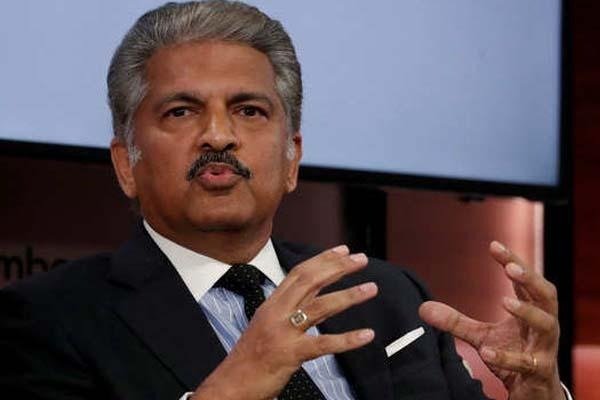
    Notably, Mahindra Group Chairman Anand Mahindra commended FM Sitharaman for keeping the budget short and crisp. He expressed that the Budget should not necessarily be the occasion for transformational policy announcements but an opportunity to plan finances prudently and with fiscal rectitude.


    Mahindra outlined five reasons why he was pleased with Sitharaman’s Interim Budget speech. First and foremost, he hailed the Finance Minister for delivering her shortest speech, emphasizing the brevity that communicates quiet confidence.


    Secondly, Mahindra appreciated that the Interim Budget included no populist measures. He expressed hope that avoiding such measures becomes a permanent norm in future budget speeches, promoting financial prudence.


    Thirdly, he commended the government for achieving a better fiscal deficit target than envisaged. The fiscal deficit target for 2024-25 is set at 5.1% of GDP, down from 5.8% in the current financial year.


    Given that the FM announced no changes in tax rates for direct and indirect taxes, Mahindra lauded the decision, stating that businesses value stability and predictability, qualities evident in this budget.


    The biggest announcement, according to Mahindra, was the higher Tax to GDP ratio. He emphasized that this development cements a strong foundation for fiscal flexibility and aggressive expenditure when needed. He urged FM Sitharaman to trumpet this achievement more loudly.


    The Interim Budget for 2024 increased by 6.1% to ₹47.66 lakh crore due to a rise in expenditure and higher allocation for capital expenditure and social sector schemes. FM Sitharaman highlighted that revenue receipts at ₹30.03 lakh crore are expected to be higher than the Budget Estimate, reflecting strong growth momentum and formalization in the economy.


    The nominal GDP growth for the next financial year has been pegged at 10.5%, slightly lower than the earlier estimate of 11%. Sitharaman stressed that the impact of all-round development is discernible in all sectors, with macro-economic stability, robust investments, and an overall flourishing economy.


    Anand Mahindra’s positive response to the Interim Budget underscores the importance of fiscal responsibility, stability, and confidence-building measures, especially as India navigates economic challenges and prepares for the upcoming elections.

  • Food Grain Scheme: No Impact On India’s Fiscal Deficit

    Food Grain Scheme: No Impact On India’s Fiscal Deficit

    The extension of India’s free food grain scheme, Pradhan Mantri Garib Kalyan Anna Yojana (PMGKAY), is not expected to impose a major fiscal impact on the country’s budget in FY24 or FY25, according to senior government officials. This statement comes amidst the government’s commitment to meeting its fiscal deficit target.


    India’s fiscal deficit for the April to September period had widened to ₹7.02 trillion, which equated to 39.3% of the annual estimates, up from ₹6.19 trillion during the same period the previous fiscal year, constituting 37.3% of that year’s target, as per government data released last week.


    The government has set a fiscal deficit target of ₹17.87 trillion for FY24, which is equivalent to 5.9% of the country’s GDP, compared to the previous fiscal year’s deficit of 6.4%.


    Prime Minister Narendra Modi recently announced the extension of the free food grain scheme, Pradhan Mantri Garib Kalyan Anna Yojana (PMGKAY), for another five years, benefiting 800 million impoverished individuals. The scheme, initially launched during the pandemic, was amalgamated with the National Food Security Act in December 2022, and was further extended to the end of this year.


    The fiscal deficit is the gap between the government’s income and expenditure, and it indicates the need for external borrowing to cover this deficit.


    While the extension of the food grain scheme is expected to increase the requirement for funds to procure grains and consequently lead to higher government spending, the government is confident of achieving its fiscal deficit target for FY24. Officials stated that the rise in grain prices might result in additional spending ranging from ₹5,000 crore to ₹7,000 crore within the food grain scheme.


    One of the officials emphasized that the government’s primary challenge is the volatility of global oil prices. The officials also clarified that the ongoing tensions between India and Canada are not anticipated to have a significant impact on Canadian investments in India. Relations between the two nations deteriorated after Canadian Prime Minister Justin Trudeau accused “agents of the Indian government” of being involved in the killing of Khalistani terrorist Hardeep Singh Nijjar in June. In response, India rejected these allegations, deeming them “absurd and motivated.”


    The government, buoyed by record numbers in goods and service tax collections and direct tax collections, remains resolute in maintaining its fiscal discipline despite the challenges posed by the PMGKAY extension and external geopolitical matters.

  • India May Cut Government Investment Spending

    India May Cut Government Investment Spending

    Goldman Sachs Group Inc. anticipates that India’s government will scale back its investment spending in the coming years as it aims to reduce the budget deficit. This shift in government expenditure could open the door for the private sector to play a more significant role in driving economic growth.


    Prime Minister Narendra Modi’s government plans to decrease the fiscal shortfall by approximately 1.5 percentage points over the next two years. According to Goldman Sachs economists Santanu Sengupta, Arjun Varma, and Andrew Tilton, the rapid growth in capital expenditure seen in recent years cannot be sustained under these fiscal constraints.


    Investment has historically been a key driver of India’s economic growth, contributing three percentage points to the annual real GDP growth rate of 7% from 2004 to 2012, as estimated by the economists at Goldman Sachs.


    While companies and households have been significant contributors to investment in the economy, their pace has slowed over the past decade due to factors such as sluggish growth in the property market, tighter credit conditions, and declining savings rates. During this period, public investment in capital projects helped offset some of the investment slowdown.


    The current environment presents an opportunity for the private sector to increase its investment, particularly as businesses seek to diversify supply chains and expand manufacturing beyond China, aligning with Prime Minister Modi’s ‘Make in India’ initiative.


    Indian companies have been reducing debt, and banks are well-capitalized, providing room for fresh lending to support business expansion. The country’s regulatory environment is also conducive to swift project clearances, potentially facilitating a revival in corporate capital expenditure.


    The Indian government has allocated a record 10 trillion rupees (approximately $120 billion) for investment in the fiscal year through March 2024. Additionally, it is committed to reducing the budget deficit from 5.9% of GDP in the current year to 4.5% in 2025-26.


    The private sector’s role in the Indian economy has strengthened following the pandemic, with a surge in credit card spending and banks doubling their retail loan portfolios since 2019.


    Goldman Sachs expects that the pickup in private sector investment activity in the coming years will be driven by domestic demand and the easing of supply-side bottlenecks, further supporting economic growth and development in India.

  • Inclusion of Petroleum Products in GST Unlikely

    Inclusion of Petroleum Products in GST Unlikely

    The inclusion of petroleum products under the Goods and Services Tax (GST) in India is unlikely to happen in the near future, according to two senior government officials who spoke to Mint. This decision is primarily driven by concerns that such a move could significantly increase state fiscal deficits and lead to substantial revenue losses for both state and central governments.


    Currently, the total taxation on petrol and diesel includes state-levied value-added tax (VAT) and the central government’s excise duty, which collectively accounts for approximately 35% to 50% of the final price. The specific percentages vary for petrol and diesel, with petrol being taxed at a higher rate, typically ranging from 45% to 50%, while diesel is taxed at around 35% to 40%.


    Even if petroleum products were subjected to the peak GST rate of 28%, there would still be substantial revenue shortfalls for both state and central governments. This would mean that the government would receive less tax revenue, even though the tax regime has changed. Achieving a “revenue-neutral” rate, where the government’s tax revenue remains the same before and after the inclusion of petroleum products in the GST, would require a significantly higher GST rate of approximately 56% to 60%.


    One of the officials noted, “If petroleum products like petrol and diesel are put under the ambit of GST, consumers may have limited benefit. But, it will end up ballooning the state government’s fiscal deficit.”


    The decision not to include petroleum products under the GST regime has implications for various sectors, including the petrochemical industry, which uses petroleum products as industrial inputs. Inclusion under GST would make these industries eligible for input tax credits.


    Industry representatives have advocated for including petroleum products under GST, citing potential benefits such as reduced inflation and lower costs for consumers. Earlier discussions had explored the possibility of applying the peak GST rate of 28% in addition to local sales tax or VAT on petrol and diesel, but this proposal did not materialize.


    The reluctance to include petroleum products in GST is primarily attributed to the significant revenue implications for state governments. State finances heavily depend on revenue generated from the taxation of petroleum products. The high tax rates on these products have been a crucial source of income for states.


    As of September 1, 2023, petrol prices in New Delhi stood at ₹96.72 per litre, including an excise duty of ₹19.90 and a VAT of ₹15.71. Similarly, diesel prices were ₹89.62 per litre, comprising an excise duty of ₹15.80 and a VAT of ₹13.11. The central government had reduced excise duties on both petrol and diesel on May 21, 2022, but prices have remained unchanged since then.


    The decision not to include petroleum products in the GST regime in India is primarily driven by concerns over revenue losses for state and central governments, as well as the potential impact on state fiscal deficits. While there are industry and consumer benefits associated with such a move, the financial implications for the government remain a significant barrier to implementation.