Tag: festive season

  • Govt. Interventions Expected to Stabilize Prices of Essential Items

    Govt. Interventions Expected to Stabilize Prices of Essential Items

    As the festive season approaches in India, the union food and public distribution secretary, Sanjeev Chopra, has reassured the public that timely government interventions are expected to keep prices of essential food items stable over the next two months. The government has been actively utilizing various tools at its disposal, including the open sale of commodities and stock limits, to control and stabilize prices.


    Chopra stated, “The government has been using all tools at its command — open sale of commodities, stock limits and [other] curbs [to keep prices in check]. The curbs may have impacted certain sections adversely [but] they are for the 140 crore consumers of the country. We have seen good results. They have been very effective in ensuring prices remain stable.”


    He further expressed confidence that essential commodity prices would remain stable, and there are no expectations of unforeseen price hikes during the festival season.


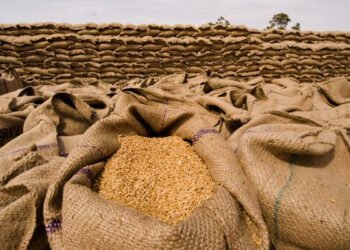
    Regarding rice prices, which have been experiencing inflation levels around 11-12%, Chopra noted that with the new harvest of kharif paddy, prices are expected to decrease significantly. He explained that the export duty of 20% on parboiled rice has contributed to a 65% reduction in exports in volume terms. This duty, initially imposed until 15th October, has been extended to 31st March 2024. Its extension aims to maintain adequate supply in the domestic market and prevent parboiled rice from being exported under the guise of other varieties.


    Chopra also highlighted that India has permitted the export of nearly 1.2 million tonnes of non-basmati white rice to several countries, including the Philippines, Mauritius, Nepal, Bhutan, the UAE, and Singapore.


    The secretary discussed the reduction in prices of all edible oils, except groundnut oil, by more than 15%, attributing this achievement to timely government measures.


    Regarding sugar prices, Chopra mentioned that there has been a decade of stable retail prices with 2% inflation. He emphasized that Indian sugar is now the cheapest in the world. The average retail sugar price in India is ₹44 per kilogram, while it is significantly higher in other countries, such as ₹134 in the UAE, ₹112 in Sri Lanka, ₹110 in the UK, and ₹76 in Brazil.


    Chopra predicted that sugar prices would fall once mills commence sugarcane crushing. Sugarcane production may face challenges in the key producing states of Maharashtra and Karnataka due to erratic monsoons, but it is expected to increase in Uttar Pradesh, another significant producer. The first advance estimate for sugarcane production for 2023-24 may be released next week.


    To ensure adequate domestic supply, the government extended restrictions on sugar exports beyond 31st October until further orders. This move is part of an ongoing effort to monitor monthly dispatches of sugar mills and ensure sufficient availability in the domestic market.


    The government’s focus on sugar export policy is also aimed at promoting consistent production of ethanol from sugar-based feedstock. In 2022-23, India diverted approximately 4.3 million tonnes of sugar toward ethanol production, generating an estimated revenue of about ₹24,000 crore for sugar-based distilleries.


    Chopra revealed that the government is also directing attention to maize for ethanol production. The contribution of maize to ethanol production was zero last year, and the government aims to increase maize productivity from the current three tonnes per hectare to five tonnes per hectare within three years.


    These measures and interventions reflect the government’s commitment to ensuring price stability for essential food items and promoting ethanol production from various feedstocks, contributing to India’s self-reliance and economic growth.

  • Amazon Introduces Prime Shopping for India’s Festive Season

    Amazon Introduces Prime Shopping for India’s Festive Season

    In preparation for India’s festive sale season, Amazon has introduced a specialized Prime membership called Prime Shopping Edition. Priced at ₹399 for a one-year subscription, this membership offers exclusive shopping perks to Indian users, including free shipping and one-day deliveries. It is exclusively available to users of Android smartphones and on the Amazon website.


    Notably, this move by Amazon comes shortly after Flipkart rolled out its membership program called Flipkart VIP, priced at ₹499 for an annual subscription. Flipkart VIP provides specific advantages related to delivery and returns in certain areas.


    While the standard Amazon Prime subscription is initially priced at ₹1,499 per year, it is often available at a discounted rate of ₹999. It offers a wide array of additional perks, including access to the OTT platform Prime Video, the music streaming app Prime Music, Prime Reading, and Prime Gaming.


    In contrast, Flipkart VIP does not include entertainment services but does provide exclusive offers and advantages for members utilizing Cleartrip, the travel unit owned by Walmart’s subsidiary.


    Amazon Great Indian Festival 2023 has already begun for Prime members, with a scheduled start date of October 8 for everyone else. However, the closing date for the sale is yet to be revealed.


    During the festival, SBI cardholders can enjoy a 10 percent instant discount on their purchases. The sale features discounts of up to 40 percent on mobiles and accessories, as well as up to 75 percent on laptops, smartwatches, and other items.


    Amazon has launched a dedicated webpage showcasing discounts on a wide range of products, including mobile phones, accessories, electronic gadgets like smartwatches, tablets, laptops, and smart TVs, as well as various home appliances. Numerous devices from both Indian and international brands, such as Apple, Asus, Lenovo, OnePlus, iQoo, Realme, Samsung, boAt, and Sony, are set to undergo price reductions.


    As Amazon and Flipkart vie for the attention of Indian shoppers during the festive season, consumers can look forward to a wide array of deals and discounts across various product categories.

  • E-Way Bill Generation in India Signals Brisk Economic Activity

    E-Way Bill Generation in India Signals Brisk Economic Activity

    India experienced a surge in electronic permits for goods shipments within and across states, reaching an all-time high of 93.4 million e-way bill generations in August. This high-frequency indicator reflects robust economic activity, potentially boosting Goods and Service Tax (GST) revenue collections in September.


    The increased e-way bill data aligns with manufacturing Purchasing Managers’ Index (PMI) data for August, which indicated strong demand and output growth. The sharp rise in e-way bill generation suggests that businesses are accelerating supplies to the market as the festive season approaches.


    In the past, a previous peak of 90.9 million e-way bill generations in March coincided with the highest-ever GST revenue collection of ₹1.87 trillion in April. Under the GST system, tax payments to the government for sales in a given month are made in the subsequent month.


    Data from GSTN, the company responsible for processing GST returns, revealed that e-way bill generation in August increased by over 19% compared to the same period last year and by over 6% compared to the previous month.


    M.S. Mani, a partner at Deloitte India, attributed the surge in e-way bill generation to increased compliance obligations and the build-up of festive stocking of goods, a trend that typically begins in August. He noted that this surge serves as a precursor to strong GST collections in September.


    The onset of a series of festivals, starting with Onam in August and continuing through December, leads to heightened freight charges for truck shipments. Consequently, many businesses choose to stock up on supplies at the retail level in advance.


    Moreover, since August 1, the sales threshold for businesses to report wholesale transactions on designated portals (e-invoicing) has been halved from ₹10 crore to ₹5 crore. This change has contributed to increased e-way bill generation activity for the transportation of goods, as e-invoice transaction data automatically feeds into other tax documents, including e-way bills and GST returns.


    India’s government is relying on sustained consumption and investment demand to achieve the projected economic growth of 6.5% this year, despite macroeconomic challenges posed by high interest rates and inflation exceeding the Reserve Bank of India’s tolerance level.


    In addition to the record e-way bill generation, official data from Indian Railways indicated a 6.38% growth in goods shipment and economic activity, with 126.95 million tonnes loaded in August compared to 119.33 million tonnes the previous year. Furthermore, the automotive retail sector experienced a robust 9% annual growth in August, with various vehicle categories showing improvement, thanks to the festive season and increased liquidity.

  • Festive Season: Video Content on Meta Platforms Dominates

    Festive Season: Video Content on Meta Platforms Dominates

    Meta’s recent survey highlights the significant influence of video content on its platforms, including Facebook and Instagram, in shaping purchase decisions during the festive season. The study, conducted by YouGov on behalf of Meta, reveals that eight out of ten Diwali shoppers heavily rely on video content while making their festive purchases.


    According to the study, Meta’s technologies are the most important channels for short-form videos (87%) and creator content (79%). Influencer and creator content also play a crucial role in influencing purchase decisions, with 66% of Diwali shoppers agreeing that creators have an impact on their choices.


    The survey was conducted on 1,523 adults in India between 23 October and 9 November 2022. It delved into how consumers discover products and services and shop during the festive season in India.


    The study highlights the growing importance of personalized content through ads on social channels. About 69% of Diwali shoppers found it easier to complete their Diwali shopping with personalized products and gift suggestions on Facebook and Instagram.


    As internet penetration increases, users are showing a preference for content in their local language. The report indicates that 76% of Diwali shoppers prefer to see advertising in their local language, showing a significant year-on-year growth in this trend.


    The festive season, which starts in September, boosts domestic consumption in India. Businesses across sectors see this period as a crucial time to reach out to consumers with their new offerings. Meta’s platforms are increasingly becoming the go-to channels for consumers during this period.


    Arun Srinivas, Director and Head of the Ads Business, Facebook India (Meta), emphasized the popularity of the festival period in India and how consumers are actively engaging on their platforms to buy fashion, beauty, gifts, and sweets.


    The study also found that 8 in 10 shoppers use WhatsApp (64%), Instagram (39%), and Messenger (38%) to engage with businesses during Diwali. Around 66% of Diwali shoppers are more likely to consider purchasing from a business if they can contact them via instant messaging.


    As Diwali shopping decisions are influenced significantly by video content and personalized ads on Meta platforms, businesses are recognizing the importance of leveraging these channels to connect with consumers and drive sales during the festive season.

  • Automobile Industry: Mixed Performance in July 2023

    Automobile Industry: Mixed Performance in July 2023

    The Indian automobile industry encountered a mixed bag of performance in July 2023, with some segments surpassing expectations while others fell short. Both the Passenger Vehicle (PV) and Commercial Vehicle (CV) segments displayed robust sales growth, in line with analysts’ predictions. On the other hand, the two-wheeler category disappointed with lower domestic and export sales.


    The passenger vehicle segment, buoyed by strong demand in Utility Vehicles (UVs), witnessed a decent growth, although the entry-level segment experienced a notable decline. Overall, PV volumes registered a 5% year-on-year (YoY) increase and a 10% sequential growth.


    The combined total sales of passenger vehicles wholesales for major listed auto players, including Maruti Suzuki India, Mahindra & Mahindra, and Tata Motors, reached 2,85,408 units in July.


    Maruti Suzuki, India’s largest passenger car manufacturer, reported total PV sales of 152,126 units in July, marking a 6.49% growth compared to the same month last year. The company’s new launches, such as the Grand Vitara, Fronx, and Jimny, significantly contributed to the uptick in UV volume, with each model boasting a robust order book.


    Mahindra & Mahindra (M&M) also witnessed a substantial surge in PV sales, recording a 29% YoY increase to 36,205 units in the domestic market. The Utility Vehicles segment, in particular, saw the highest-ever SUV sales of 36,205 vehicles in a month. M&M’s strong order book and record-breaking Scorpio N sales bolstered its overall performance.


    Tata Motors’ total passenger vehicle sales, including Electric Vehicles (EVs), saw a marginal rise to 47,689 units. The company experienced a remarkable 53% YoY increase in EV sales, selling 6,329 units in July.


    Despite the high base of FY23, brokerage firm Motilal Oswal Financial Services predicts that the PV industry will grow in mid-single digits in FY24. This growth will be driven by a strong order book, improved supply chain, and new model launches. Maruti Suzuki is expected to outperform the PV industry due to its robust order book, resolved supply side issues, and successful new launches.


    Analysts anticipate a continued positive momentum in the PV segment, fueled by a strong order book and channel filling in August, ahead of the festive season. However, the two-wheeler segment faces challenges that will require further attention to drive growth in the coming months.