Tag: Federal Reserve

  • Federal Reserve’s Mester Deems Rate Cut Premature

    Federal Reserve’s Mester Deems Rate Cut Premature

    Federal Reserve Bank of Cleveland President, Loretta Mester, asserted that it is premature to contemplate cutting interest rates as early as the March meeting, emphasizing the necessity for additional evidence. Mester, a voting member on interest-rate decisions this year, cited the latest inflation data as a key factor indicating that policymakers have more work to do.


    In an interview with Bloomberg TV, Mester stated, “I think March is probably too early in my estimate for a rate decline because I think we need to see some more evidence.” She pointed to the December Consumer Price Index (CPI) report, indicating that it reveals there’s more work to be done, and addressing it would require restrictive monetary policy.


    The government’s recently released data on inflation showed an uptick in the year through December, primarily driven by higher housing costs and an unexpected increase in used vehicle prices. The consumer price index rose by 3.4% from a year earlier, the most in three months, while prices excluding food and energy cooled slightly less than forecast, registering at 3.9%.


    Mester stressed that as policymakers observe more evidence of inflation on a sustainable path toward the 2% target, the conversation about potential rate cuts will be revisited. She also highlighted the significance of considering inflation expectations in the decision-making process.


    The Cleveland Fed President acknowledged that the latest inflation figures reinforced her perspective that current policy positioning allows for a thorough assessment of incoming data on prices and employment. Despite the need for vigilance, Mester expressed confidence in the ability to navigate the situation effectively.


    “Obviously we don’t want to see the progress in inflation stall out, but I don’t think this report suggests that’s happening,” she stated. “It just suggests we have more work to do, and we’re committed to doing it.”


    Federal Reserve officials had raised rates to a range of 5.25% to 5.5% in July, reaching a 22-year high. However, policy has remained unchanged since then as inflation continued to cool. Economic forecasts following the December meeting indicated that none of the 19 policymakers foresee rates moving higher, signaling a potential rate cut as the next policy move.


    Mester, who had previously forecast three rate cuts in 2024, emphasized the commitment to carefully assess incoming economic data. In a December interview with the Financial Times, she noted that markets were slightly ahead of policymakers’ expectations for rates in the upcoming year.


    As one of the voting members of the Federal Open Market Committee until her tenure ends in June, Mester will play a key role in shaping the central bank’s monetary policy decisions during this period of economic scrutiny.

  • Russia’s Relaxation of Fuel Ban Keeps Oil Prices Steady

    Russia’s Relaxation of Fuel Ban Keeps Oil Prices Steady

    Despite Russia’s recent relaxation of its fuel export ban, global oil prices remained relatively steady on Monday. The markets continued to grapple with concerns about demand, given a tighter supply outlook and ongoing uncertainty surrounding high-interest rates.


    Russia’s move to ease certain restrictions on fuel exports was seen as a significant development. The country lifted some constraints on fuel used for bunkering certain vessels and on diesel with high sulfur content. However, it’s essential to note that these restrictions remain in place for all types of gasoline and high-quality diesel, as reported by Reuters.


    Brent crude futures, a key benchmark for global oil prices, inched up by 0.18%, equivalent to 17 cents, ultimately settling at $93.44 per barrel on Monday. This came after a slight 3-cent decrease in the closing price from the previous Friday. In parallel, U.S. West Texas Intermediate (WTI) crude recorded a modest gain of 7 cents, constituting a 0.08% increase, and closed at $90.10.


    On the Multi Commodity Exchange (MCX), where Indian traders engage in crude oil futures, contracts set to expire on October 19 were trading at ₹7,466 per barrel. This was slightly lower than the previous close of ₹7,483 per barrel.


    Market analysts have been closely monitoring these developments. Tony Sycamore, an analyst at IG Markets, commented, “The market continues to digest Russia’s temporary ban on diesel and gasoline exports into an already tight market, offset with the Fed’s hawkish message that rates will stay higher for longer,” speaking to Reuters.


    The key factor contributing to the market’s concerns has been the U.S. Federal Reserve’s recent adoption of a more aggressive monetary policy stance. This decision sent shockwaves through global financial markets and raised questions about future oil demand.


    The previous week saw a decline in crude oil prices, marking the end of a three-week period of consistent price increases. During those weeks, crude oil prices had surged by over 10%. These increases were largely driven by the decisions of major oil-producing countries, such as Saudi Arabia and Russia, to limit oil production by extending production cuts until the end of the year.


    While Russia’s relaxation of its fuel export ban provided some relief, the market’s focus on the broader economic landscape and monetary policies continues to influence oil prices. Ongoing uncertainty regarding interest rates, coupled with supply and demand dynamics, will likely dictate the trajectory of oil prices in the coming weeks.

  • Gold Prices Expected to Trade Within Established Ranges

    Gold Prices Expected to Trade Within Established Ranges

    According to a research report by Emkay Wealth Management titled “Navigator,” the prices of gold are expected to remain within the established ranges, with notable support levels at $1830 and $1880 in the short term. As of the report, gold is currently trading at $1960, and it has exhibited fluctuations between $1880 and $1960 over the past month.


    While gold exchange-traded funds (ETFs) experienced outflows in the preceding two months, recent weeks have seen a modest amount of inflows, contributing to the strength of gold prices, as noted in the Emkay Wealth report. The direction of the US Dollar and the trajectory of US interest rates are identified as two fundamental factors intricately linked to gold’s movements. The expectation of rising interest rates has favored the currency outlook.


    The report also acknowledges that the US unemployment claims report surpassed analyst estimates, dispelling concerns about the performance of the US economy and the likelihood of a significant economic downturn. However, the predominant concern among traders remains the economic sluggishness observed in several affluent nations, and the report suggests that its severity is unlikely to boost gold demand.


    The final speech by the Chairman of the Federal Reserve has made it clear that interest rates must be raised to control inflation. He also acknowledges the potential for short-term below-trend growth due to these interest rate adjustments. In recent years, various factors have prompted investors to incorporate gold into their portfolios, including changes in geopolitics, interest rates, expectations of economic growth, portfolio diversification, and rising price levels. Yet, the Emkay Wealth report highlights that, apart from the generally pessimistic outlook for the global economy, inflation remains the primary driver of current gold prices.


    Of particular concern is the Federal Reserve’s notably hawkish stance, as it has reaffirmed its commitment to achieving its 2% inflation target and the determination to pursue this target until it is met. Consequently, the report anticipates that gold will trade within a limited range in the near term, as the Federal Reserve’s fight against inflation has taken precedence since the Jackson Hole meeting, overshadowing other factors like inflation and uncertainty that might have typically favored gold.


    The report suggests that gold prices will remain confined within their existing ranges, with support at $1830 and $1880. The intricate relationship between gold, US interest rates, and the US Dollar, coupled with the Federal Reserve’s emphasis on inflation control, is expected to continue influencing the direction of gold prices in the near term.

  • Delayed Approvals for Wyoming’s Crypto-Focused Banks

    Delayed Approvals for Wyoming’s Crypto-Focused Banks

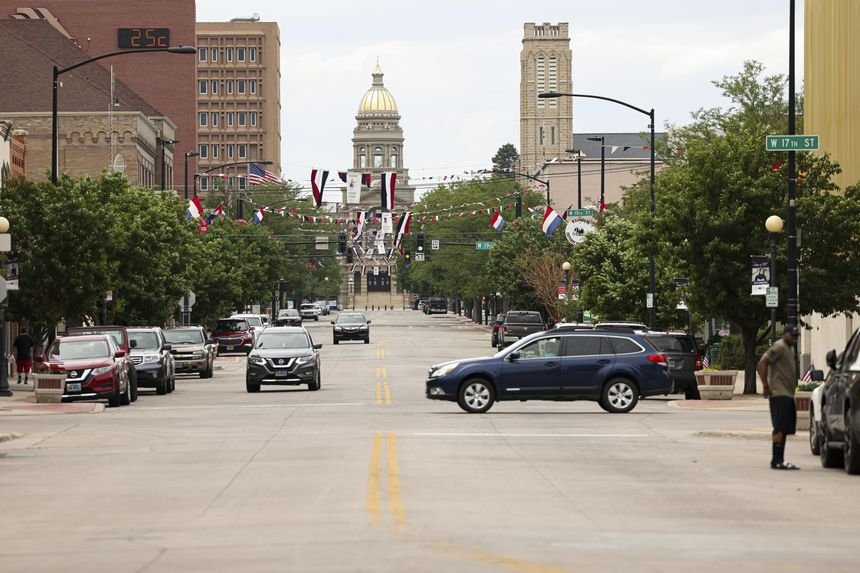
    Wyoming’s efforts to establish state-chartered banks catering to cryptocurrency firms have faced delays in obtaining approval from the Federal Reserve. These special-purpose depository institutions (SPDIs) were envisioned to serve as custodians of digital assets and facilitate the bridge between cryptocurrencies and dollars for various financial activities. However, the Federal Reserve has yet to grant any of Wyoming’s four new SPDIs access to the Fed’s financial payment systems, which handle a massive $4 trillion a day.


    About 9,300 banks and credit unions currently have Federal Reserve master accounts, essential for day-to-day banking operations. These master accounts are also critical for SPDIs, often referred to as “speedy” startups.


    Wyoming officials argue that state-chartered banks should have equal access to master accounts as federally chartered banks, emphasizing that SPDIs are subject to stringent state laws and restrictions. However, the Federal Reserve maintains that it has the discretion to approve master accounts and is cautious about the risks cryptocurrencies pose to the financial system.


    Custodia Bank, a SPDI based in Cheyenne, Wyoming, is currently facing a federal trial to determine the fate of its master account. Custodia filed a lawsuit against the Federal Reserve’s board of governors and the Kansas City Fed in June 2022 after facing initial delays in obtaining a master account. The application was subsequently denied by the Kansas City Fed in late January.


    Custodia Bank is authorized to accept U.S. dollar deposits and provide custody services for Bitcoin and Ethereum owners. The bank does not act as a cryptocurrency exchange but plans to integrate with exchanges that can provide such services.


    In response to the lawsuit, the Federal Reserve argued that the cryptocurrency industry had experienced extreme volatility and losses, emphasizing the need for “appropriate risk management structures.” They also characterized Custodia’s business model as “novel and risky.”


    This delay in securing master accounts has frustrated Wyoming lawmakers who initially consulted with the Kansas City Fed while drafting the SPDI legislation and made changes based on the regional Fed bank’s suggestions.


    A federal trial scheduled for April will determine the outcome of Custodia Bank’s case and shed further light on the regulatory challenges faced by state-chartered cryptocurrency banks in Wyoming.

  • Wall Street Closes: Investors Await Fed’s Interest Rate Insights

    Wall Street Closes: Investors Await Fed’s Interest Rate Insights

    The week ended on a mixed note for Wall Street, with major indices showing minimal changes as investors remained cautious ahead of insights on interest rates from the Federal Reserve. The Nasdaq Composite slipped by 0.2%, the S&P 500 barely moved with a 0.01% decline, while the Dow Jones Industrial Average inched up by 0.08%.


    Amidst global markets hovering near two-month lows, the MSCI world equity index, tracking shares across 45 countries, registered a 0.24% decline at the latest check.


    After a recent surge, benchmark US 10-year Treasury yields experienced a decline, settling from their 16-year highs earlier in the week. Investors speculated that the robust US economy could prompt the Federal Reserve to maintain higher interest rates for an extended period.


    According to Blake Emerson, a global investment specialist at JP Morgan Private Bank, “August historically has been a weak month for markets, and it isn’t surprising that after a big rally to start the year, investors would take a breather. The headlines haven’t changed all that much, but the lens with which investors are viewing those headlines has,” as reported by Reuters.


    Despite touching a peak of 4.328% on Thursday, 10-year yields subsided to 4.255%. A breakthrough beyond the 4.338% level recorded in October would mark the highest yields since November 2007.


    The dollar index, reflecting the currency’s performance against a basket of six major rivals, dipped by 0.16%. Despite its daily decline, the dollar notched its longest winning streak in 15 months with a sixth consecutive week of gains.


    Recent minutes released from the Federal Reserve’s July meeting revealed that committee members continued to acknowledge strong upside risks to inflation. This suggests the possibility of upcoming rate hikes to control inflation.


    All eyes are now on the annual meeting of the Federal Reserve and other major central banks in Jackson Hole, Wyoming. Next Friday, Fed Chair Jerome Powell is anticipated to deliver a speech, closely observed by investors for signals about the future trajectory of interest rates.


    TD Securities analysts noted, “We view the event as a good opportunity for Powell to start laying the ground for the next step in the Fed’s policy guidance: no longer focused on how many hikes to expect, but rather on rates remaining ‘higher for longer,’” as reported by Reuters.