Tag: Economic Forum

  • IMF Deputy Managing Director Meets Chanel CEO Leena Nair

    IMF Deputy Managing Director Meets Chanel CEO Leena Nair

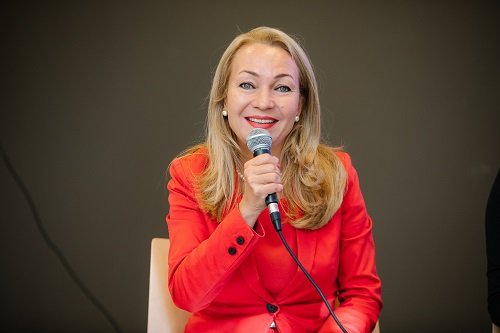
    The ongoing World Economic Forum (WEF) in Davos has witnessed a notable encounter between two influential leaders, showcasing the convergence of economics and fashion. Gita Gopinath, the Deputy Managing Director of the International Monetary Fund (IMF), and Leena Nair, the CEO of Chanel, crossed paths during this prestigious annual gathering, highlighting the diverse connections fostered at Davos.


    Gita Gopinath: Economist Extraordinaire

    Born and raised in India, Gita Gopinath has emerged as a trailblazer in the field of economics. At 52, she holds the distinction of being the first deputy managing director of the IMF, a position she assumed after serving as the chief economist at the organization from 2019 to 2022. Gopinath’s academic credentials include a PhD from Princeton University, and her contributions to the field have significantly influenced global economic policies.


    Leena Nair: Breaking Barriers in Fashion Leadership

    Leena Nair, a 54-year-old British citizen of Indian origin, has left an indelible mark in the corporate world. In 2021, she made history by becoming the first female and youngest-ever chief executive of Chanel, the iconic French luxury fashion house. Prior to her role at Chanel, Nair served as the chief human resources officer at Unilever, showcasing her leadership prowess and breaking barriers in the corporate hierarchy.


    The convergence of these two leaders from distinct sectors—economics and fashion—illustrates the interdisciplinary nature of discussions at Davos. The annual forum serves as a melting pot of ideas, bringing together leaders from diverse fields to address global challenges and opportunities.


    Davos Encounter: Gopinath and Nair

    Gita Gopinath took to social media to share a moment from her encounter with Leena Nair at Davos. In a tweet, she expressed, “Great to finally meet ⁦@LeenaNairHR⁩. Only in Davos does an economist run into a fashion mogul.” This candid acknowledgment encapsulates the unique interactions and connections that unfold at Davos, transcending professional boundaries.


    Beyond the casual meeting, Gopinath has been actively engaged in discussions at Davos, providing insights into crucial economic matters. Recently, she issued a cautionary note regarding central banks and their approach to interest rate cuts in the coming year. Her perspective is rooted in the persistent concerns about inflation and the need for a measured approach to monetary policies.


    Caution on Interest Rates: Gopinath’s Insights

    In an interview with the Financial Times, Gita Gopinath highlighted the importance of caution when considering interest rate cuts in the current economic landscape. She pointed out that inflation is anticipated to decelerate less sharply than in the previous year. This projection is attributed to tight labor markets and heightened services inflation in regions such as the US and the euro area.


    Gopinath emphasized that, based on existing data, a more prudent timeline for rate cuts would be in the second half of the year rather than the first. Her nuanced understanding of global economic trends adds a valuable perspective to the ongoing discourse at Davos.


    Optimism Amid Challenges: Gopinath’s Stance

    While acknowledging the challenges posed by inflation, Gita Gopinath expressed optimism about the global economy. She asserted that the likelihood of a deep recession is less probable, contributing a sense of reassurance amid economic uncertainties. Her insights align with the broader theme of navigating challenges with resilience and strategic policymaking.


    Leena Nair’s Dynamic Presence

    Leena Nair’s presence at Davos brings a dynamic perspective from the realm of fashion and luxury. As the CEO of Chanel, she represents an industry that intersects with various aspects of business, culture, and global trends. The inclusion of leaders from diverse sectors, including fashion, underscores the comprehensive nature of discussions at Davos.


    The intersection of Gita Gopinath’s economic insights and Leena Nair’s leadership in the fashion industry highlights the multidimensional nature of the global landscape. Davos continues to serve as a platform where leaders from different fields come together to share ideas, foster collaborations, and address the multifaceted challenges shaping the future of the global economy.


    The encounter between Gita Gopinath and Leena Nair at Davos exemplifies the richness of connections and conversations that define this annual gathering. As these leaders contribute their perspectives to the global dialogue, Davos remains a symbol of cross-disciplinary collaboration and collective problem-solving.

  • World Leaders Set to Debate Open Innovations at VI International Economic Forum

    World Leaders Set to Debate Open Innovations at VI International Economic Forum

    The Institute of Economics of the Latvian Academy of Sciences will be organising its VI International Economic Forum under the theme Open Innovation: from the Creativity of the Individual to an Innovative Science-Based Economy from September 21-22, 2023 at the Latvian Academy for Sciences, Academy Square 1, Riga Latvia.


    The two-day conference will have gatherings & presence of top policy makers, academicians, Researchers on topics of significant issues. Academic Researchers, Scientists, Entrepreneurs, Politicians and public figures will discuss key trends and prospects related to the compelling economic challenges and global economy & its significant repercussions on the society.


    The historic & Iconic VI International Economic Forum has cemented its status as a leading international Economic Forum focusing on key issues on the global economic agenda. It provides a platform for participants to exchange best practices and expertise in the interests of sustainable development. The theme of the VI International Economic Forum is Open Innovation: from the Creativity of the Individual to an Innovative Science-Based Economy from September 21-22, 2023 at Riga Latvia.


    Speaking on this, Dr Nina Linde, Director, Institute of Economics of the Latvian Academy of Sciences said “International Economic Forum, now in its VI year aim to be the voice of the people of the European Union & emerge as a significant player in the Latvia as a power house. The aim of the Forum is to promote the development of the business environment, by drawing more attention to the study of the obstacles hindering the development of entrepreneurship and providing science-based recommendations for the improvement of the state and local government support system.


    The Forum serves as a platform for the exchange of experience and cooperation of scientists, entrepreneurs, and politicians, stimulating the entry of local and foreign investment and the development of an innovative national economy in the long term. International Economic Forum at Riga in Latvia accelerate the impact of a diverse community of responsible leaders across borders and sectors to shape a more inclusive and sustainable future. International Economic Forum are motivated to use their talent and influence to be a force for good. We cultivate collective and individual leadership to help develop informed, visionary global change-makers.


    International Economic Forum believe that by pooling their diverse skills, experiences and networks they can achieve more together. We foster collaboration in the global public interest. And yes, International Economic Forum are pioneering and bold. We identify and champion ways to scale-up, amplify and accelerate their impact, to make more of a difference in their communities and beyond. Aligned with the International Economic Forum’s mission, we seek to drive public-private co-operation in the global public interest. We are united by the belief that today’s pressing problems present an opportunity to build a better future across sectors and boundaries.”


    The Institute of Economics of Latvian Academy of Sciences : The Institute of Economics of Latvian Academy of Sciences (Institute) is registered as a scientific and research institute in 2006. The action and activities of the Institute are oriented to studying of economic problems significant for Latvia, seeking and creating innovative and scientifically based solutions.


    At present, the Institute is one of the leading research centres for economy with wide partnership links in European and other countries of the World and being able to provide a research based, competent opinion about ongoing processes in the economy of Latvia, Baltics and Europe, as well as to note the future progression. The mission of the Institute is to facilitate the development of Latvian economy in the regions and in the country as a whole, preparing based on researches, competent assessments and opinions on ongoing processes in the economy of Latvia, Baltics and Europe, as well as elaborating recommendations related to development opportunities of economy.


    Panel Discussion between Entrepreneurs, Scientists and Politicians in order to find mechanisms for solving the following issues:

    How to increase the effectiveness of open innovation in practice

    How to select effective tools for open innovation

    How to promote the development of creativity and achievement motivation at school, university, and enterprise

    What competencies are needed to search for new solutions in the external environment and to develop an innovative economy at the micro and macro levels

    How does the attitude of managers and key specialists towards innovation affect the performance of organizations

    How to access the worlds best technologies and competencies, and use them to enter new markets in order to diversify

    How best to protect intellectual property and control R&D activities

    How to organize the transfer of technologies and scientific developments in effective way

    How to use the open innovation model, allowing companies to increase the chances of success in developing new products by 3 times

    What does Europe and, in particular, the Baltic countries lack in order to launch innovative solutions on the market