Tag: Economic Development

  • India’s Jammu and Kashmir Budget vs. Pakistan’s IMF Bailout

    India’s Jammu and Kashmir Budget vs. Pakistan’s IMF Bailout

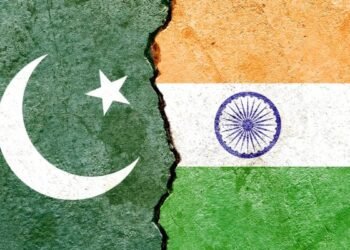
    India’s announcement of an interim budget totaling $14 billion for fiscal 2024-25 for the Union Territory of Jammu and Kashmir has drawn significant attention, particularly as it dwarfs Pakistan’s recent IMF bailout. The $14 billion budget allocation for Jammu and Kashmir is approximately 4.5 times larger than the $3 billion bailout package approved by the IMF for Pakistan to address its ongoing economic challenges. This stark contrast highlights the divergent economic trajectories of the two neighboring nations.


    Finance Minister Nirmala Sitharaman, while unveiling the interim budget, emphasized the substantial commitment to the economic development of Jammu and Kashmir. She credited crucial reforms undertaken in 2019 for enabling path-breaking measures by the Union Territory Government, including decentralization of the governance structure, promotion of inclusive development, revenue generation enhancement, and infrastructure development scaling up.


    Sitharaman also underscored the government’s commitment to maintaining law and order for security while implementing initiatives for economic and social development, with a policy of zero tolerance against terrorism. She noted that effective and continuous action by security forces has significantly improved the security situation in the region.


    In contrast, Pakistan recently received the second tranche of a $3 billion bailout package from the IMF, aimed at addressing its cash-strapped economy. The IMF’s approval of a $700 million loan tranche followed the completion of the first review of Pakistan’s economic reform program. This disbursement brings the total amount received under the Stand-By Arrangement to $1.9 billion. The bailout package comes as Pakistan grapples with economic challenges, with the first tranche of $1.2 billion released in July 2023.


    The disparity in budget allocations and economic assistance underscores the differing economic landscapes and priorities of India and Pakistan. While India’s focus on bolstering the economy of Jammu and Kashmir reflects its commitment to development and stability in the region, Pakistan’s reliance on IMF support highlights the urgency of addressing its economic woes. As both countries navigate their economic trajectories, the significant contrast in financial assistance underscores the complex dynamics shaping the South Asian region’s economic landscape.

  • Uttarakhand Secures ₹54,550 Crore in Investments

    Uttarakhand Secures ₹54,550 Crore in Investments

    The Uttarakhand government, led by Chief Minister Pushkar Singh Dhami, has successfully secured investments totaling ₹54,550 crore from various industries and sectors. The commitments were made during Chief Minister Dhami’s recent visits to London, Birmingham, Dubai, Abu Dhabi, and New Delhi. These investments span a wide range of sectors, including tourism, pharmaceuticals, health and wellness, education, and agro-processing, showcasing the growing economic prospects for the state.


    Chief Minister Dhami revealed that these substantial investment commitments will lay the foundation for economic development in Uttarakhand. The government is planning to commence the groundwork for these investments ahead of the upcoming global investor summit scheduled for December 8-9. This summit will provide a platform for investors and businesses to explore opportunities and partnerships in Uttarakhand.


    Dhami emphasized that the government is keen to consider all proposals and suggestions received from investors and corporate entities. Decisions regarding the committed investments will be made after a careful assessment of the prospective benefits and their impact on the state’s welfare. The priority, Dhami stated, will be given to investment proposals that generate employment and stimulate economic growth.


    A significant portion of the investment commitments, totaling ₹15,475 crore, was inked during roadshows in the United Arab Emirates on Tuesday and Wednesday. Prior to this, investments amounting to ₹12,500 crore were secured in the United Kingdom, while agreements worth ₹26,575 crore were signed in Delhi on two occasions, September 4 and October 4 of this year.


    Chief Minister Dhami highlighted that the past year has seen the approval of projects worth ₹1.5 trillion, and projects worth ₹20,000 crore are currently in progress. Uttarakhand is strategically poised to expand its presence in the fields of solar and wind energy. Additionally, the state is focusing on pump storage projects to enhance its energy infrastructure.


    Dhami acknowledged that the real estate and commercial sectors in the United Arab Emirates are well-established. He has held discussions with major residential and commercial property developers in West Asian countries, proposing projects in key cities of Uttarakhand, including Dehradun, Rishikesh, and Haridwar.


    Addressing environmental concerns and landslides triggered by heavy rainfall, Dhami revealed plans to organize a conference on the “balance of ecology and economy” from November 29 to December 1. This conference will provide a platform for discussions on issues related to environmental sustainability and economic development.


    Uttarakhand has been actively working to improve its business environment, having introduced several policies to promote sectors such as tourism and micro, small, and medium enterprises (MSMEs). The state has also offered a significant capital subsidy of 50% for businesses to encourage investment and economic growth.


    The upcoming two-day global investor summit will be a major event, attracting business delegations, corporate leaders, academia, innovators, and governments from around the world. Over 5,000 national and international delegates are expected to participate. The state government aims to showcase its investor-friendly policies, good governance initiatives, regulatory environment, and sustainable practices to encourage more investment in Uttarakhand.


    The summit will also facilitate business-to-business and government-to-business meetings, fostering collaboration and aiding investors in making informed decisions. Uttarakhand’s commitment to economic development and attracting investments underscores its ambition to become a thriving hub for various industries.

  • India Showcases PM GatiShakti National Master Plan

    India Showcases PM GatiShakti National Master Plan

    India showcased its ambitious PM GatiShakti National Master Plan at the Asian Development Bank’s (ADB) 2023 Regional Cooperation and Integration Conference in Tbilisi, Georgia. The Ministry of Commerce & Industry made this announcement, emphasizing India’s commitment to advancing logistics efficiency and regional connectivity.


    The conference, which spans from September 7th to 9th, brought together representatives from over 30 member countries, including senior officials from ADB’s Developing Member Countries responsible for Economic Cooperation and Development (ECD). It also featured participation from representatives of development partner agencies and regional cooperation organizations.


    The Indian delegation at the conference was led by Sumita Dawra, Special Secretary (Logistics) from the Department for Promotion of Industry and Internal Trade (DPIIT) under the Ministry of Commerce and Industry.


    The delegation highlighted PM GatiShakti as a groundbreaking “whole-of-government” initiative aimed at integrated planning of multimodal infrastructure connectivity to economic nodes and social infrastructure. This approach is expected to significantly enhance logistics efficiency and facilitate the seamless flow of goods and services.


    Furthermore, the Indian delegation emphasized that PM GatiShakti principles incorporate socio-economic area-based development as an integral part of regional connectivity. This holistic approach is expected to not only improve infrastructure but also promote economic growth and development in the connected regions.


    The government’s targeted interventions and substantial capital expenditure investments in infrastructure, coupled with the adoption of cutting-edge technologies such as geospatial technology, have been instrumental in transforming the entire logistics and infrastructure ecosystem, the delegation added.


    PM GatiShakti represents a “Made in India” initiative aimed at creating a robust and interconnected infrastructure network that can support the nation’s economic development and enhance its competitiveness on the global stage. By focusing on multimodal connectivity and integrated planning, India aims to bolster its logistics capabilities, reduce transportation costs, and facilitate the movement of goods and services more efficiently.


    The presentation of PM GatiShakti at the ADB conference underscores India’s commitment to fostering regional cooperation, improving connectivity, and promoting sustainable economic development in the region. The innovative approach of PM GatiShakti, which combines infrastructure development with socio-economic growth, aligns with India’s vision of becoming a global economic powerhouse while ensuring inclusivity and sustainable development.

  • West Bengal to Unveil Investment-friendly Policies

    West Bengal to Unveil Investment-friendly Policies

    The West Bengal government is gearing up to introduce a range of policy measures designed to attract investments and promote economic growth in the state. According to Amit Mitra, the principal chief advisor to Chief Minister Mamata Banerjee, these policies will be unveiled at the upcoming Bengal Global Business Summit in November.


    During a press briefing, Mitra highlighted the government’s efforts to create an investment-friendly environment. He emphasized that several policies are in the works, with some already approved by the cabinet. The aim of these policies is to encourage businesses to invest in various sectors, thus boosting economic activity and creating new opportunities.


    Mitra explained that the government’s approach involves stimulating consumption, which subsequently generates demand for investments. By creating an environment that supports business growth and innovation, West Bengal aims to attract both domestic and international investors.


    The Bengal Global Business Summit is scheduled to take place from November 21 in Kolkata. This two-day event aims to bring together a diverse range of stakeholders, including business leaders, academia, and think-tanks from around the world. The summit serves as a platform for forging strategic alliances and business partnerships that can contribute to the economic development of West Bengal.


    To further promote the upcoming summit and showcase the potential of West Bengal as an investment destination, the state government and the Confederation of Indian Industry (CII) organized a roadshow with business stakeholders in the capital. During the roadshow, leaders from various sectors, including manufacturing, healthcare, food processing, education, startups, hospitality, and logistics, shared their positive experiences of working in West Bengal and highlighted the state’s industry potential.


    The West Bengal government’s proactive approach to investment promotion and economic development underscores its commitment to fostering growth and prosperity in the state. The policy measures to be announced at the Bengal Global Business Summit are expected to play a pivotal role in attracting investments and driving sustainable economic progress.