Tag: economic challenges

  • PM Shehbaz Appoints JPMorgan Banker as Finance Minister

    In a significant move aimed at reviving Pakistan’s struggling economy, Prime Minister Shehbaz Sharif has appointed Muhammad Aurangzeb, a former banker from JPMorgan Chase & Co., as the country’s new Finance Minister. This decision comes at a critical juncture for Pakistan, following a contentious election and amidst pressing economic challenges.


    Muhammad Aurangzeb, aged 59, brings a wealth of experience to his new role, having previously served as the chief executive officer of Pakistan’s largest bank by deposits, Habib Bank Ltd. His appointment underscores Prime Minister Shehbaz Sharif’s commitment to tapping into technocratic expertise to address the economic woes facing the nation.


    One of the most urgent tasks confronting the new finance minister is the imperative to secure substantial financial assistance from the International Monetary Fund (IMF). Pakistan is facing a severe cash crunch, exacerbated by surging inflation and slowing economic growth. To navigate through these challenges, Pakistan urgently needs access to at least $6 billion in loans from the IMF. Additionally, the country must unlock the final $1.1 billion tranche from an existing IMF program, which is set to expire next month. Compounding these financial pressures, Pakistan also faces the maturity of $1 billion worth of dollar-denominated bonds in April.


    The choice of Muhammad Aurangzeb as finance minister reflects Prime Minister Shehbaz Sharif’s strategic vision for steering Pakistan’s economy back on track. Aurangzeb’s extensive banking experience, coupled with his tenure as CEO of Habib Bank, positions him well to tackle the complex financial challenges facing the nation. His track record of leadership and strategic decision-making in the banking sector underscores his suitability for the role.


    Prime Minister Shehbaz Sharif’s decision to prioritize securing IMF assistance underscores his commitment to implementing bold economic reforms. He has emphasized the need for a comprehensive approach to address Pakistan’s economic challenges, characterizing the task ahead as a “surgical operation” that requires decisive action. By appointing Muhammad Aurangzeb, Sharif signals his intent to leverage technocratic expertise to navigate Pakistan through its current economic crisis.


    The importance of IMF assistance cannot be overstated in Pakistan’s quest for economic stability. Securing IMF loans will not only provide immediate financial relief but also demonstrate Pakistan’s commitment to implementing critical structural reforms. Prime Minister Shehbaz Sharif’s personal engagement with IMF Managing Director Kristalina Georgieva reflects his determination to push through necessary reforms, bypassing previous obstacles encountered by his predecessors.


    Bloomberg Economics analyst Ankur Shukla has expressed optimism about Prime Minister Shehbaz Sharif’s ability to secure IMF assistance. Sharif’s proven track record of implementing reforms during his previous tenure as prime minister instills confidence in his leadership. Sharif’s party manifesto, which includes ambitious targets for fiscal deficit reduction and current account balance improvement, aligns closely with IMF objectives. Shukla’s assessment suggests that Pakistan’s prospects for securing a new IMF package have significantly improved under Sharif’s leadership.


    The acquisition of IMF aid is also crucial for maintaining support from key creditor nations, such as Saudi Arabia and the United Arab Emirates, which have provided substantial financial assistance to Pakistan in the past. The injection of IMF funds will bolster investor confidence and help stabilize Pakistan’s economy, thereby attracting further investments. Notably, Pakistan’s dollar bonds have already witnessed a significant increase in value this year, signaling renewed investor interest in the country’s economic prospects.


    Despite these optimistic projections, some observers remain cautious about Pakistan’s economic outlook. Nadeem Ul Haque, a former economist with the IMF, has cautioned against overly optimistic expectations. He argues that Pakistan’s economic challenges run deep and cannot be resolved solely through changes in personnel or IMF programs. Structural reforms and long-term solutions are needed to address the underlying issues plaguing Pakistan’s economy.


    The appointment of Muhammad Aurangzeb as Pakistan’s Finance Minister marks a significant step towards addressing the country’s economic challenges. Prime Minister Shehbaz Sharif’s decision underscores his commitment to leveraging technocratic expertise and implementing bold reforms to revive Pakistan’s cash-strapped economy. The successful acquisition of IMF assistance will be crucial in stabilizing Pakistan’s financial situation and laying the groundwork for sustainable economic growth. However, the road ahead remains fraught with challenges, and concerted efforts will be needed to address the deep-rooted structural issues facing Pakistan’s economy.

  • Economy: Industrial Output Slows, Inflation Jumps

    Economy: Industrial Output Slows, Inflation Jumps

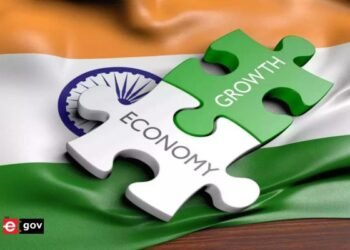
    Toward the end of the year, the Indian economy faced a dual challenge with a slowdown in industrial output growth and a surge in inflation, according to data released on Friday. Industrial output growth hit an eight-month low of 2.4% in November, indicating a cooling momentum in manufacturing. Simultaneously, the consumer price index (CPI)-based inflation rose to 5.69% in December, marking its fastest pace in four months.


    In November, factory output growth slowed down, with a notable contraction in capital goods production, reflecting a decline in fixed investments. The manufacturing sector reported a 1.2% annual growth, while consumer durables production contracted by 5.4%. The Index of Industrial Production (IIP) rose by 7.6% in November, reflecting a mixed performance across different sectors.


    The inflation data for December revealed an uptick in CPI-based inflation to 5.69%, up from 5.55% the previous month. Food inflation, a significant component of the overall consumer price basket, rose to 9.53% in December, contributing to the overall inflationary pressures. The government had implemented supply-side measures earlier to address high inflation, including releasing cereal stocks and managing imports and exports of essential commodities.


    Despite the elevated inflation levels, the Reserve Bank of India (RBI) maintained a cautious stance on interest rates, signaling potential measures by the government to curb rising prices. The December CPI inflation remained higher than the RBI’s target of 4% but stayed within its tolerance range of 2-6% for the fourth consecutive month.


    The industrial output growth slowdown in November comes after a period of expansion, with a growth rate of 6.4% in the April-November period of the fiscal year. This expansion was slightly above the 5.5% figure reported in the same period the previous year. However, the monthly growth rate in November was the slowest in the April-November 2023 period.


    The Indian economy’s performance in the first half of the fiscal year showcased robust growth, driven by strong domestic consumption and investment. Private Final Consumption Expenditure (PFCE) grew by 4.5%, with its share in GDP increasing to 60.4%. The finance ministry’s first advance estimates projected India’s growth at 7.3% for FY24.


    International agencies, including the International Monetary Fund (IMF) and the World Bank, have raised their growth projections for the Indian economy. Despite challenges such as slowing global growth and consumption, India’s economic outlook remains positive, supported by sustained investment growth and output in manufacturing, construction, and certain services.


    As the Indian economy faces headwinds, policymakers are likely to closely monitor both industrial output and inflation trends to implement measures that maintain economic stability and address emerging challenges.

  • Xi Jinping Hosts Third Belt and Road Forum, Backed by Russia

    Xi Jinping Hosts Third Belt and Road Forum, Backed by Russia

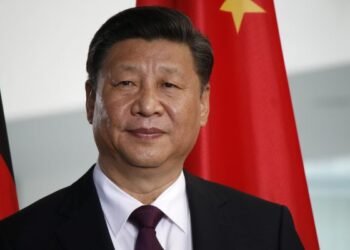
    Chinese President Xi Jinping is hosting the Third Belt and Road Forum at the Great Hall of the People in Beijing, signaling China’s continued efforts to present itself as an alternative leader in the international arena. Xi’s Belt and Road Initiative, aimed at creating a global network of infrastructure projects, is part of his vision to establish an alternative to the US-led world order, with the backing of Russian President Vladimir Putin.


    In recent years, Xi Jinping has intensified his efforts to project China as a global leader, particularly as the United States has taken steps to reduce its reliance on Chinese labor and explore trade alternatives in South Asia, including India.


    The Belt and Road Initiative, a hallmark of Xi’s foreign policy, envisions how global security and development should be ensured in the 21st century. Putin has expressed support for this initiative, emphasizing their shared vision for a fairer, multi-polar world and mutually beneficial cooperation between their countries.


    During the forum, attended by representatives from over 140 countries, China aims to celebrate a decade since the launch of the Belt and Road Initiative and demonstrate its contributions to global development. This signature foreign policy has led to significant Chinese investments in infrastructure projects worldwide, such as ports, power stations, bridges, railways, and roads. Over 150 countries have participated in the program, which China claims has mobilized up to a trillion dollars in investments, fostering growth in developing nations.


    However, China faces domestic challenges, including a slowing economy, high unemployment, and recent political changes within the ruling Communist Party. Despite these issues, Beijing seeks to downplay these challenges and project its power as an exemplar of superior leadership.


    The Belt and Road Initiative has raised concerns due to its environmental and financial impact, including its contribution to China becoming the world’s largest debt collector. Xi Jinping, in his address at the forum, dismissed criticisms and reiterated his commitment to the initiative. He also proposed an eight-part action plan for the Belt and Road Initiative, including the removal of restrictions on foreign investment in Chinese manufacturing and an initiative on global artificial intelligence governance.

  • Russian Ruble Falls Below 100 to US Dollar

    Russian Ruble Falls Below 100 to US Dollar

    The Russian ruble’s value against the US dollar has taken a significant hit, dropping below 100 to the dollar. This is the first time the ruble has experienced such levels since the weeks following Russia’s invasion of Ukraine. The decline in the ruble’s value has been accelerated in recent weeks, with the currency losing almost 30% of its value against the dollar so far this year. This places the ruble among a handful of currencies, including the Turkish lira, Nigerian naira, and Argentine peso, that are facing a worse year in terms of value depreciation.


    The pronounced weakening of the ruble serves as an indicator of mounting financial anxiety within the Russian economy. The decline also sheds light on internal divisions among senior Russian officials on how best to address the situation. A senior Kremlin aide has attributed the ruble’s weakness to the central bank’s loose monetary policy, highlighting the underlying tensions.


    Maxim Oreshkin, President Vladimir Putin’s top economic adviser, implicitly criticized the central bank’s policies, stating that “the main source of ruble depreciation and inflation acceleration is loose monetary policy.” He emphasized the importance of a strong ruble for the Russian economy.


    The ruble’s depreciation raises concerns about mounting inflation and increased costs of imports, affecting the overall economic landscape. The central bank attempted to counter the rise in inflation by raising interest rates, but this measure has failed to stem the ruble’s decline.


    Russia’s economy has faced challenges due to Western sanctions, yet it has managed to maintain some stability through oil revenues and significant government spending on war-related activities. Despite these challenges, a weakening ruble poses a significant threat to the economy, increasing costs and impacting inflation.


    The decline in the ruble’s value has implications beyond the economic realm, affecting social rights and citizens’ livelihoods. It also sparks memories of historical instances where a weak ruble correlated with times of conflict and economic instability in Russia’s history.


    Efforts to regain confidence in the ruble have proven challenging, with Russians moving money abroad and outflows totaling $1 billion in recent months. A weakening ruble affects not only economic indicators but also the international reputation of the currency, reflecting on Russia’s global standing.


    The decline in the ruble’s value poses a dual challenge for Russia’s government, as it grapples with rising costs of the ongoing war while also striving to protect the population from the consequences of a weakened currency. The central bank’s role in managing the ruble’s value remains pivotal, and the ongoing struggle to stabilize the currency underscores the complexities of economic management in a challenging geopolitical landscape.

  • Shiv Sena Criticizes Government’s Handling of Rising Inflation

    Shiv Sena Criticizes Government’s Handling of Rising Inflation

    The official mouthpiece ‘Saamana’ of Shiv Sena has targeted the Narendra Modi-led central government for its handling of the surging prices of essential commodities in India. In an editorial, the party expressed concerns about the escalating inflation and the potential shortage of staple goods like grains, pulses, and sugar.


    The editorial asserts that inflation has reached alarming levels, causing essential commodity prices to soar. The situation has sparked fears of scarcity among the public. The editorial also raises questions about whether the government is adequately addressing these issues and providing relief to the common citizens grappling with the financial strain caused by inflation.


    The editorial takes a critical stance on the government’s priorities, stating, “This government is merely busy breaking the Opposition parties, unleashing central agencies to harass Opposition leaders and resorting to politics while people continue to suffer.”


    Prime Minister Narendra Modi comes under scrutiny in the editorial, with Shiv Sena accusing him of being silent on the matter of runaway inflation. The editorial remarks, “He brags about the country being on course to becoming the third biggest in the world but a ‘mauni (silent) baba’ on the issue of runaway inflation.” It further highlights the discrepancy between the government’s claims and the current realities faced by the citizens.


    The editorial paints a dire picture, depicting citizens already grappling with inflation now facing the prospect of shortages in essential food items. Amidst these challenges, the Shiv Sena editorial asserts that those in power at the center remain indifferent.


    The political context is significant, as Shiv Sena underwent a split when Eknath Shinde left the party along with a majority of MLAs to join BJP and form a government in June of the previous year. Ajit Pawar similarly led the majority of NCP MLAs to join the Eknath Shinde-led Maharashtra government. As the nation navigates the complexities of inflation and essential commodity prices, the editorial reflects the sentiments of a significant political voice in India.