Tag: E-commerce

  • Paytm Aims to Onboard 10 Million Merchants on ONDC by 2025

    Paytm Aims to Onboard 10 Million Merchants on ONDC by 2025

    Vijay Shekhar Sharma, the CEO and founder of One97 Communications, the parent company of Paytm, announced on Monday that the company is contemplating onboarding 10 million merchants by 2025 onto the government-backed Open Network for Digital Commerce (ONDC) platform. He stated that approximately 11.8 million customers have already been directed to Paytm’s product through the ONDC platform.


    Paytm’s ecosystem revolves around small merchants, and its mission is centered on assisting these businesses in becoming integral parts of the mainstream economy. Vijay Shekhar Sharma shared this vision at an ONDC event, emphasizing the role of ONDC in expanding Paytm’s reach and connecting with new customers.


    ONDC is a government-supported platform open to all e-commerce stakeholders for service onboarding. Digital payment firms such as Paytm, PhonePe’s Pincode, and hyperlocal e-commerce company magicpin are among the entities present on this platform.


    Vijay Shekhar Sharma highlighted that ONDC already boasts more than 10 million customers, constituting one-fifth of the total e-commerce market in India. The platform provides an avenue for merchants to connect with a vast customer base actively seeking new products and services.


    Sharma acknowledged the challenges of trust and discovery that come with bringing a large number of merchants onboard but expressed optimism, stating that there is a significant pool of customers ready to embrace online shopping.


    The CEO’s commitment to bringing 10 million merchants onto ONDC by the end of 2025 reflects Paytm’s dedication to leveraging digital commerce platforms for the benefit of small businesses. The move aligns with the broader mission to foster financial inclusion and enhance the accessibility of digital services.


    T Koshy, the Managing Director and CEO of ONDC, provided insights into the platform’s recent operations. He noted that since January, ONDC has witnessed significant growth, with nearly 5 million transactions this month, compared to approximately 1,200 transactions at the beginning of the year. Transactions are now occurring in 600 cities, indicating widespread adoption.


    Koshy expressed optimism about the future, envisioning substantial growth in transactions in the next 1-2 years. The goal is to add another zero to the current transaction levels within a year, signifying the platform’s potential to catalyze a significant shift in e-commerce dynamics.


    The commitment and growth seen in Paytm’s engagement with ONDC underscore the transformative impact that government-backed digital commerce initiatives can have on connecting businesses with consumers and fostering economic growth.

  • MCX to Offer Shorter Duration Futures Contracts

    MCX to Offer Shorter Duration Futures Contracts

    Multi Commodity Exchange of India (MCX) is set to introduce shorter duration futures contracts on select commodities and options on commodity indices, which is expected to have a significant impact on its trading turnover. This decision comes on the heels of obtaining approval from the market regulator to go live on Tata Consultancy Services Ltd’s new commodity derivatives platform, starting from October 16.


    MCX is one of the four Sebi-recognized national exchanges that dominate the commodity derivatives segment (CDS), boasting approximately 98% market share. Other exchanges offering CDS include NSE-anchored NCDEX, NSE, and BSE. This recent regulatory approval will pave the way for MCX to launch index options and shorter-duration contracts on benchmark gold and silver futures.


    Currently, MCX offers bi-monthly futures contracts for 1 kg of gold and 30 kg of silver. While it does provide gold and silver contracts in smaller denominations, it’s the larger contracts that attract the most significant trading volumes. MCX had initially sought and received approval from the Securities and Exchange Board of India (SEBI) for shorter duration contracts. However, the exchange will approach SEBI once again for the final green light. After the implementation of shorter duration futures contracts, the exchange will also seek approval for index options.


    Market experts suggest that the introduction of these contracts will be a game-changer for MCX. These instruments have the potential to significantly increase the exchange’s turnover as they have done with index options in the equity market. Index options hold a 98% market share in derivatives on the NSE, with a turnover of ₹37,380.7 trillion recorded so far in this fiscal year.


    MCX’s shift towards a more versatile and dynamic trading platform is long-awaited. The exchange had an eight-year contract with 63 Moons Technologies for its commodity derivatives platform, which expired in September last year. Subsequently, in 2021, the exchange selected Tata Consultancy Services (TCS) as its new vendor, entrusting it with the task of implementing a modern commodity derivatives platform before September 2022. However, multiple delays caused the migration to be pushed back.


    The latest contract extension with the old vendor was for six months, set to end in December 2023. But in a recent development, MCX confirmed that it was ready to migrate to the TCS platform, and SEBI gave its approval. This move is expected to position MCX as a more agile, adaptable, and competitive player in India’s commodity markets, and it could well be a crucial step in transforming its future growth prospects.


    MCX’s stock performance has also shown positive signs, with a 70% rise from a 52-week low of ₹1,285.05 on May 22 to a 52-week high of ₹2,179.45 on October 11. It closed at ₹2,109.95 on October 13. This upward trajectory is partly attributed to the positive market sentiment regarding the exchange’s potential to enhance its offerings and trading opportunities.

  • WestBridge Capital Acquires Stake in Meesho at $3.5 Billion

    WestBridge Capital Acquires Stake in Meesho at $3.5 Billion

    WestBridge Capital, a prominent investment firm, has acquired a 1.5% stake in Meesho, a leading Indian e-commerce platform, at a valuation of $3.5 billion. This acquisition comes as part of a secondary share sale and represents a significant development in the Indian e-commerce landscape.


    WestBridge Capital acquired the stake from Meesho’s seed investor, Venture Highway. As a result of this transaction, Venture Highway will retain around 3.8% of Meesho. While the exact financial details of the deal were not disclosed, this strategic investment underscores the substantial growth potential of Meesho in the Indian e-commerce market.


    In a statement, Venture Highway highlighted its longstanding support for Meesho, stating that it was an early and long-term backer of the company, having invested in its first seed round over eight years ago. Venture Highway also noted that it generated over 50 times its initial investment from this transaction.


    Meesho, founded in 2015 by Vidit Aatrey and Sanjeev Barnwal, initially started as a social commerce platform but has since transformed into a broader e-commerce marketplace. The platform has experienced strong growth, with a diverse product mix, including home, kitchen, and baby care products. Notably, over half of Meesho’s traffic is now organic, which has significantly reduced customer acquisition costs.


    This strategic investment by WestBridge Capital underscores the positive outlook for Meesho and the broader Indian e-commerce market. Meesho’s ability to provide superior value to a large base of Indian consumers has enabled the company to make rapid strides in the fast-growing e-commerce sector. WestBridge Capital expressed its enthusiasm for partnering with Meesho and supporting the founders’ and management’s vision for future growth.


    This investment transaction is a testament to the continued interest and confidence of investors in India’s e-commerce sector. As the Indian e-commerce market continues to expand and evolve, it presents opportunities for both established and emerging players to thrive and deliver value to consumers.


    WestBridge Capital, a prominent investment firm managing over $7.5 billion of capital across various funds focused on India, recognizes the potential of Meesho’s business model and its significant growth prospects. Meesho’s strategic focus on third-party logistics and product diversification has contributed to its strong position in the Indian e-commerce landscape.


    Overall, this investment serves as a notable milestone in the journey of Meesho, highlighting its ability to attract investment from prominent players like WestBridge Capital and further solidifying its position as a key player in the Indian e-commerce industry.

  • Amazon Introduces Prime Shopping for India’s Festive Season

    Amazon Introduces Prime Shopping for India’s Festive Season

    In preparation for India’s festive sale season, Amazon has introduced a specialized Prime membership called Prime Shopping Edition. Priced at ₹399 for a one-year subscription, this membership offers exclusive shopping perks to Indian users, including free shipping and one-day deliveries. It is exclusively available to users of Android smartphones and on the Amazon website.


    Notably, this move by Amazon comes shortly after Flipkart rolled out its membership program called Flipkart VIP, priced at ₹499 for an annual subscription. Flipkart VIP provides specific advantages related to delivery and returns in certain areas.


    While the standard Amazon Prime subscription is initially priced at ₹1,499 per year, it is often available at a discounted rate of ₹999. It offers a wide array of additional perks, including access to the OTT platform Prime Video, the music streaming app Prime Music, Prime Reading, and Prime Gaming.


    In contrast, Flipkart VIP does not include entertainment services but does provide exclusive offers and advantages for members utilizing Cleartrip, the travel unit owned by Walmart’s subsidiary.


    Amazon Great Indian Festival 2023 has already begun for Prime members, with a scheduled start date of October 8 for everyone else. However, the closing date for the sale is yet to be revealed.


    During the festival, SBI cardholders can enjoy a 10 percent instant discount on their purchases. The sale features discounts of up to 40 percent on mobiles and accessories, as well as up to 75 percent on laptops, smartwatches, and other items.


    Amazon has launched a dedicated webpage showcasing discounts on a wide range of products, including mobile phones, accessories, electronic gadgets like smartwatches, tablets, laptops, and smart TVs, as well as various home appliances. Numerous devices from both Indian and international brands, such as Apple, Asus, Lenovo, OnePlus, iQoo, Realme, Samsung, boAt, and Sony, are set to undergo price reductions.


    As Amazon and Flipkart vie for the attention of Indian shoppers during the festive season, consumers can look forward to a wide array of deals and discounts across various product categories.

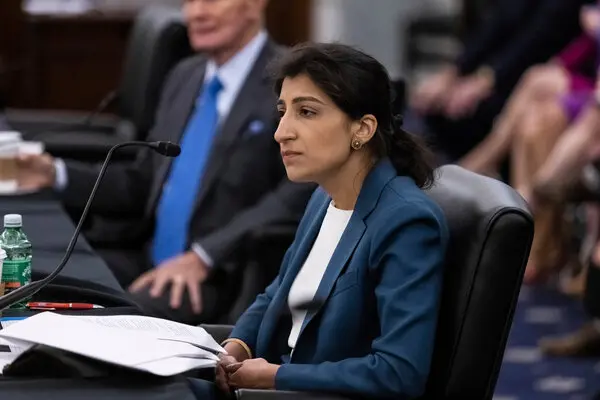
  • Lina Khan Targets Amazon’s E-commerce Monopoly in Lawsuit

    Lina Khan Targets Amazon’s E-commerce Monopoly in Lawsuit

    Lina Khan, the chair of the Federal Trade Commission (FTC) and a prominent figure in the world of antitrust enforcement, has filed a lawsuit against Amazon, marking another significant step in the ongoing scrutiny of big tech companies. Khan, known for her prior critique of Amazon’s practices, has accused the e-commerce giant of abusing its monopoly power in the online retail market.


    Khan’s legal criticism of Amazon initially gained attention in 2017 when she was a law student at Yale, and the company was rapidly expanding its reach in the retail sector. In her academic paper, Khan accused Amazon of engaging in predatory pricing strategies, where it lowered prices to a level where competitors couldn’t compete, thus hurting consumers. However, she acknowledged that predatory pricing was almost obsolete as a legal theory due to high legal barriers.


    Fast forward to 2023, and the FTC’s lawsuit presents a different perspective. Instead of accusing Amazon of harming consumers with low prices, the lawsuit asserts that Amazon has hurt consumers by imposing higher prices, mainly through punitive measures against marketplace sellers who offer lower discounts elsewhere. Additionally, it claims that Amazon benefits from its monopoly by mandating sellers to use its fulfillment services.


    This change in focus has led to discussions about the evolution of antitrust enforcement, with experts highlighting the complexity of antitrust theory and practice. While Khan’s 2017 paper criticized Amazon for aggressive discounting to gain a monopoly, the company later shifted to raising prices after establishing market dominance. This shift aligns with the most common theory of antitrust harm, which centers on consumer harm, often through higher prices or reduced quality.


    The FTC’s lawsuit further claims that Amazon’s advertising practices have contributed to its violations. Amazon’s shopping results pages are described as “cluttered with advertisements,” making it challenging for consumers to find the products they want. Additionally, it suggests that Amazon’s advertising creates a pay-to-play system for sellers who must pay for better search placements through advertising.


    Amazon has strongly contested the FTC’s claims, arguing that they are baseless and would force the company to raise prices or offer worse service to consumers. The company has emphasized its role in helping marketplace sellers offer competitive prices.


    It’s worth noting that the FTC’s complaint does not address certain practices that Lina Khan criticized in her 2017 paper, such as Amazon’s alleged use of third-party seller data to create competing products. Transforming these claims into antitrust violations presents legal challenges.


    Overall, Lina Khan’s lawsuit against Amazon reflects the evolving landscape of antitrust enforcement, especially in the digital age where online platforms act as intermediaries between buyers and sellers. While the outcome of this legal battle remains uncertain, it underscores the broader debate about the power and practices of tech giants in the digital economy.

  • Amazon Resumes its Amazon Shipping Service

    Amazon Resumes its Amazon Shipping Service

    Amazon has announced the revival of its shipping service, Amazon Shipping, which had been put on hold at the onset of the COVID-19 pandemic. With this move, Amazon aims to compete with established logistics giants FedEx and UPS. The service allows sellers, including those on external platforms, to utilize Amazon’s delivery services for domestic shipments without needing to store their products in Amazon’s warehouses.


    Confirming the resumption of the service, an Amazon spokesperson clarified that businesses must be selling on the company to be eligible for Amazon Shipping. The company is already known for providing shipping to merchants who utilize its storage and delivery service, Fulfillment by Amazon. However, Amazon Shipping caters to sellers who wish to leverage Amazon’s delivery capabilities while managing their own inventory.


    Amazon Shipping, which was previously tested but paused in 2020 due to the surge in pandemic-related orders on the platform, has now been reinstated to support sellers’ order fulfillment needs. Amazon spokesperson Olivia Connors emphasized that the service provides sellers with an additional option for shipping packages quickly and cost-effectively, contributing to enhanced customer service.


    Amazon had expanded its logistics operations during the pandemic to accommodate the rising online orders. This expansion led to increased warehouse capacity, but as the pandemic situation eased, Amazon was faced with excess warehouse space. The company responded with strategies such as subleasing, lease terminations, and delaying new construction to optimize its warehousing resources.


    Notably, Amazon’s efforts to improve shipping speeds have borne fruit, with over 50% of Prime orders in major US metropolitan areas being delivered within a single day during the second quarter of this year. This highlights Amazon’s commitment to offering faster Prime delivery services to its customers.


    In addition to reinstating the company’s Shipping, the company is making changes to its fee structure for third-party merchants. Merchants participating in Amazon’s Seller Fulfilled Prime program will soon be subject to a 2% fee on each sale starting in October, in addition to the existing commission fees they pay to sell products on Amazon’s platform. This fee adjustment has drawn attention, especially as it coincides with looming antitrust concerns surrounding Amazon’s market dominance.


    As Amazon resumes its shipping service and introduces fee adjustments for sellers, the e-commerce giant continues to make strategic moves to enhance its logistics operations and maintain its position as a leader in the online retail space.

  • Meesho Removes Over 42 Lakh Counterfeit Listings

    Meesho Removes Over 42 Lakh Counterfeit Listings

    Meesho, a SoftBank-backed e-commerce platform, has taken significant steps to combat counterfeit and restricted product listings on its platform. The company recently announced that it has successfully delisted nearly 42 lakh counterfeit and infringing product listings, along with 10 lakh restricted products, in the past six months. These delisted products account for approximately 5% of the total listed products on Meesho’s platform.


    According to the company, its “Project Suraksha” systems have played a pivotal role in this achievement. Since February 2023, there has been an impressive 80% reduction in platform views for non-compliant listings. Furthermore, Meesho has effectively blocked over 12,000 bad actor accounts from accessing the platform, reinforcing its commitment to creating a safe and trustworthy environment for users.


    Meesho’s Founder and Chief Technology Officer, Sanjeev Barnwal, revealed that the company utilized advanced techniques in computer vision and natural language understanding to fortify quality checks and identify counterfeit products and bad actors effectively. The company also maintains a dedicated quality and compliance team that proactively cross verifies automated signals to combat fraudulent practices, fostering user trust.


    The platform has also created a “Suraksha List” comprising approximately 1,800 high-risk brands known for infringement and counterfeiting, allowing Meesho to implement stringent monitoring and protection measures.


    Amid the ongoing challenges in the e-commerce sector, Meesho has been working towards a leaner organizational structure and sustainable profitability. In May, the company announced a workforce reduction of 15% in its third round of layoffs to align with its business goals.


    Despite the workforce reduction, Meesho’s financials have shown positive trends. A recent report by Jefferies revealed that the platform has achieved contribution-margin positivity (pre-marketing and indirect spends) and is nearing zero cash burn, positioning it on track to achieve EBITDA breakeven this year.


    As the Indian government frames a national e-commerce policy and consumer protection rules for the sector, Commerce and Industry Minister Piyush Goyal is scheduled to meet representatives from leading e-commerce firms, including Amazon, Flipkart, Tata CLiQ, Reliance, Zomato, Swiggy, and Meesho, along with domestic traders body CAIT. This meeting aims to discuss pertinent issues related to the e-commerce sector and address challenges faced by stakeholders.

  • E-commerce and Online shopping, buying and selling of goods and services online

    E-commerce and Online shopping, buying and selling of goods and services online

    E-commerce refers to the buying and selling of goods and services online. This can include anything from clothing and electronics to digital products like software and e-books. Online shopping is a subset of e-commerce that specifically refers to the process of purchasing goods and services online.E-commerce and online shopping have become increasingly popular in recent years, with more and more people choosing to shop online for convenience and accessibility. Online shopping allows you to browse a wide range of products from the comfort of your own home, and often offers better prices and a larger selection than traditional brick-and-mortar stores.


    When shopping online, it’s important to take steps to protect your personal and financial information. Look for reputable online retailers that use secure payment methods and encryption to protect your data. Don’t share your personal information with untrusted websites, and be cautious of phishing scams and other fraudulent activities.


    To keep track of your online purchases, you can check your purchase history on the platform where you made your purchase. For example, if you made a purchase on Amazon, you can view your order history by logging into your account and navigating to the “Your Orders” section. Similarly, if you made a purchase on Snapchat, you can view your purchase history by checking your account settings.


    One of the biggest advantages of online shopping is convenience. You can shop from anywhere, at any time, and have your purchases delivered directly to your doorstep. Online shopping also offers a wider selection of products than traditional stores, as you can easily browse products from multiple retailers without leaving your home.


    To ensure a safe and secure online shopping experience, it’s important to shop from reputable retailers and take steps to protect your personal and financial information. Look for secure payment methods like PayPal or credit cards, and avoid sharing sensitive information like your Social Security number or bank account details.


    Another benefit of online shopping is the ability to compare prices and find the best deals. Many online retailers offer discounts and promotions that may not be available in-store. You can also read reviews from other customers to get a better sense of the quality and value of a product before making a purchase.


    In addition to convenience and a wider selection of products, online shopping also offers a more personalized shopping experience. Many retailers use data and analytics to track your shopping habits and offer personalized recommendations based on your interests and past purchases. This can help you discover new products that you might not have found otherwise.


    Online shopping also offers greater accessibility for people with disabilities or limited mobility. With online shopping, you can easily browse products and make purchases without having to navigate physical stores or deal with crowds.


    However, there are also some potential downsides to online shopping. For example, it can be difficult to judge the quality and fit of a product when shopping online, and returns can be more complicated and time-consuming. Additionally, some people may feel that online shopping lacks the social and sensory experience of traditional shopping.


    Despite these potential drawbacks, e-commerce and online shopping are likely to continue to grow in popularity as more people embrace the convenience and accessibility of online retail.


    Another advantage of online shopping is the ability to easily compare prices and products from multiple retailers. With a few clicks, you can compare prices, features, and reviews of similar products across different websites. This can help you find the best deal and make an informed purchase.


    Online shopping also allows you to avoid the crowds and hassle of traditional shopping, which can be especially appealing during busy shopping seasons like the holidays. You can shop from the comfort of your own home, and avoid the stress and frustration of navigating crowded stores and long lines.


    Another advantage of online shopping is the ability to easily find and purchase niche or hard-to-find products. With online shopping, you can easily search for and purchase products that may not be available in your local stores. This can be especially helpful for people who live in rural areas or who are looking for specialized products that may not be widely available.


    In addition, online shopping also offers a wider range of payment options than traditional shopping. Many online retailers accept a variety of payment methods, including credit cards, PayPal, and even cryptocurrencies like Bitcoin. This can make it easier to make purchases and manage your finances in a way that works best for you.


    Online shopping can also be more environmentally friendly than traditional shopping. By reducing the need for physical stores and transportation, online shopping can help reduce carbon emissions and other environmental impacts associated with retail.


    Online shopping can also be a great way to save time and money. With online shopping, you can easily compare prices and products, which can help you find the best deals and save money. You can also shop at your own pace and on your own schedule, which can help you save time and avoid the stress and frustration of traditional shopping. E-commerce and online shopping offer a range of benefits that make it an attractive option for many consumers.


    In conclusion, online shopping has transformed the retail industry and offers a range of benefits for consumers. With online shopping, you can easily compare prices, find niche products, and enjoy a personalized shopping experience. You can also avoid the crowds and hassle of traditional shopping, and shop from the comfort of your own home.


    However, there are also some potential drawbacks to online shopping, including the difficulty of judging the quality and fit of products, and the potential for complicated returns. Additionally, some people may feel that online shopping lacks the social and sensory experience of traditional shopping.


    Overall, online shopping is a convenient, accessible, and cost-effective way to shop for a wide range of products. Whether you’re looking for niche products, trying to save time and money, or simply looking for a more personalized shopping experience, online shopping is likely to continue to be an attractive option for consumers in the years to come.