Tag: Digital

  • The Future Heroes of India’s Digital Evolution

    The Future Heroes of India’s Digital Evolution

    India is a unicorn. Change here starts at a billion people. The countrys digital transformation journey, marked by initiatives like Aadhaar and UPI have proven this repeatedly. We have written the DPI playbook for the world. We delve into 5 less-publicised yet pivotal developments that will shape Indias sustainable and technologically advanced future using the 3 levers of Samaj, Sarkaar and Bazaar.


    Architects of Indias Digital Future :

    1. Beckn Protocol : Decentralised Foundations

    The Beckn Protocol, very unlike the Ghost Protocol, but very much on a Mission Impossible – crafting Indias decentralised future. It embodies the visions of web inventor Tim Berners-Lee and blockchain pioneer Satoshi Nakamoto. Heres why its a game-changer:


    Open & Interoperable

    Its open-source nature fosters universal participation, powering platforms like ONDC that challenge monopolies and empower social sectors by creating significant opportunities for MSMEs and artisans. Recent estimates suggest ONDC transactions can potentially generate $250-300 Bn in GMV (gross merchandise value) by 2030, driving Indias internet economy to $1 Tn.


    Unbundling the Ecosystem

    Beckn is a set of lightweight, open, and interoperable specifications, much like SMTP for emails but for digital transactions. It is designed to create peer-to-peer decentralised networks for pan-sector economic transactions and empower buyers and sellers to transact without intermediaries or apps. This empowers small businesses and gives consumers greater control, a crucial aspect in Indias diverse market.


    Trust & Transparency

    By integrating Discovery, Order, Fulfilment, and Post-fulfilment into the internets core, Beckn supercharges the digital economy, creating a seamless synergy between buyers and sellers. This empowers small businesses and gives consumers greater control, a crucial aspect in Indias diverse market.


    Real-world Impact

    Beyond e-commerce, Beckns applications extend to education, healthcare, mobility, and governance, impacting millions nationwide. Beckn powers. Namma Yatri, a peer-to-peer autorickshaw booking app in Bengaluru, India, challenges ride-hailing giants (45,000 autorickshaws already onboarded).. Open Kochi is a multimodal mobility network built on Beckn, offering citizens a seamless transportation experience. OGa is an open network in Gambia leveraging Beckn for a variety of services, from agriculture to logistics


    2. Bhashini : Multi-lingual AI Breaking Barriers

    Captain Kirk and the crew of the USS Enterprise all carried communicators. These were also Universal Translators and (as per the story) were first used in the late 22nd century on Earth for instant translation of well-known Earth languages. Bhashini may have proved them wrong.


    Inclusive Development

    Bhashini is a multi-lingual AI platform currently under development by the Ministry of Electronics and Information Technology (MeitY). It aims to provide accessible and inclusive AI tools for Indian languages, breaking down language barriers and fostering broader participation in the digital economy.


    Citizen Participation

    Every Indian can help build an open data repository to digitally enrich their language through Bhasha Daan – the Suno India, Bolo India, Likho India, and Dekho India initiatives. This participatory approach ensures that Bhashini reflects the true diversity of the Indian language. Just recently, Prime Minister Modi utilised Bhashini to address the Tamil-speaking audience at the Kashi Tamil Sangam, showcasing its potential for national communication.


    3. Digilocker : Authentic Digital Documents

    A Monster.com survey shows 82% of Indian employers encountered fake resumes in 2022, and the average cost per bad hire is ₹4.2 lakh. Digilocker addresses this pervasive issue of fake resumes and degrees, providing every Indian citizen and entity access to authentic digital documents.


    Combating Fraud

    Digilocker ensures citizens can access authentic digital documents. Digilocker tackles the widespread issue of fake documents, verifying credentials for over 240 million registered users and issuing over 6 billion documents as of January 2024.


    Benefits beyond Individuals

    Digilocker streamlines bureaucratic processes for government agencies, enabling secure document exchange and reducing administrative overhead. Some examples:

    During income tax filing, integration with Digilocker enables the Income Tax department to pull PAN card details, reducing verification time seamlessly. Over 30 million taxpayers have linked their PAN with Digilocker.

    For public sector bank recruitments, Digilocker APIs allow candidate identity and document verification by banks in real-time, cutting processing time from 4 days to 4 hours.

    The Central Board of Secondary Education uses Digilocker to deliver exam certificates to over 34 million students electronically. This has reduced certificate printing and logistics costs.


    4. Societal Platforms : Digital Solutions for Social Challenges

    I was totally intrigued by this concept when I first heard Sanjay Purohit discuss the analogy of the forest versus the farm to illustrate two fundamentally different approaches to systems organisation and governance. The forest is a decentralised, self-regulating, and resilient system, while the farm represents a centralised, controlled, and uniform system. This is also the basis for Societal Thinking and Societal Platforms – an EkStep-backed initiative.


    This approach involves a set of values, frameworks, and principles that have been developed through iterative cycles of building Societal Platforms in collaboration with over 150 change leaders, thinkers, and enablers across 25 countries. The emphasis is on empowering individuals to address their diverse problems with agency, dignity, and choice.


    Shifting the Paradigm

    Societal Platforms move beyond technology, adopting a systemic approach to social issues through open innovation and shared infrastructure. This philosophy is evident in platforms like the Maternal Care: The “Improving maternal care by making midwifery mainstream” platform, has trained over 10,000 midwives in India, reaching 3.6 million women and 1.2 million children with essential healthcare. This has led to a 25% reduction in maternal mortality rates in target regions.


    Societal Platforms in Action

    Water Security: The “Water Resilience for 100 Million” platform, has provided access to safe drinking water for over 5 million people in rural India. This has resulted in a 30% decrease in waterborne illnesses and a 20% increase in agricultural productivity in targeted areas.

    The “100 Million Farmers School” has empowered over 10 million farmers with financial literacy and business skills, leading to a 25% increase in income for participants.


    5. Diksha : Scaling Education Access

    The most well-established, Diksha, the EKStep Foundations education platform, is pivotal in scaling education and making it accessible to a broader audience in India. It brought 600 million textbooks alive for 180+ million students and 7+ million teachers via QR codes to deliver education at scale.


    Addressing the Content Gap

    Diksha offers over 60 billion minutes of learning across diverse subjects, catering to educational needs in all 28 states and 8 union territories.


    Overcoming the Digital Divide

    Dikshas offline accessibility and partnerships with mobile network operators ensure education continuity even in remote areas, bridging the digital divide and reaching previously underserved communities.


    Personalized Learning for All

    Diksha utilises AI-powered algorithms to personalise learning pathways, leading to improved test scores and increased student engagement. This focus on individual needs makes education more effective and engaging for all. My personal vision for the platform is the possibility of students to learn any course in any language from any university (online or offline) and bring it all together as a degree/certificate via a nationally accepted credit system.


    These 5 innovations are not just technological marvels; they represent a paradigm shift in how public infrastructure is designed, perceived and utilised. By focusing on inclusivity, accessibility, and self-sustainability, India is showcasing to the world that technology, when thoughtfully implemented, can be a powerful catalyst for societal transformation and global integration.

  • Will Koo App be able to reverse its decline and become a major player in the market?

    Will Koo App be able to reverse its decline and become a major player in the market?

    The microblogging website Koo, touted as a desi alternative to Twitter, saw monthly active users fall. The Koo app has been experiencing a decline in its monthly active user (MAU) base since its peak in July 2022. According to data from Moneycontrol, Koo’s MAUs dropped from 9.4 million in July 2022 to 3.1 million in April 2023. It, however, said the numbers were inaccurate and refused to share any specific details on the declining trend.


    “As a privately listed company, we are not required to disclose information on our burn, financial information and DAU/MAU numbers publicly. The numbers you have stated in your questions are also incorrect. With the global slowdown and the current market environment, our focus this year has been to optimise our costs and focus on revenue. We have moved from a growth engine to a very efficient system that is super optimised on marketing, tech and people costs, successfully bringing down our burn by 4X,” a company spokesperson told Moneycontrol.


    Start Up Journey :

    Founded by Aprameya Radhakrishna and Mayank Bidawatka in 2020, Koo has raised over $65 million from large investors like Tiger Global, Accel, Blume Ventures and was last valued at over $270 million, as per data available on Tracxn, a market intelligence data provider. Naval Ravikant and Balaji Srinivasan are among the notable angel investors in Koo, data showed.


    That time, founders Aprameya Radhakrishna and Mayank Bidawatka aggressively pitched for celebrities and political leaders to use Koo as an alternative. A bunch of them, like Union IT Minister Ashwini Vaishnaw, Dalai Lama, Baba Ramdev, Anupam Kher, Yogi Adityanath, Nitin Gadkari, Supriya Sule etc. created their accounts on the app. Some Media Institutions like Dainik Jagaran, Republic TV, News18, NDTV etc, also created their account on Koo app. Even globally, users in Brazil flocked to Koo which pushed downloads late last year. In just over three years of launch, Koo is the second-largest microblog available to the world with over 20 global languages on the platform.


    Then, Technical Challenges started for Tech Start up Koo. The Tiger Global-backed startup saw its MAUs drop to about 3.1 million in April 2023, the third straight month of decline this year. In January 2023, Koo’s MAUs were around 4.1 million, which fell closer to 3.5 million in February and dropped again to about 3.2 million in March. The 3.1 million MAUs in April was just about a third from a peak of 9.4 million in July 2022, when Twitter and the Indian government were involved in a legal tussle.


    Experts Opinion : Catch-22 situation

    An internet sector analyst said Koo is in a Catch-22 situation. If the company continues to lower its burn rate, it will see declining MAUs. It can choose to shore up MAUs but that would mean burning more money than it already has and most investors won’t be willing to take that route now. To be sure, most consumer internet startups are facing a similar dilemma and the situation is not specific to Koo.


    The jump in losses was also because Koo has scaled fast with 60 million downloads in the past three years. This comes at a time when Koo’s revenues were just Rs 14 lakh in FY22, as per the latest available data, up from Rs 8 lakh in FY21. During the same period, Koo’s losses jumped 460 percent to Rs 197 crore from Rs 35 crore in FY21.


    The steady decline in Koo’s MAUs was largely because Koo was spending lesser to acquire new users, and also retain existing users as it lowers its cash burn rate in an environment where capital has become difficult to access. It reduced marketing spends and at least two rounds of layoffs in the past year or so, Koo managed to reduce its monthly cash burn, as per moneycontrol.


    Several Other factors have contributed to Koo’s declining user base :

    Reduced Marketing Efforts : Koo has significantly reduced its spending on user acquisition and retention in an attempt to lower its cash burn rate, which may have led to a decline in new user growth.


    Lack of Distinctive Features : Koo offers many pro features to its users free of cost like long post, edit option etc, but Koo lacks unique features that would set it apart from established micro blogging platforms like Twitter (X). This makes it less appealing to potential users.


    Loss of interest from Indian government : The Indian government was a key early supporter of Koo, but the company’s relationship with the government appears to have cooled in recent months.


    Loss of interest from Indian users : The Indian people was great supporter of Koo, but the company’s policy to recognize Indian People, Brand and Start Ups based on recognition from foreign Platforms like Twitter(X), Instagram, Facebook etc, cooled the great support of Indian Users.


    Limited Content Ecosystem : Koo‘s content ecosystem is still relatively small compared to its rivals. Koo compares itself with meta and X and not ready to recognize small or medium content publishers, so small medium publishers also kept distance from Koo. This made it difficult for users to find interesting and engaging content on the platform.


    Competition from established micro blogging platforms : Koo faces tough competition from established micro blogging platforms such as Twitter and Instagram. These platforms have a much larger user base and are more familiar to Indian users.


    Future :

    Despite these challenges, Koo’s management team remains confident in the app’s future, and committed to the app and are continuing to work on improvements. The company is continuing to invest in product development and is working to attract new users. They are focusing on enhancing the user experience, expanding the content ecosystem, and attracting more users from different regions and language groups. It is also exploring opportunities to monetize the app, such as through advertising and premium features. Company says it is well-capitalized and remains positive about building a social media platform from India for the world.


    It remains to be seen whether Koo app will be able to reverse its decline and become a major player in the Indian micro blogging market. However, the company’s future is uncertain, and it faces a number of challenges that it will need to overcome in order to succeed. Hope for the best!

  • Truth Social puts Fake News on notice for egregious media smears

    Truth Social puts Fake News on notice for egregious media smears

    “On November 13, 2023, Truth Social’s merger partner, Digital World Acquisition Corp (DWAC), submitted an amended S-4 registration statement to the Securities and Exchange Commission. The submission was a major milestone toward completing our merger with DWAC. The mainstream media, however, responded by launching a momentous smear campaign against Truth Social and its parent company, Trump Media & Technology Group (TMTG)”, Truth Social.


    “Instead of reporting that we’re advancing toward completing our planned merger with DWAC, dozens of outlets, in an apparently coordinated attack, published a fake news story that fabricated utterly fictitious financial results for TMTG. TMTG will not tolerate being smeared like this. We have now sent media outlets more than twenty retraction demand letters. Every outlet that defamed TMTG or Truth Social must completely retract its article and issue a public apology in print, on its website, and on its social media accounts—or face swift legal action”, Truth Social


    Truth Social Shares Additional Information :

    DWAC has filed with the SEC a Registration Statement, which includes a preliminary proxy statement of the Company, and a prospectus in connection with the proposed Business Combination with TMTG. The definitive proxy statement and other relevant documents will be mailed to stockholders of DWAC as of a record date to be established for voting on the Business Combination. Securityholders of DWAC and other interested persons are urged to read the preliminary proxy statement/prospectus, and amendments thereto, and, when available, the definitive proxy statement/prospectus in connection with DWAC’s solicitation of proxies for the special meeting to be held to approve the Business Combination because these documents will contain important information about DWAC, TMTG and the Business Combination. DWAC’s security holders and other interested persons will also be able to obtain copies of the Registration Statement and the proxy statement/prospectus, without charge, once available, on the SEC’s website at www.sec.gov or by directing a request to: Digital World Acquisition Corp., 3109 Grand Ave, #450, Miami, FL 33133.


    “NEITHER THE SEC NOR ANY STATE SECURITIES REGULATORY AGENCY HAS APPROVED OR DISAPPROVED THE TRANSACTIONS DESCRIBED IN THIS PRESS RELEASE, PASSED UPON THE MERITS OR FAIRNESS OF THE BUSINESS COMBINATION OR RELATED TRANSACTIONS OR PASSED UPON THE ADEQUACY OR ACCURACY OF THE DISCLOSURE IN THIS PRESS RELEASE. ANY REPRESENTATION TO THE CONTRARY CONSTITUTES A CRIMINAL OFFENSE”.


    Shared Information regarding Participants in Solicitation :

    DWAC and TMTG and certain of their respective directors, executive officers, other members of management and employees, under SEC rules, may be deemed to be participants in the solicitation of proxies from the securityholders of DWAC in favor of the approval of the proposed extension and the Business Combination. Securityholders of DWAC and other interested persons may obtain more information regarding the names and interests of DWAC’s directors and officers in the Business Combination in DWAC’s filings with the SEC, including in the definitive proxy statement and the Registration Statement, and the names and interests of TMTG’s directors and officers in the proposed Business Combination in the Registration Statement. These documents can be obtained free of charge from the sources indicated above. TMTG and its officers and directors who are participants in the solicitation do not have any interests in DWAC or the proposed Business Combination other than with respect to their interests in the Business Combination.


    Truth Social Also shares Forward-Looking Statements :

    This press release contains certain forward-looking statements within the meaning of the federal securities laws with respect to the proposed Business Combination between the Company and TMTG. These forward-looking statements generally are identified by the words “believe,” “project,” “expect,” “anticipate,” “estimate,” “intend,” “strategy,” “future,” “opportunity,” “plan,” “may,” “should,” “will,” “would,” “will be,” “will continue,” “will likely result” and similar expressions, but the absence of these words does not mean that a statement is not forward-looking. Forward-looking statements are predictions, projections and other statements about future events that are based on current expectations and assumptions and, as a result, are subject to risks and uncertainties.


    Many factors could cause actual future events to differ materially from the forward-looking statements in this press release, including but not limited to :

    (i) the risk that the Business Combination and the securities purchase agreements (the “SPAs”) with certain institutional investors (the “PIPE Investors”) pursuant to which the PIPE Investors agreed to purchase up to an aggregate of 1,000,000 shares of Digital World’s Series A Convertible Preferred Stock (the “Preferred Stock”) for a purchase price of $1,000 per share for an aggregate commitment of up to $1,000,000,000 in a private placement (the “PIPE”) may not be completed in a timely manner or at all, which may adversely affect the price of DWAC’s securities.

    (ii) the risk that the Business Combination may not be completed by DWAC’s Business Combination deadline.

    (iii) the failure to satisfy the conditions to the consummation of the Business Combination or the PIPE, including the approval of that certain Agreement and Plan of Merger, dated as of October 20, 2021 (as amended and supplemented from time to time, the “Merger Agreement”) by the stockholders of DWAC.

    (iv) the lack of a third-party fairness opinion in determining whether or not to pursue the proposed Business Combination.

    (v) the occurrence of any event, change or other circumstance that could give rise to the termination of the Merger Agreement.

    (vi) the failure to achieve the minimum amount of cash available following any redemptions by DWAC stockholders.

    (vii) redemptions exceeding a maximum threshold or the failure to meet The Nasdaq Stock Market’s initial listing standards in connection with the consummation of the contemplated transactions.

    (viii) the effect of the announcement or pendency of the PIPE or the Business Combination on TMTG’s business relationships, operating results, and business generally.

    (ix) risks that the Business Combination disrupts current plans and operations of DWAC.

    (x) the outcome of any legal proceedings that may be instituted against TMTG or against DWAC related to the Merger Agreement or the Business Combination.

    (xi) the risk of any investigations by the SEC or other regulatory authority relating to the PIPE, the Merger Agreement or the Business Combination and the impact they may have on consummating the transactions.

    (xii) Truth Social, TMTG’s initial product, and its ability to generate users and advertisers.

    (xiii) changes in domestic and global general economic conditions.

    (xiv) the risk that TMTG may not be able to execute its growth strategies.

    (xv) risks related to the future pandemics and response and geopolitical developments.

    (xvi) risk that TMTG may not be able to develop and maintain effective internal controls.

    (xvii) costs related to the Business Combination and the failure to realize anticipated benefits of the Business Combination or to realize estimated pro forma results and underlying assumptions, including with respect to estimated stockholder redemptions.

    (xviii) DWAC’s ability to timely comply with Nasdaq’s rules and complete the Business Combination.

    (xix) risks that DWAC or TMTG may elect not to proceed with the Business Combination after completing their respective updated due diligence investigations.

    (xx) those factors discussed in the DWAC’s filings with the SEC and that will be contained in the definitive proxy and the Registration Statement relating to the Business Combination.


    The foregoing list of factors is not exhaustive. You should carefully consider the foregoing factors and the other risks and uncertainties that described in the “Risk Factors” section of the Registration Statement, DWAC’s Annual Report on Form 10-K/A for the year ended December 31, 2022, as filed with the SEC on October 30, 2023 (the “2022 Annual Report”) and in other reports DWAC files with the SEC. Risks regarding the Business Combination are also discussed in the Registration Statement filed with the SEC on November 13, 2023, as it may be amended or supplemented from time to time. You should not place undue reliance on any forward-looking statements, which are based only on information currently available to DWAC (or to third parties making the forward-looking statements).


    These filings identify and address other important risks and uncertainties that could cause actual events and results to differ materially from those contained in the forward-looking statements. Forward-looking statements speak only as of the date they are made. Readers are cautioned not to put undue reliance on forward-looking statements, and while DWAC and TMTG may elect to update these forward-looking statements at some point in the future, they assume no obligation to update or revise these forward-looking statements, whether as a result of new information, future events or otherwise. Neither DWAC nor TMTG gives any assurance that DWAC, TMTG, or the combined company, will achieve its expectations.


    Note : This article is not a News Updates or fact checked article by Ganga News Team. This is Purely Press Release of Truth Social. Follow Us:  X (Twitter) | TruthSocial | LinkedIn | Google NewsPinterest | Facebook | Sharechat | Kooapp | YouTube | Flipboard

  • Former CEO of Twitter, Jack Dorsey deletes his Instagram account

    Former CEO of Twitter, Jack Dorsey deletes his Instagram account

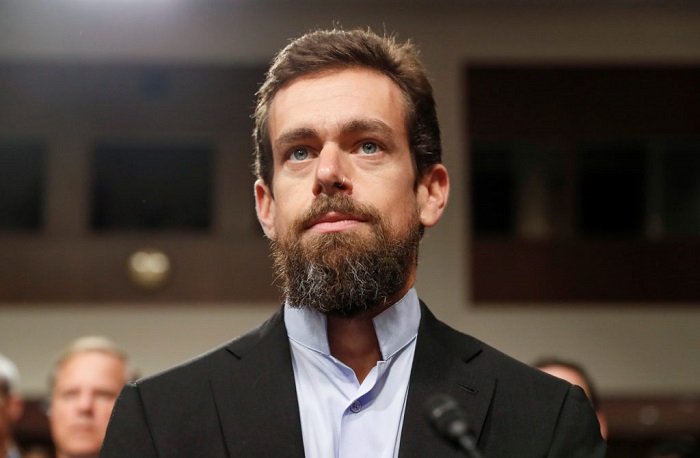
    Jack Dorsey, the co-founder and former CEO of Twitter, deleted his Instagram account on Saturday, August 18, 2023. He announced the deletion in a post on his Twitter account, saying that he had been on Instagram for 12 years and that it was “time to say goodbye.” He also said that he was one of the first 10 accounts on Instagram and one of the first angel investors in the company.


    Dorsey’s decision to delete his Instagram account comes amid a growing debate about the negative impact of social media on mental health. In recent years, there have been a number of studies that have shown that social media can contribute to anxiety, depression, and loneliness. Dorsey has been a vocal critic of social media, and he has said that he believes it is “time to break up with the internet.”


    It is unclear why Dorsey decided to delete his Instagram account specifically. However, it is possible that he was concerned about the negative impact of the platform on his mental health. It is also possible that he was simply no longer interested in using the platform.


    Dorsey’s decision to delete his Instagram account is a significant one. He is one of the most prominent figures in the tech industry, and his decision could have a ripple effect on other users. It remains to be seen how many other people will follow Dorsey’s lead and delete their Instagram accounts.

  • Instagram Threads falls down after Initial Jump, struggling to sustain Users

    Instagram Threads falls down after Initial Jump, struggling to sustain Users

    Instagram Threads did not “fall down” in the sense of being taken offline or experiencing a major outage. However, the app has been struggling to sustain its large number of new sign ups since its launch on July 6, 2023. It did experience a significant drop in engagement in the weeks following its launch. Sensor Tower, a market analytics firm, reported that traffic to Threads has slumped by 75% since its launch. This is likely due to a number of factors, including:


    • There is nothing for news users. They can’t even choose the username or change their name. This is just a migration app from instagram to threads, seems like just a trick of Meta to hold the users from migrating somewhere else.


    • Threads app is not very different from other Meta owned other apps, like Instagram and Facebook. Users can’t even understand, what the purpose of the app was. Is it a replacement for Instagram, A way to communicate with close friends or A way to share photos and videos that you didn’t want to post on your main Instagram profile? This makes it difficult for users to see why they should use Threads instead of these other apps.


    • The lack of features. Threads is a very basic app. It only offers a few features, such as sending text messages, sharing photos and videos, and making voice calls. The app’s limited features, which were not seen as being as compelling as those of other social media platforms. This makes it difficult for users to stay engaged with the app.


    • The app was not well-promoted. Meta has not done a lot of marketing for Threads. This has made it difficult for people to know about the app.  Many people didn’t even know it existed.


    • Threads was not available to everyone, initially being limited to users in the United States and select other countries.


    As a result of these factors, users quickly lost interest in Threads. However, It is still too early to say whether Instagram Threads will be a success or not. The app’s early struggles suggest that it will need to make some changes in order to attract and retain users like username setting option, name change options, Quick Support etc.


    Despite these challenges, Meta has continued to invest in Threads and has released a number of updates to the app, including the ability to send disappearing messages, share live videos, and create polls. It remains to be seen whether these changes will be enough to boost engagement and usage of Threads, but Meta is clearly committed to making the app a success.


    If you are having trouble with Instagram Threads app, you can try the following troubleshooting tips :

    • Check for updates to the app.
    • Make sure that you have a strong and stable Internet connection.
    • Restart your device. Sometimes, a simple restart can fix problems with apps.
    • Log out of Threads and log back in.
    • Clear the cache and data for the Threads app.
    • Uninstall and reinstall the app. This will often fix problems with apps that are not working properly.


    Contact Instagram support : If you have tried all of the above steps and you are still having trouble with Threads app, you can contact Instagram support for help. However, there is very less chance of getting the support or any help, because Facebook, Instagram or meta support is not actually known to be quick or user friendly.

  • Iraq blocks Telegram app cites personal data violations

    Iraq blocks Telegram app cites personal data violations

    Iraq’s telecoms ministry said it has blocked the Telegram messaging app over national security concerns and in order to preserve the integrity of users’ personal data, which it said the app had mishandled.


    The app is widely used in Iraq for messaging but also as a source of news and for sharing content. Some channels contain large amounts of personal data including the names, addresses, and family ties of Iraqis. The ministry said in a statement it had asked the app to close down “platforms that leak the data of the official state institutions and the personal data of citizens… but the company did not respond and did not interact with any of these requests.”


    “The Ministry of Communications affirms its respect for citizens’ rights to freedom of expression and communication, without prejudice to the security of the state and its institutions,” the statement said.


    Some time ago, even Brazil banned Telegram :

    Sometime before Brazil have also suspended Telegram app for failing to disclose ‘neo-Nazi’ groups details. A Brazilian court has recently banned Telegram in the country. The court took this decision after the messaging company denied requests to reveal the personal data of users who had been sharing extremist hate messages. An investigation conducted on a teenager who was responsible for a mass shooting at a school in Brazil concluded that the teen was part of hate speech groups on Telegram.


    Difficult to identify Real or Fake Account :

    Telegram was having a reputation for being a private and secure messaging service. But after Username Selling scheme, the impersonating account has risen on telegram, which made it more vulnerable to scam. Many fake account is using other brands username, which leads users to fall into scam. As It is near to impossible for users to identify the difference between real brand account and impersonating account.


    The number, frequency, and scale of scams involving impersonations are growing like fungi, and it’s worrisome. It is not just amateur operations run from basements. It’s reached the level of organized crime. You think you’re joining a recommended or reputable group or channel, but it’s actually a fake version of that group or channel, using real username of brands after purchasing form telegram.


    Please be careful while using Telegram. Protect your data, never trust any account, channel or group on telegram; whether it looks like original and having even original brand account username. Be Safe!