Tag: consumer protection

  • Understanding the ICICI Bank Fraud

    Understanding the ICICI Bank Fraud

    The case of Shveta Sharma, an Indian woman who fell victim to fraudulent activities allegedly perpetrated by an account manager at ICICI Bank, sheds light on the vulnerabilities faced by individuals in the banking system and the challenges of financial fraud prevention.


    Shveta Sharma, who had lived in the United States and Hong Kong before returning to India, entrusted her savings to ICICI Bank, believing she was making prudent investments in fixed deposits. However, she alleges that an account manager at the bank engaged in fraudulent activities, including creating fake accounts, forging signatures, and manipulating account records, ultimately leading to her being duped of ₹16 crore over a period of four years.


    The case highlights the importance of robust safeguards and oversight mechanisms within financial institutions to prevent fraudulent activities and protect the interests of customers. It also underscores the need for greater awareness and vigilance among consumers to detect and report suspicious transactions promptly.


    ICICI Bank, in response to the allegations, has asserted its commitment to safeguarding customers’ interests and pledged to cooperate fully with investigations into the matter. The bank has offered to transfer the disputed amount of ₹9.27 crore to Shveta Sharma’s account pending the outcome of the investigation, emphasizing its willingness to address the issue transparently and responsibly.


    However, the incident raises questions about the effectiveness of the bank’s internal controls and oversight mechanisms in detecting and preventing fraud. Despite assurances from the bank, Shveta Sharma’s ordeal continues, highlighting the challenges faced by victims of financial fraud in seeking redressal and resolution.


    The case also underscores the broader issue of financial literacy and consumer protection in India. As individuals increasingly rely on banking and financial services, there is a growing need for robust regulatory frameworks and mechanisms to safeguard against fraud and misconduct.


    Moving forward, it is imperative for financial institutions to enhance their risk management practices, strengthen internal controls, and invest in technologies such as blockchain and artificial intelligence to detect and prevent fraudulent activities effectively. Moreover, there is a need for greater collaboration between banks, regulators, law enforcement agencies, and other stakeholders to combat financial fraud comprehensively.


    The case of Shveta Sharma underscores the importance of transparency, accountability, and integrity in the banking system. It serves as a reminder of the need for constant vigilance and proactive measures to protect consumers’ interests and maintain trust and confidence in the financial sector. As efforts to address financial fraud continue, stakeholders must work together to build a safer and more resilient financial ecosystem for all.

  • Traders’ Body Files Complaint Against Flipkart’s

    Traders’ Body Files Complaint Against Flipkart’s

    The Confederation of All India Traders (CAIT) has raised concerns over a Flipkart advertisement featuring Bollywood icon Amitabh Bachchan for the upcoming Big Billion Days sale. In a complaint filed with the Ministry of Consumer Affairs and the Central Consumer Protection Authority (CCPA), CAIT has termed the advertisement as “misleading” and detrimental to the interests of small retailers in the country.


    CAIT’s complaint specifically targets the advertisement for being “misleading” and asserts that it violates consumer protection regulations. The traders’ body is calling for the immediate withdrawal of the advertisement and is also demanding penalties be imposed on Flipkart in accordance with relevant provisions of the Consumer Protection Act. Additionally, CAIT is seeking a ₹10 lakh fine on Amitabh Bachchan for his endorsement of the advertisement.


    The basis of CAIT’s complaint revolves around the allegation that Flipkart, with Amitabh Bachchan as its endorser, has misled the public regarding the pricing of mobile phones in the Indian smartphone market. This alleged misinformation, according to CAIT, harms the reputation and trade of others in the industry.


    CAIT’s Secretary General, Praveen Khandelwal, stressed the importance of truthful and honest representation in advertisements. He pointed out that the advertisement, as per the Guidelines for Prevention of Misleading Advertisements and Endorsements for Misleading Advertisements, 2022, is considered misleading because it lacks truthful and honest representation and is, in fact, incorrect, malicious, misleading, and manipulative.


    Last week, CAIT had already voiced its concerns regarding the advertisement featuring Amitabh Bachchan promoting Flipkart’s Big Billion Day sale. In the ad, Bachchan conveys to consumers that mobile deals would not be available offline at retail stores, which CAIT views as detrimental to offline retailers.


    The Big Billion Days sale, which is set to take place from October 8 to October 15, is a highly anticipated event among online shoppers. However, CAIT’s complaint underscores the importance of responsible advertising that does not harm the interests of small traders and retailers, who are an integral part of the Indian retail landscape.

  • FTC Investigates Amazon: Lina Khan’s Antitrust Challenge

    FTC Investigates Amazon: Lina Khan’s Antitrust Challenge

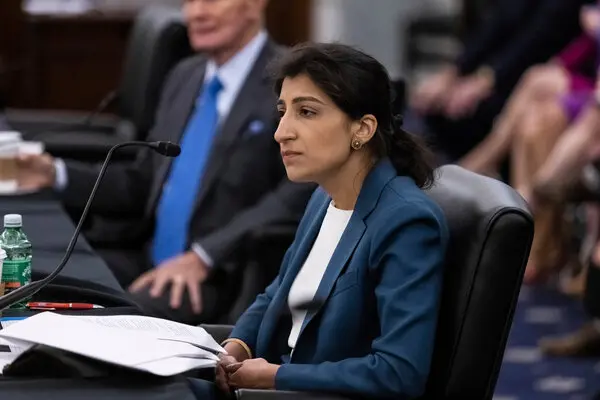
    Lina Khan, a law student in 2017, gained attention with an article advocating for a reimagining of US antitrust law, focusing on Amazon.com. Today, as Chair of the US Federal Trade Commission (FTC), Khan is leading an investigation into Amazon’s business practices, raising questions about the company’s market dominance and competition. Here’s what you need to know about this high-profile case:


    FTC’s Investigation:
    The FTC and 17 states have accused Amazon of engaging in illegal conduct to stifle competition. The lawsuit alleges that Amazon compels sellers on its platform to use its logistics and delivery services in exchange for prominent placement and punishes merchants that offer lower prices on rival sites. This investigation began in 2019.


    Amazon’s Response:
    Amazon counters these allegations, claiming that its practices benefit customers and the online retail market. The company argues that the FTC’s case is “wrong on the facts and the law.” Amazon maintains that it competes vigorously in the retail market, both online and offline, striving to offer customers the best shopping experience, including competitive prices and a wide range of products.


    Third-Party Sellers:
    Amazon operates as a platform for third-party sellers, acting as both a competitor and business partner. Some independent merchants have accused Amazon of using its gatekeeper role to disadvantage competing sellers and even using proprietary consumer data to create competing products.


    Market Share:
    The definition of the market is crucial in this case. The FTC is expected to argue that Amazon’s marketplace is the most widely used platform for purchasing various products, and it unlawfully ties access to its marketplace with the use of its logistics service, resulting in higher prices for consumers. Amazon accounts for a significant share of online retail sales (37.6%), but a smaller portion (3.5%) of total US retail, including offline businesses.


    Other FTC Cases Against Amazon:
    The FTC has pursued consumer protection cases against Amazon. These include settlements related to Amazon’s Alexa-powered speakers, Ring video doorbell privacy concerns, and allegations of deceptive practices in signing up for Prime service memberships. Additionally, the FTC is investigating Amazon’s proposed acquisition of iRobot, maker of the Roomba automated vacuum cleaner.


    Amazon’s Diverse Business Portfolio:
    Apart from its e-commerce site, Amazon offers fulfillment services, Prime video and music streaming, and is a major player in cloud computing through Amazon Web Services (AWS). The acquisition of Whole Foods also established Amazon’s presence in the grocery industry.


    Significance of the Case:
    This case holds significant implications for antitrust law and the broader tech industry. President Joe Biden’s appointment of Lina Khan as FTC Chair reflects a desire to return to trust-busting practices from the early 20th century. Khan, known for her work on modern monopolies, contributed to a report that informed tech-focused antitrust bills in Congress. Amazon has called for Khan’s recusal from the FTC’s investigation, but two judges have ruled in favor of her participation.


    The outcome of this case against Amazon will test the boundaries of US antitrust law, particularly in an era dominated by tech giants, and could set important precedents for future antitrust enforcement.

  • Bureau of Indian Standards Signs MoUs with 35 Institutions

    Bureau of Indian Standards Signs MoUs with 35 Institutions

    The Bureau of Indian Standards (BIS), the national standards body of India, took a significant step towards enhancing standardization and conformity assessment by signing Memorandum of Understandings (MoUs) with 35 institutions across the country. These partner institutions include prominent National Institutes of Technology (NITs), government, and private engineering colleges from various states.


    The signed MoUs are expected to pave the way for greater collaboration between BIS and the partner institutions in various aspects of standardization and conformity assessment. The key points covered in the MoUs include:


    1. Participation in Standardization Activities: The partner institutions will be associated with the technical committees of BIS at both the national and international levels, allowing them to actively participate in standardization activities.
    2. Infrastructure Support for R&D Projects: The institutions will receive infrastructure support for relevant Research and Development (R&D) projects related to standardization.
    3. Joint Organization of Events: BIS and the partner institutions will jointly organize events focused on standardization and conformity assessment.
    4. Exchange of Publications: There will be an exchange of publications between BIS and the partner institutions to promote knowledge sharing and dissemination of information.
    5. Standardization Curricula in Academics: The partner institutions will introduce standardization curricula in their academic programs to foster a culture of standardization among students.
    6. Center of Excellence: Exploring the establishment of a center of excellence for standardization, testing, and conformity assessment, which will facilitate advanced research and innovation in this domain.
    7. Sharing Laboratory Facilities: BIS and the partner institutions will share laboratory facilities to enhance the testing and evaluation capabilities.


    Pramod Kumar Tiwari, the Director-General of BIS, expressed his belief that these MoUs with esteemed academic institutions will significantly contribute to enriching the standards formulation activities. By collaborating with these institutions, BIS aims to strengthen its efforts towards creating robust standards that benefit industries and, ultimately, ensure consumer protection.


    BIS operates as a statutory body under the Ministry of Consumer Affairs, Food, and Public Distribution, Government of India. It plays a crucial role in various schemes like product certification with the ISI mark, management systems certification, hallmarking of gold and silver jewelry/artifacts, and laboratory services, all aimed at safeguarding consumer interests and ensuring product quality. With the new collaborations in place, BIS aims to further strengthen the standardization ecosystem in India and foster continuous improvement in various industries.