Tag: Bilateral Trade

  • India: Preferred Investment Destination for Swedish Firms

    India: Preferred Investment Destination for Swedish Firms

    In recent years, India has emerged as a preferred investment destination for Swedish businesses, signaling a shift from traditional markets like China. Jan Thesleff, Sweden’s ambassador to India, highlighted this trend, noting the increasing interest among Swedish companies in broadening their presence in Asia, with India being one of their preferred choices. Thesleff’s remarks underscore the growing economic ties between the two countries and the significant potential for further collaboration in various sectors.


    One of the key factors driving Swedish investment in India is the positive perception of the business climate in the country. According to the 2023 Global Business Climate Survey conducted by Business Sweden, a majority of Swedish companies perceive India’s business climate to be either good or very good, reflecting a significant increase compared to previous years. This favorable sentiment has encouraged Swedish businesses to explore investment opportunities in India across various sectors.


    FDI inflows from Sweden to India have been noteworthy, totaling $2.38 billion between 2000 and 2023, according to Invest India, the government’s trade promotion agency. Sectors such as automobiles, industrial machinery, electrical equipment, and metallurgy have attracted significant investment from Swedish companies. Additionally, the defense sector has witnessed closer ties, with Swedish firm SAAB receiving clearance to establish a 100% FDI manufacturing unit for producing Carl Gustaf M4 rockets, further boosting investment prospects.


    Despite the economic cooperation in innovation, clean energy, and defense, bilateral trade between India and Sweden has historically underperformed. However, efforts are underway to strengthen trade ties, with both countries exploring avenues for enhanced collaboration. The proposed India-EU free trade agreement is viewed as a significant opportunity to bolster economic relations between India and Sweden. Thesleff emphasized the importance of the FTA for both parties, highlighting India’s demographic dividend and its potential to transform its economy.


    In addition to trade agreements, Sweden is leveraging its export credit agency SEK, along with other agencies like EKM and Swedfund, to support investments in India. These agencies provide financing, export credit guarantees, and expertise for large-scale projects, contributing to the growth of bilateral economic cooperation. Thesleff emphasized Sweden’s focus on promoting trade rather than aid, highlighting the role of these agencies in facilitating investments and fostering economic partnerships.


    The presence of the Indian diaspora in Sweden has also contributed to closer ties between the two countries. With steady immigration over the years, the Indian community in Sweden has grown to approximately 60,000 individuals, representing a significant portion of Sweden’s population. Thesleff highlighted the increasing influence of the Indian diaspora in Sweden and its potential to further strengthen bilateral relations in the future.


    Looking ahead, Thesleff expressed optimism about the future of India-Sweden relations, emphasizing the mutual benefits of deeper economic engagement. As India continues to undergo economic transformation and embraces global trade opportunities, Sweden sees potential for expanding cooperation across various sectors. The ongoing discussions around the India-EU free trade agreement present an opportunity to deepen economic ties and unlock new avenues for collaboration between the two countries.


    India has emerged as a preferred investment destination for Swedish firms, driven by a positive business climate, growing FDI inflows, and efforts to strengthen economic cooperation. With both countries exploring avenues for closer collaboration, there is significant potential for further growth and partnership in the years to come.

  • Canada’s HC Urges Continued Business Ties with India

    Canada’s HC Urges Continued Business Ties with India

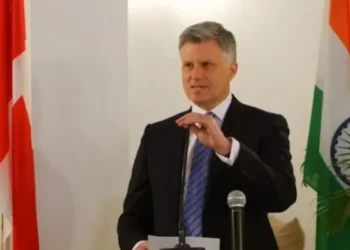
    Despite recent diplomatic tensions between India and Canada, the High Commissioner of Canada to India, Cameron Mackay, highlighted the alignment of strategic interests between the two countries. Speaking at the Vibrant Gujarat Global Summit, Mackay emphasized the need for continued bilateral trade and investment relationships, asserting that the business-to-business ties would support job creation, technology partnerships, and the prosperity of both nations.


    “In the past months, it has been a time of some tensions between our two countries. It is no secret. But I am encouraged by the leadership and vision of the business community present here and outside the room to continue with the trade and investment relationship, which is in the interest of both of our countries,” stated Mackay.


    While acknowledging the diplomatic challenges, Mackay expressed confidence in the long-term alignment of Canada’s strategic interests with India’s. He urged governments to handle diplomatic matters while emphasizing the importance of maintaining business ties between the two nations.


    “My advice to my government and that to the Indian government and business community on both sides is to let the governments do what they are doing, let the government do diplomacy, but everyone knows that in the long term, Canada’s strategic interest and India’s strategic interest are absolutely aligned,” affirmed the high commissioner.


    Mackay stressed the significance of business-to-business ties, asserting that collaborative efforts in the business sector could contribute to fostering friendly relations between the nations. Despite diplomatic tensions, the high commissioner expressed optimism about the resilience of business relations and their potential to overcome political challenges.


    “In the meantime, let’s have business-to-business ties. We should work together to make our businesses and nations friendly again,” Mackay added.


    The high commissioner’s call for continued business engagement comes against the backdrop of strained relations between Canada and India. Last year, tensions escalated when Canadian Prime Minister Justin Trudeau accused India of involvement in the killing of Khalistani separatist Hardeep Singh Nijjar. India firmly rejected the allegation, leading to a cooling of diplomatic ties.


    Despite the diplomatic row, Mackay asserted that business relations between the two countries remained unaffected. He commended the resilience of the business community in fostering economic ties and urged both governments to prioritize the long-term strategic interests that align Canada and India.


    The Vibrant Gujarat Global Summit serves as a platform for discussions on economic and business collaboration, making Mackay’s remarks particularly relevant in emphasizing the importance of business ties amid diplomatic challenges. The summit provides an opportunity for stakeholders from both countries to explore avenues for trade, investment, and technology partnerships.


    As Canada’s high commissioner encourages the continuation of business ties, the collaborative efforts of the private sector become crucial in maintaining and strengthening the economic relationship between Canada and India. Business-to-business interactions, technology collaborations, and investment initiatives are poised to play a pivotal role in driving job creation and fostering prosperity in both nations.


    Cameron Mackay’s message at the Vibrant Gujarat Global Summit underscores the resilience and importance of economic partnerships between Canada and India. Despite recent diplomatic strains, the call for sustained business engagement reflects a pragmatic approach to leverage shared strategic interests and foster mutual prosperity. As the business communities of both nations navigate challenges, their collaborative efforts serve as a testament to the enduring strength of Canada-India economic relations.

  • US Emerges as India’s Top Trading Partner in H1 2023-24

    US Emerges as India’s Top Trading Partner in H1 2023-24

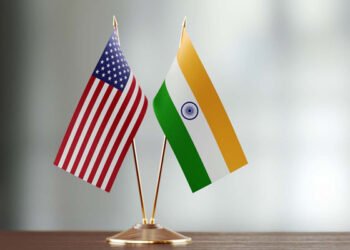
    Despite a decline in exports and imports, the United States has emerged as India’s leading trading partner during the first half of the financial year 2023-24, surpassing China. Government data reveals a drop in trade between India and both the US and China, with the US ultimately becoming India’s top trading partner during this period.


    During the period from April to September 2023, exports from India to the United States fell to $38.28 billion, down from $41.49 billion the previous year. Likewise, imports between the two nations also saw a decrease, falling to $21.39 billion during the first half of the current fiscal year compared to $25.79 billion in the same period last year.


    Despite the trade decline between India and the US, experts remain hopeful of a positive trend in trade in the coming months. They believe that the growth rate will soon enter a positive zone.


    In contrast, trade between India and China also saw a decline, with bilateral trade dropping by 3.56% to $58.11 billion. Exports to China marginally decreased to $7.74 billion during the first half of the current fiscal year, down from $7.84 billion in the year-ago period. Imports from China also decreased to $50.47 billion from $52.42 billion a year earlier.


    Experts anticipate that the trend of increasing bilateral trade with the United States will continue in the coming years, as New Delhi and Washington work to strengthen their economic ties.


    China had previously held the title of India’s top trading partner from the financial year 2013-14 until 2017-18, with the United Arab Emirates (UAE) and other countries following closely. In the financial year 2022-23, the UAE ranked as India’s third-largest trading partner, with bilateral trade totaling $76.16 billion.


    To boost trade between India and the United States, the restoration of Generalized System of Preferences (GSP) benefits by the United States to Indian exports can be beneficial. According to Sanjay Budhia, Chairman of the CII national committee on EXIM, this could help promote trade.


    The trade between New Delhi and Washington is expected to continue to grow in the coming years, as Mumbai-based exporter Khalid Khan and Ludhiana-based exporter SC Ralhan expressed their optimism.


    In the financial year 2022-23, the United States was India’s biggest trading partner, with bilateral trade increasing by 7.65% to $128.55 billion, up from $119.5 billion in 2021-22. It had been $80.51 billion in the financial year 2020-21.


    Despite current challenges, the United States is expected to remain India’s leading trading partner, underlining the strength of their economic relationship.