Tag: bail

  • Bail to CM Arvind Kejriwal in Excise Policy Scam Cases

    Bail to CM Arvind Kejriwal in Excise Policy Scam Cases

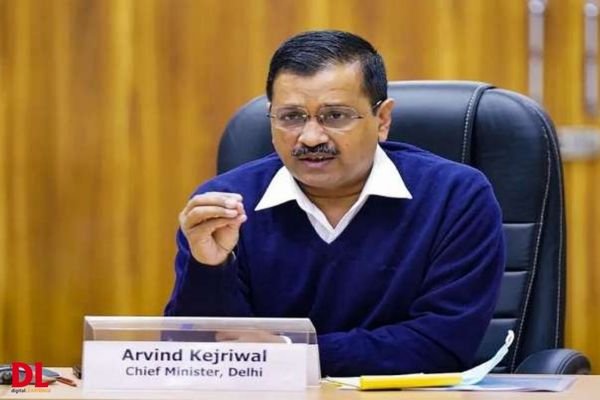
    Delhi Chief Minister Arvind Kejriwal secured bail from the Rouse Avenue Court on Saturday in connection with two cases filed against him by the Enforcement Directorate (ED) for allegedly skipping summons related to the excise policy scam. The court granted him bail upon the submission of a bail bond worth ₹15,000 and a surety of ₹1 lakh.


    The cases stem from summons issued to Kejriwal by the court based on complaints filed by the ED regarding the Delhi liquor excise policy case. Kejriwal, in compliance with the court’s directive, appeared before the court personally.


    AAP party’s legal head, Sanjeev Nasiar, confirmed the development, stating, “The court had summoned CM (Arvind Kejriwal). Last time he attended it through video conferencing when he was directed again he said that he would appear physically. He appeared today & submitted the bail bond. The bail was granted…”


    Kejriwal had approached the Rouse Avenue Court to challenge an order issued by Additional Chief Metropolitan Magistrate Divya Malhotra, which instructed him to appear before the court on March 16.


    Senior Advocate Ramesh Gupta, representing Kejriwal, contended that there was no intentional disobedience by the Chief Minister. He argued that summoning a person is only justified when their non-appearance is deliberate.


    Previously, Additional Sessions Judge Rakesh Syal heard arguments from both Kejriwal’s advocates and the Enforcement Directorate concerning the initial order summoning Kejriwal for February 17. On February 17, Kejriwal was granted exemption from appearing in person after participating via video conference. The court then directed him to appear on March 16.


    On March 7, Additional Chief Metropolitan Magistrate Divya Malhotra issued another summons for Kejriwal to appear on March 16. The Enforcement Directorate had issued a total of eight summons to Kejriwal related to the case.


    The court of ACMM Malhotra scheduled the next hearing for March 16, where the matter regarding summonses no. 1 to 3 will be addressed alongside other complaints.


    The allegations against Kejriwal relate to purported irregularities in the Delhi liquor excise policy. The Enforcement Directorate has been investigating the matter, and Kejriwal’s non-compliance with summons led to the legal proceedings against him.


    The granting of bail to Kejriwal marks a significant development in the legal battle surrounding the excise policy scam. As a prominent political figure, Kejriwal’s actions and legal proceedings draw considerable attention from both the public and political circles.


    The AAP party has been steadfast in its support for Kejriwal, asserting that the summonses issued against him lack merit and are politically motivated. They maintain that Kejriwal’s appearance before the court demonstrates his commitment to transparency and adherence to the rule of law.


    Kejriwal’s legal team continues to assert his innocence and challenges the legitimacy of the allegations leveled against him. The ongoing legal saga underscores the complexities and challenges inherent in India’s legal system, especially concerning high-profile cases involving political figures.


    Despite the legal hurdles, Kejriwal remains focused on his duties as the Chief Minister of Delhi. The granting of bail provides temporary relief, allowing him to continue his governance responsibilities while addressing the legal proceedings against him.

  • Mufti Salman Azhari Granted Bail in Second Hate Speech Case

    Mufti Salman Azhari Granted Bail in Second Hate Speech Case

    In a significant legal development, a court in Gujarat’s Kutch district has granted bail to Mumbai-based Islamic preacher Mufti Salman Azhari in a second “hate speech” case. This decision comes in connection with a religious event organized at Samakhiali town in the district around two weeks ago. The cleric was granted bail by a court of Judicial Magistrate First Class (JMFC) Y Sharma at Bhachau, according to Samakhiali police sub-inspector Vishal Patel.


    Following the granting of bail, Mufti Salman Azhari was transferred to Rajkot central jail, from where the Arvalli police will take custody of him in a third “hate speech” case registered at Modasa police station on Friday, Patel mentioned.


    Initially, on February 8, the Bhachau court had remanded Mufti Salman Azhari in police custody until Sunday. However, upon his appearance in court on Sunday, Azhari’s legal counsel submitted a bail application. After considering arguments from both sides, the court decided to grant bail to the accused preacher.


    This recent development follows Azhari’s bail in the first FIR registered against him, involving an alleged hate speech delivered in B division police station limits in Junagadh on January 31. He was apprehended from Mumbai on February 5 in connection with this case.


    Immediately after securing bail from the Bhachau court, Azhari was detained by the Kutch police concerning an alleged inflammatory speech during a religious event in Samakhiari on January 31. Subsequently, he was granted bail in the second case, registered on February 8, on Sunday.


    Adding to his legal challenges, Azhari was booked in a third case for delivering an allegedly inciting speech at an open ground in Modasa, Arvalli district, on December 24 last year.


    In both Junagadh and Kutch, Azhari faced charges under Indian Penal Code sections 153B (promoting enmity between different religious groups) and 505(2) (making statements conducive to public mischief).


    Moreover, in the Modasa case, Azhari faces additional charges under section 298 for “uttering words with deliberate intent to wound the religious feelings of any person.” Police have also invoked relevant sections of the Scheduled Castes and Scheduled Tribes (Prevention of Atrocities) Act, as Azhari allegedly made derogatory remarks against the SC community in his speech.


    This series of legal proceedings highlights the gravity of hate speech allegations and the legal scrutiny faced by individuals accused of such offenses. The bail granted to Mufti Salman Azhari underscores the complexities involved in navigating legal matters related to freedom of speech, religious tolerance, and communal harmony.


    It is important to note that while freedom of speech is a fundamental right, it is not absolute and must be balanced with responsibilities towards maintaining social cohesion and preventing the incitement of hatred or violence based on religious, racial, or caste differences.

    As the legal process unfolds, it remains to be seen how the courts will adjudicate on these cases and what implications they may have for the broader discourse on hate speech, religious freedom, and minority rights in India. The outcome of these cases will likely have far-reaching implications for the protection of individual liberties and the promotion of communal harmony in the country.

  • Bombay High Court Grants Bail, Highlights Right to Speedy Trial

    Bombay High Court Grants Bail, Highlights Right to Speedy Trial

    The Bombay High Court, in a recent ruling, granted bail to a man accused in a double murder case while emphasizing the significance of the right to a speedy trial. Justice Bharati Dangre, presiding over a single bench, delivered the judgment on September 26, granting bail to Akash Satish Chandalia, who had been arrested in September 2015 by the Lonavala police in Pune district on charges of double murder and conspiracy.


    In its order, the court stressed the need to strike a balance between the gravity of the charges faced by the accused and the extended duration of the trial process. It noted that while the seriousness and heinous nature of an offense are important considerations when granting bail, the factor of prolonged incarceration of an accused as an under-trial prisoner also holds significance.


    The court highlighted that keeping a person in custody for an indefinite period pending trial violates the fundamental rights enshrined in the Constitution of India. It emphasized that time and again, the extended incarceration of an accused has been recognized as a justiciable ground to exercise discretion in favor of releasing the accused on bail.


    Despite directions to conclude the trial within a reasonable timeframe, the court noted that the trial had not made substantial progress. In such circumstances, the court found no option but to grant bail to the accused.


    The court also emphasized the importance of considering the impact of prolonged trials on the accused, particularly if they are eventually acquitted. It stated that a balance must be struck between the seriousness of the charges and the extended trial duration.


    Justice Dangre underscored that depriving an individual of personal liberty without ensuring a speedy trial is not in line with Article 21 of the Constitution, which guarantees the right to life and personal liberty. Access to justice and a speedy trial are fundamental rights guaranteed in the Constitution, and when a timely trial is not feasible, the accused cannot be subjected to prolonged incarceration.


    The court added that if an accused has already undergone a significant portion of the proposed sentence during the trial, the court is typically obligated to grant bail, regardless of the gravity of the accusations.


    Chandalia’s advocate, Sana Raees Khan, argued that her client had been in custody for nearly eight years, and the trial had yet to conclude. She asserted that indefinite incarceration amounts to a pre-trial conviction and is inconsistent with Article 21 of the Constitution, violating fundamental rights.


    The case against Chandalia involves charges under Indian Penal Code (IPC) Section 302 (murder), and the alleged offense is of a serious nature. The prosecution’s case alleges that Chandalia and a co-accused gangster kidnapped two individuals and fatally assaulted them.


    The Bombay High Court’s decision underscores the importance of ensuring a speedy trial and the protection of an individual’s fundamental rights, including the right to personal liberty. It emphasizes that indefinite incarceration pending trial is not in accordance with the principles of justice and the Constitution of India.

  • Gujarat HC Orders ₹1 Lakh Compensation to Man who Spent 3 Years in Jail

    Gujarat HC Orders ₹1 Lakh Compensation to Man who Spent 3 Years in Jail

    The Gujarat High Court has taken a significant step towards ensuring justice and accountability in the state’s penal system. In a recent ruling, a division bench of the Gujarat High Court comprising Justice AS Supehia and Justice MR Mengdey ordered the state government to pay ₹1 lakh in compensation to a 27-year-old convict, Chandanji Thakor. What makes this case particularly noteworthy is that Thakor had secured bail in 2020 but continued to languish in jail for an additional three years due to the sheer negligence of prison authorities.


    Thakor’s ordeal began when he was serving a life sentence in connection with a murder case. However, his life took a turn when his sentence was suspended on September 29, 2020. The High Court registry promptly informed the jail authorities about the bail order, which should have led to Thakor’s release. Unfortunately, this crucial information did not translate into action due to a shocking reason – the prison authorities claimed that they were unable to open the attachment to an email that contained the bail order. Their justification for this negligence was the COVID-19 pandemic, which supposedly disrupted their ability to access and process emails effectively.


    The Court, however, did not accept this excuse as valid, highlighting that the email had also been sent to the District Sessions Court. This oversight raised serious questions about the accountability and efficiency of the penal system. The Court aptly described the case as an “eye-opener” and sought to rectify the injustice suffered by Thakor.


    In its ruling, the Gujarat High Court unequivocally blamed the negligence of the jail authorities for Thakor’s wrongful incarceration. It emphasized that despite being released on bail, he was forced to endure an extended stay in prison solely because the prison authorities failed to take the necessary steps to implement the Court’s order. This failure of due diligence not only deprived Thakor of his freedom but also caused emotional and psychological distress.


    As a measure to prevent such miscarriages of justice in the future, the Court issued several directives. First and foremost, it ordered the Gujarat state government to provide ₹1 lakh in compensation to Thakor as a form of redress for the injustice he suffered. This financial compensation is a significant step towards acknowledging the wrongful detention and its impact on Thakor’s life.


    Furthermore, the Court directed all District Legal Services Authorities (DLSAs) to collect data on prisoners who have been granted bail but may still be in custody. This proactive approach aims to ensure that similar cases do not go unnoticed or unaddressed in the future. By emphasizing the importance of accountability and the duty of authorities to uphold the rule of law, the Gujarat High Court’s ruling sets a crucial precedent.


    Gujarat High Court’s decision to award compensation to Chandanji Thakor and its call for greater oversight and accountability within the penal system are significant steps towards ensuring that justice is not just a concept but a reality for all individuals within the legal framework. The case serves as a reminder of the critical role the judiciary plays in upholding the rights and freedoms of citizens and holding authorities accountable for their actions.

  • Fodder Scam: Lalu Prasad Yadav Responds to CBI

    Fodder Scam: Lalu Prasad Yadav Responds to CBI

    Lalu Prasad Yadav, the leader of the Rastriya Janata Dal (RJD), has responded to the Central Bureau of Investigation (CBI) in the Supreme Court of India, opposing their efforts to deny him bail in the Fodder scam case. Yadav firmly stated that the CBI cannot seek the apex court’s intervention to revoke his bail order merely because the agency is dissatisfied with the decision.


    The CBI had challenged the orders of the Jharkhand High Court that granted bail to Lalu Prasad Yadav in four cases related to the multi-crore fodder scam. The cases involve alleged embezzlement of funds from Dumka, Chaibasa, Doranda, and Deogarh treasuries.


    A three-judge bench, led by Chief Justice of India DY Chandrachud, is scheduled to hear the matter on 25 August. The RJD leader’s bail was granted despite his five-year prison sentence handed down by a CBI court in February 2022. He was also fined ₹60 lakh for his involvement in the embezzlement of over ₹139 crore from the Doranda treasury.


    In his response, Lalu Prasad Yadav cited his poor health and argued that his custody serves no purpose. He maintained that the high court’s decision was based on general principles and uniform rules and should not be interfered with, as reported by India Today.


    The fodder scam, amounting to ₹950 crore, revolved around alleged fraudulent withdrawals from various government treasuries for cattle fodder. The scheme reportedly involved the issuance of “fake” bills by the Animal Husbandry Department to facilitate the withdrawals. Lalu Yadav, who held the finance portfolio of undivided Bihar and served as the chief minister during the scam period, was accused of receiving kickbacks through the animal husbandry department. The fraudulent bills were allegedly cleared by the finance department, and money was released through the treasury.


    Additionally, the CBI had filed charges against Lalu Prasad Yadav, his wife Rabri Devi, and their son Tejashwi Yadav, the Deputy Chief Minister of Bihar, in an alleged land-for-jobs scam. This case, investigated by the agencies, involves allegations that individuals were granted jobs in the Indian Railways between 2004 and 2009 in exchange for land deals benefiting the Yadav family, during Lalu Yadav’s tenure as the railway minister.

  • Consensual Relationship Delhi HC Grants Bail in POCSO Case

    Consensual Relationship Delhi HC Grants Bail in POCSO Case

    In a significant legal development, the Delhi High Court has extended bail to a 23-year-old man entangled in a case falling within the ambit of the Protection of Children from Sexual Offences Act (POCSO Act). The case, rooted in a consensual physical relationship between the accused and a minor girl, underscores the complexities of interpreting the law in cases of consensual relationship.


    Justice Vikas Mahajan, presiding over the case, anchored his decision on a previous high court ruling that underscored the foundational purpose of the POCSO Act: safeguarding individuals under the age of 18 from sexual exploitation. The Act, as clarified by the court, was never designed to label consensual romantic connections between young adults as criminal acts.


    The focal point of the court’s analysis was the maturity and intellectual capacity of the minor girl, who was 17 and a half years old at the time of the incident. Justice Mahajan observed that her level of maturity indicated the potential for her active participation in a consensual romantic association with the accused. The court affirmed that the physical intimacy between the two was a result of their voluntary inclinations.


    The petitioner, aged about 23 years, had been in custody since October 15, 2021. Justice Mahajan expressed concerns about exposing the young man to the negative influences of seasoned criminals, emphasizing that keeping him incarcerated would potentially inflict more harm than good.


    Addressing the intricacies of the case, the court acknowledged that the prosecutrix was a minor when the incident occurred. However, the court noted that she was aged 17.5 years at the time, possessing a level of maturity and intellectual capacity that couldn’t be disregarded. Concurrently, the petitioner was around 20 years old when the incident took place, adding another layer to the complexity of the matter.


    The case originated with an FIR filed by the girl, alleging a physical relationship with her neighbor. She alluded to the prospect of a future marriage with the accused. Subsequently, her medical examination revealed her pregnancy, though the option of abortion was no longer feasible due to the advanced stage of her pregnancy.


    Crucially, the court acknowledged that the prosecutrix had expressed her reluctance to initiate legal proceedings against the petitioner. Despite this, it seemed that the FIR was lodged, possibly influenced by family pressure. The family’s decision might have been motivated by the discovery of the girl’s pregnancy, which had progressed beyond the stage where abortion could be considered a viable recourse.


    This case highlights the intricate interplay of age, consent, individual circumstances, and the broader legal framework. The court’s nuanced approach underscores the necessity of assessing such situations from multiple angles, ensuring that justice is served while considering the unique dynamics of each case.

  • Elgar Parishad Activists Released on Bail

    Elgar Parishad Activists Released on Bail

    In a significant development, activists Vernon Gonsalves and Arun Ferreira, accused in the Elgar Parishad-Maoist links case, have been released on bail. A special court in Mumbai issued the release order after the Supreme Court granted them bail. The activists walked out of Taloja prison in Navi Mumbai on Saturday afternoon, where a few supporters and relatives were present to receive them.


    With the release of Gonsalves and Ferreira, five out of the 16 accused arrested in the Elgar Parishad-Maoist links case are now out on bail. It is worth noting that Jesuit priest Stan Swamy, who was also among the accused, passed away at a private hospital in July 2021 during judicial custody.


    The Supreme Court granted bail to Gonsalves and Ferreira on 28 July, citing the lack of evidence of their actual involvement in any terrorist act based on third-party communications. Justices Aniruddha Bose and Sudhanshu Dhulia, comprising the bench, observed that the mere possession of certain literature that might advocate violence would not fall under the provisions of the Unlawful Activities (Prevention) Act.


    While acknowledging the seriousness of the allegations, the bench emphasized that bail cannot be denied solely on those grounds. As part of the bail conditions, the accused have been instructed not to leave Maharashtra without the permission of the trial court, surrender their passports, and inform the National Investigation Agency (NIA), which is handling the case, about their addresses. They are each allowed to use one mobile phone. The bench also granted the NIA the right to seek cancellation of their bail in case of any violation of the bail conditions.


    Previously, Gonsalves and Ferreira had approached the Supreme Court against the Bombay High Court’s rejection of their bail pleas. The recent bail granted by the apex court provides a significant relief to the activists and their families, as it allows them to defend themselves in court without being in custody.

  • Illegal Entry: Seema Haider Arrested in India

    Illegal Entry: Seema Haider Arrested in India

    During a two-day interrogation by the Uttar Pradesh Anti-Terror Squad (UP ATS), Seema Haider, a resident of Pakistan, came under scrutiny, leading to the recovery of five Pakistan-authorised passports, an unused passport, and an identity card, among other items. The UP director general of police (DGP) office stated that the investigation is ongoing regarding these documents, as well as the four mobile phones and two video cassettes found in Seema’s possession. The accused are currently out on bail, while the district police take necessary legal action concerning her illegal entry into India.


    Authorities are exploring the espionage angle, as it is suspected that Seema, aged 27, crossed the Nepal border to enter India. The UP ATS is investigating along with her Indian husband, Sachin Meena (aged 22), and his father, Netrapal Singh, to ascertain whether Seema has any connections to espionage activities.


    The Gautam Buddha Nagar police have reached out to the Intelligence Bureau (IB) and UP ATS to conduct further investigations based on the evidence gathered thus far.


    The note provided details of the route Seema Haider took to enter India. On March 10, she departed from Pakistan’s Karachi airport and arrived at Sharjah airport (UAE), then traveled to Kathmandu airport, Nepal, on a 15-day tourist visa. On March 17, she returned to Pakistan through the same route. Sachin Meena, on the other hand, reached Gorakhpur on March 8, proceeded to the Sonauli border on March 9, and left for Kathmandu. On March 10, he picked up Seema from the airport, and they both stayed at the New Vinayak Hotel in Kathmandu until March 17.


    Seema Haider later left Pakistan for the second time on May 10, again on a 15-day tourist visa. She traveled with four of her children, starting from Karachi to Dubai and then to Kathmandu. The note indicated that she took a public transport van to Pokhara, Nepal, where she stayed in a hotel for one night. On March 12, she crossed the Rupandehi-Khunwa border in Siddharthnagar district, entering India. Seema reached Gautam Buddha Nagar via Lucknow and Agra, eventually staying with Sachin Meena in Rabupura (Greater Noida), where he had previously rented a room.


    Their acquaintance began in 2020 through the gaming platform PUBG, and after approximately 15 days of playing together, they exchanged phone numbers and started communicating on WhatsApp.


    On July 4, Seema Haider, Sachin Meena, and his father, Netrapal Singh, were arrested for illegal entry into India and providing shelter to Seema. They were charged under various sections of the Foreigners Act, the Indian Penal Code, and the Passport Act. After 14 days of judicial custody, they were granted bail on July 7.