Tag: Asset Monetization

  • NHAI Achieves Record ₹15,624.90 Crore in Asset Monetization

    NHAI Achieves Record ₹15,624.90 Crore in Asset Monetization

    The National Highways Authority of India (NHAI) has achieved a milestone in asset monetization by raising a record ₹15,624.90 crore through ‘InvIT Round-3’. This achievement was made possible by monetizing 10 stretches of highways spanning approximately 890 km, according to a statement from the Ministry of Road Transport and Highways.


    InvITs, or Infrastructure Investment Trusts, function similarly to mutual funds by pooling money from investors and investing in assets that generate steady cash flows over time. NHAI’s infrastructure investment trust, named NHIT, facilitates the monetization of highway stretches it acquires from NHAI.


    Remarkably, the letter of acceptance (LOA) for the third round was issued within two hours of the bid opening, marking it as the most successful round to date. NHAI has previously raised ₹10,000-11,000 crore through two funding rounds conducted in 2022 and 2023 via the InvIT route.


    NHAI employs three modes for monetization: toll operate transfer (TOT), InvIT, and securitization. In the current fiscal year, NHAI has awarded four TOT bundles, resulting in a monetized value of ₹15,968 crore. The success rate in TOT mode during FY24 was an impressive 100%, with LOAs issued within one day of the financial bid opening.


    Under the TOT mode, NHAI has already monetized six rounds spanning 1,614 km, generating ₹26,366 crore, along with two rounds of InvIT covering 635 km and realizing ₹10,200 crore. Additionally, NHAI has raised approximately ₹37,000 crore through securitization and aims to raise an additional ₹5,000 crore by the end of FY24.


    With these achievements, NHAI’s total asset monetization programme has surpassed ₹1 trillion, comprising ₹42,334 crore through TOT, ₹26,125 crore through InvIT, and ₹42,000 crore through securitization.


    This milestone aligns with the government of India’s vision under the national monetization plan and underscores its commitment to fulfilling budgetary announcements. Roads play a crucial role in the national monetization pipeline, with the central government identifying national highways and road assets worth ₹1.6 trillion to be monetized by 2024-25, contributing to the overall target of ₹6 trillion for the same period.

  • India and UAE Discuss Bilateral Investment Treaty

    India and UAE Discuss Bilateral Investment Treaty

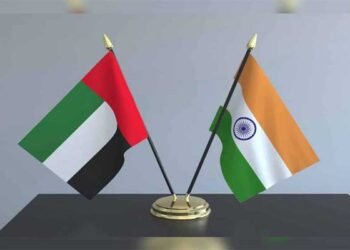
    In a significant development, India and the United Arab Emirates (UAE) engaged in discussions on Thursday regarding a potential bilateral investment treaty (BIT). This treaty has the potential to pave the way for substantial UAE investments in India’s critical sectors, including renewable energy, health, semiconductor manufacturing, and asset monetization, according to the Union Commerce Ministry.


    This dialogue also saw leaders from both nations evaluating the progress made since the implementation of the Comprehensive Economic Partnership Agreement (CEPA), which officially took effect in May 2022. CEPA has been a landmark agreement designed to enhance economic cooperation between India and the UAE.


    Moreover, during the UAE-India High Level Joint Task Force on Investments held in Abu Dhabi, the parties assessed the strides taken toward establishing a mechanism to expedite Indian investments into the UAE. The Indian delegation underscored the importance of strengthening this mechanism, especially in priority areas such as renewable energy and energy transition, as highlighted by the Commerce and Industry Ministry.


    In a notable shift, India is reconsidering its approach to BITs. In 2016, India terminated most of its BITs and adopted a new template. This change in approach comes at a crucial juncture when India is actively engaged in negotiations for investment treaties and free-trade agreements with key trading partners, including the United Kingdom and the European Union.


    Previously, India had annulled BITs based on older model texts established in 1993, following unfavorable judgments in multibillion-dollar disputes in international courts. The new model BIT included a clause emphasizing “exhaustion of local remedies,” placing a greater focus on state rights over investor rights.


    Simultaneously, India and the UAE forged a strategic partnership agreement that aims to operationalize the UAE’s national domestic card scheme (DCS). This initiative seeks to stimulate the growth of e-commerce and digital transactions in the UAE, reduce payment costs, and bolster the country’s competitiveness in the global payments arena, as per the Union Commerce Ministry.


    The strategic partnership involves NPCI International Payments Limited (NIPL), a wholly-owned subsidiary of the National Payments Corporation of India (NPCI), collaborating with Al Etihad Payments (AEP) for Domestic Card Scheme Implementation in the UAE. AEP is an indirect subsidiary of the Central Bank of UAE.


    Under this agreement, NIPL and AEP will collaborate on building, implementing, and operationalizing the UAE’s national domestic card scheme. This solution offered by NIPL comprises a RuPay stack and value-added services, including fraud monitoring and analytics. NIPL will also assist AEP in formulating the operating regulations for their domestic card scheme. It’s worth noting that RuPay cards constitute over 60% of the cards issued in India.


    The discussions between India and the UAE encompassed a wide range of critical areas, from investment treaties and economic partnerships to initiatives aimed at fostering digital transactions and payments in the UAE. These developments hold the potential to further strengthen the bilateral ties between the two nations.