Tag: Antitrust

  • Judge Defends Handling of Google Antitrust Case

    Judge Defends Handling of Google Antitrust Case

    The antitrust case brought by the Justice Department against Google has raised concerns about courtroom secrecy and the lack of public access. U.S. District Judge Amit Mehta, who is overseeing the case, has faced criticism for allowing extensive sealing of courtroom proceedings, leading to questions about transparency in the landmark trial.


    Advocacy groups and news organizations have expressed frustration over the limited public access to the trial, especially during key testimonies, including those of top Apple executives. Some have accused Judge Mehta of being too accommodating to Google’s requests to seal the courtroom and protect sensitive business information.


    During a recent session of the trial, Judge Mehta defended his approach to sealing the courtroom, explaining that he relies on government lawyers and the plaintiffs to determine when closed sessions are necessary. He cited concerns about revealing confidential business information that Google seeks to keep private.


    “I’m relying largely on the plaintiffs, who represent the public interest, to let me know if you think it is objectionable to go into closed session,” Mehta said.


    The trial has brought to light the alleged anticompetitive conduct of Google, with the Justice Department arguing that the tech giant used agreements with Apple and other phone manufacturers to maintain its dominance in the search engine market. Google has defended its practices, claiming that it offers the best search engine and that its agreements allow for user choice.


    However, much of the trial has remained inaccessible to the public, leading to concerns about transparency and the public’s right to access court proceedings. The lack of public access has raised questions about the fairness and accountability of the legal process.


    While Judge Mehta acknowledged that he faces challenges in determining which business information should be sealed, critics argue that he has been overly cautious in favor of secrecy. Some believe that this cautious approach has inadvertently limited the public’s access to important trial information.


    One example cited is the testimony of Apple executive John Giannandrea, who played a significant role at Google before joining Apple. Giannandrea’s testimony was initially in open court for just 10 minutes before moving to a closed session lasting four hours.


    Advocacy groups, including the Freedom of the Press Foundation, have voiced concerns about the lack of transparency in the trial, emphasizing that the judge should balance the need for confidentiality with the public’s right to know about the proceedings. They argue that transparency is essential to maintaining public trust in the outcome of the case.


    The trial, which could have far-reaching implications for Google’s business practices and the tech industry as a whole, continues to be closely watched, with stakeholders advocating for greater transparency and openness in the courtroom.

  • Lina Khan Targets Amazon’s E-commerce Monopoly in Lawsuit

    Lina Khan Targets Amazon’s E-commerce Monopoly in Lawsuit

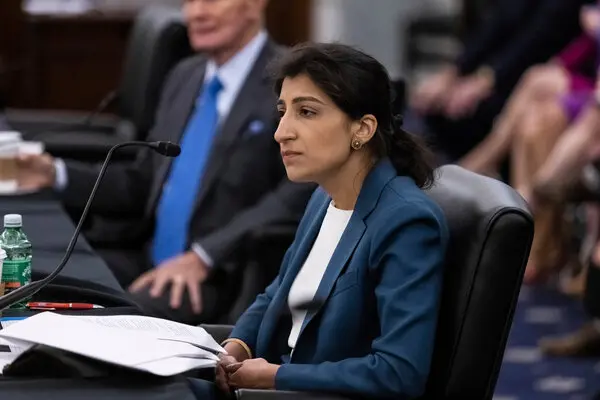
    Lina Khan, the chair of the Federal Trade Commission (FTC) and a prominent figure in the world of antitrust enforcement, has filed a lawsuit against Amazon, marking another significant step in the ongoing scrutiny of big tech companies. Khan, known for her prior critique of Amazon’s practices, has accused the e-commerce giant of abusing its monopoly power in the online retail market.


    Khan’s legal criticism of Amazon initially gained attention in 2017 when she was a law student at Yale, and the company was rapidly expanding its reach in the retail sector. In her academic paper, Khan accused Amazon of engaging in predatory pricing strategies, where it lowered prices to a level where competitors couldn’t compete, thus hurting consumers. However, she acknowledged that predatory pricing was almost obsolete as a legal theory due to high legal barriers.


    Fast forward to 2023, and the FTC’s lawsuit presents a different perspective. Instead of accusing Amazon of harming consumers with low prices, the lawsuit asserts that Amazon has hurt consumers by imposing higher prices, mainly through punitive measures against marketplace sellers who offer lower discounts elsewhere. Additionally, it claims that Amazon benefits from its monopoly by mandating sellers to use its fulfillment services.


    This change in focus has led to discussions about the evolution of antitrust enforcement, with experts highlighting the complexity of antitrust theory and practice. While Khan’s 2017 paper criticized Amazon for aggressive discounting to gain a monopoly, the company later shifted to raising prices after establishing market dominance. This shift aligns with the most common theory of antitrust harm, which centers on consumer harm, often through higher prices or reduced quality.


    The FTC’s lawsuit further claims that Amazon’s advertising practices have contributed to its violations. Amazon’s shopping results pages are described as “cluttered with advertisements,” making it challenging for consumers to find the products they want. Additionally, it suggests that Amazon’s advertising creates a pay-to-play system for sellers who must pay for better search placements through advertising.


    Amazon has strongly contested the FTC’s claims, arguing that they are baseless and would force the company to raise prices or offer worse service to consumers. The company has emphasized its role in helping marketplace sellers offer competitive prices.


    It’s worth noting that the FTC’s complaint does not address certain practices that Lina Khan criticized in her 2017 paper, such as Amazon’s alleged use of third-party seller data to create competing products. Transforming these claims into antitrust violations presents legal challenges.


    Overall, Lina Khan’s lawsuit against Amazon reflects the evolving landscape of antitrust enforcement, especially in the digital age where online platforms act as intermediaries between buyers and sellers. While the outcome of this legal battle remains uncertain, it underscores the broader debate about the power and practices of tech giants in the digital economy.